Event
Marie Antoinette, the widowed queen consort of…
Marie Antoinette, the widowed queen consort of Louis XVI of France, had been tried by the Revolutionary Tribunal on October 14, 1793.
Some historians believe the outcome of the trial had been decided in advance by the Committee of Public Safety around the time the Carnation Plot was uncovered.
She and her lawyers had been given less than one day to prepare her defense.
Among the accusations, many previously published in the libelles, were: orchestrating orgies in Versailles, sending millions of livres of treasury money to Austria, planning the massacre of the gardes françaises (National Guards) in 1792, declaring her son to be the new king of France, and incest, a charge made by her son Louis Charles, pressured into doing so by the radical elements who controlled him.
This last accusation had drawn an emotional response from Marie Antoinette, who had refused to respond to this charge, instead appealing to all mothers present in the room; their reaction had comforted her, since these women were not otherwise sympathetic to her.
Early on October 16, Marie Antoinette is declared guilty of the three main charges against her: depletion of the national treasury, conspiracy against the internal and external security of the State, and high treason because of her intelligence activities in the interest of the enemy; the latter charge alone is enough to condemn her to death.
At worst, she and her lawyers had expected life imprisonment.
In the hours left to her, she composes a letter to her sister-in-law, Madame Élisabeth, affirming her clear conscience, her Catholic faith, and her love and concern for her children.
The letter will not reach Élisabeth.
Preparing for her execution, she has to change clothes in front of her guards.
She puts on a plain white dress, white being the color worn by widowed queens of France.
Her hair is shorn, her hands bound painfully behind her back, and she is put on a rope leash.
Unlike her husband, who had been taken to his execution in a carriage (carrosse), she has to sit in an open cart (charrette) for the hour it takes to convey her from the Conciergerie via the rue Saint-Honoré thoroughfare to reach the guillotine erected in the Place de la Révolution, (the present-day Place de la Concorde).
She maintains her composure, despite the insults of the jeering crowd.
A constitutional priest is assigned to her to hear her final confession.
He sits by her in the cart, but she ignores him all the way to the scaffold.
Marie Antoinette is guillotined at 12:15 p.m. on October 16, 1793.
Her last words were "Pardon me, sir, I meant not to do it", to Henri Sanson the executioner, whose foot she had accidentally stepped on after climbing to the scaffold.
Her head is one of those of which Marie Tussaud is employed to make death masks.
Her body is thrown into an unmarked grave in the Madeleine cemetery located close by in rue d'Anjou.
Because its capacity is exhausted the cemetery will be closed the following year, on March 25, 1794.
Some historians believe the outcome of the trial had been decided in advance by the Committee of Public Safety around the time the Carnation Plot was uncovered.
She and her lawyers had been given less than one day to prepare her defense.
Among the accusations, many previously published in the libelles, were: orchestrating orgies in Versailles, sending millions of livres of treasury money to Austria, planning the massacre of the gardes françaises (National Guards) in 1792, declaring her son to be the new king of France, and incest, a charge made by her son Louis Charles, pressured into doing so by the radical elements who controlled him.
This last accusation had drawn an emotional response from Marie Antoinette, who had refused to respond to this charge, instead appealing to all mothers present in the room; their reaction had comforted her, since these women were not otherwise sympathetic to her.
Early on October 16, Marie Antoinette is declared guilty of the three main charges against her: depletion of the national treasury, conspiracy against the internal and external security of the State, and high treason because of her intelligence activities in the interest of the enemy; the latter charge alone is enough to condemn her to death.
At worst, she and her lawyers had expected life imprisonment.
In the hours left to her, she composes a letter to her sister-in-law, Madame Élisabeth, affirming her clear conscience, her Catholic faith, and her love and concern for her children.
The letter will not reach Élisabeth.
Preparing for her execution, she has to change clothes in front of her guards.
She puts on a plain white dress, white being the color worn by widowed queens of France.
Her hair is shorn, her hands bound painfully behind her back, and she is put on a rope leash.
Unlike her husband, who had been taken to his execution in a carriage (carrosse), she has to sit in an open cart (charrette) for the hour it takes to convey her from the Conciergerie via the rue Saint-Honoré thoroughfare to reach the guillotine erected in the Place de la Révolution, (the present-day Place de la Concorde).
She maintains her composure, despite the insults of the jeering crowd.
A constitutional priest is assigned to her to hear her final confession.
He sits by her in the cart, but she ignores him all the way to the scaffold.
Marie Antoinette is guillotined at 12:15 p.m. on October 16, 1793.
Her last words were "Pardon me, sir, I meant not to do it", to Henri Sanson the executioner, whose foot she had accidentally stepped on after climbing to the scaffold.
Her head is one of those of which Marie Tussaud is employed to make death masks.
Her body is thrown into an unmarked grave in the Madeleine cemetery located close by in rue d'Anjou.
Because its capacity is exhausted the cemetery will be closed the following year, on March 25, 1794.

-
{# Image navigates to the detail page; the magnifying-glass chip is the only Fancybox lightbox trigger (kept a separate sibling — anchors can't nest). #}
 The Atlantic Lands
World
The Atlantic Lands
World
-
{# Image navigates to the detail page; the magnifying-glass chip is the only Fancybox lightbox trigger (kept a separate sibling — anchors can't nest). #}
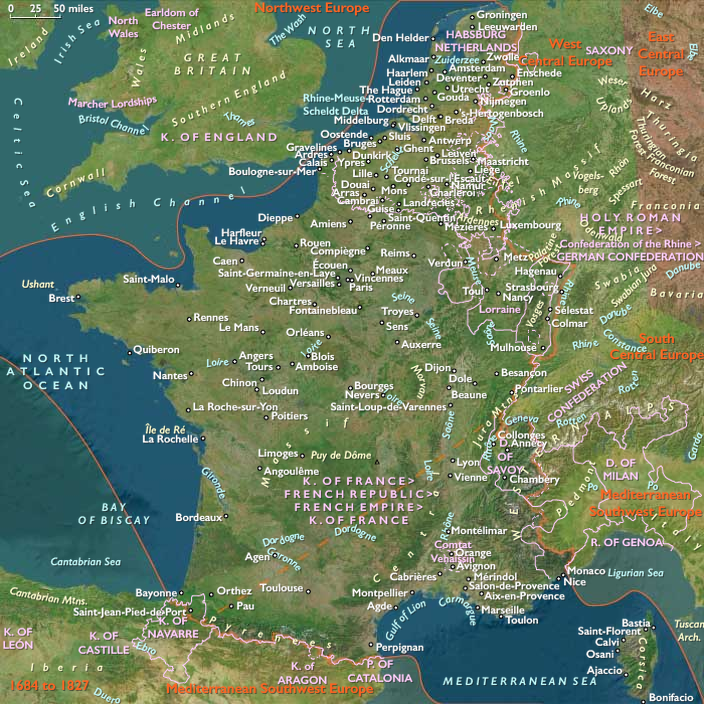 West Europe
Region
West Europe
Region
-
{# Image navigates to the detail page; the magnifying-glass chip is the only Fancybox lightbox trigger (kept a separate sibling — anchors can't nest). #}
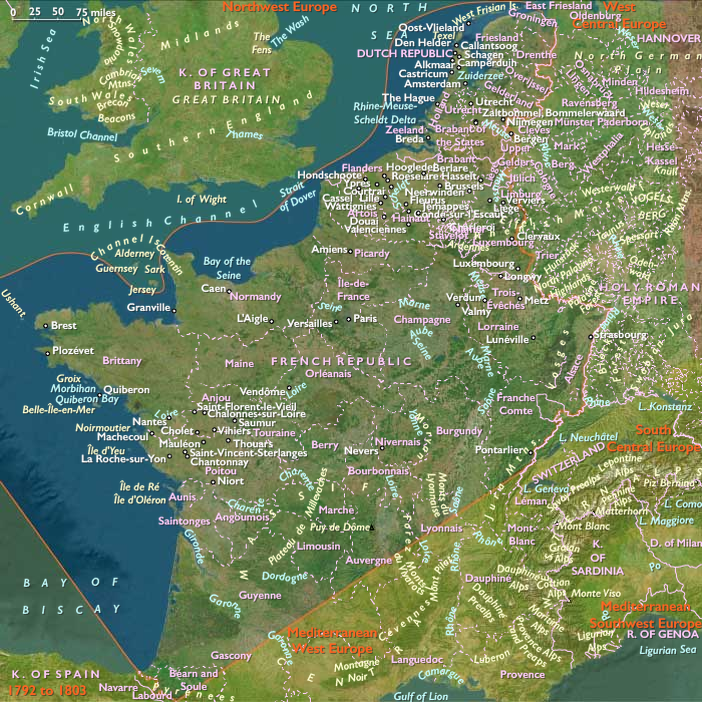 Atlantic West Europe
Subregion
Atlantic West Europe
Subregion