
the further refinement of the bassoon has…
1831 CE
the further refinement of the bassoon has been spurred by increasing demands on the capabilities of musical instruments and players in the 1800s—particularly concert halls requiring louder tones and the rise of virtuoso composer-performers.
Increased sophistication both in manufacturing techniques and acoustical knowledge has made possible great improvements in the playability of the instrument.
German instrument-makers began to make radical changes to the bassoon circa 1830, sacrificing tone quality for an instrument evenly effective (or ineffective) at all dynamic levels and in all ranges.
The design of the modern bassoon owes a great deal to the performer, teacher, and composer Carl Almenräder, who, assisted by the German acoustic researcher Gottfried Weber, has developed the seventeen-key bassoon with a range spanning four octaves.
Almenräder's improvements to the bassoon had begun with an 1823 treatise in which he described ways of improving intonation, response, and technical ease of playing by means of augmenting and rearranging the keywork; subsequent articles further developed his ideas.
Working at the factory of Schott, the international music publisher, had given him the means to construct and test instruments according to these new designs, the results of which were published in Caecilia, Schott's house journal.
Almenräder leaves Schott to start his own factory along with partner Johann Adam Heckel in 1831.
Heckel and two generations of descendants will continue to refine the bassoon; their instrument is to become the standard for other instrument makers to follow.
Locations
Regions
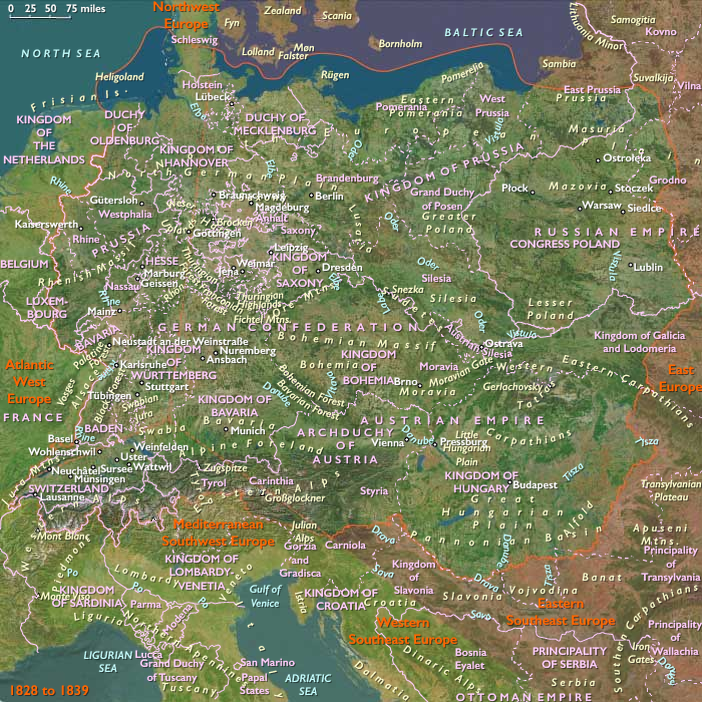
Central Europe
View →Subregions
