The uprising, which seriously threatens British rule…
1852 CE to 1863 CE
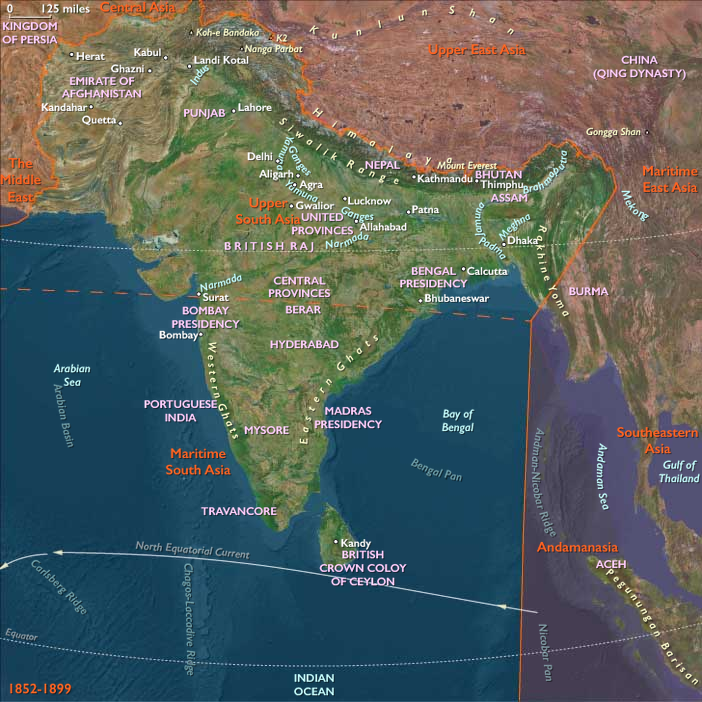
The uprising, which seriously threatens British rule in India, will be called many names by historians, including the Sepoy Rebellion, the Great Mutiny, and the Revolt of 1857; many people in South Asia today, however, prefer to call it India's first war of independence.
Undoubtedly, it is the culmination of mounting Indian resentment toward British economic and social policies over many decades.
Until the rebellion, the British had succeeded in suppressing numerous riots and "tribal" wars or in accommodating them through concessions, but two events trigger he violent explosion of wrath in 1857.
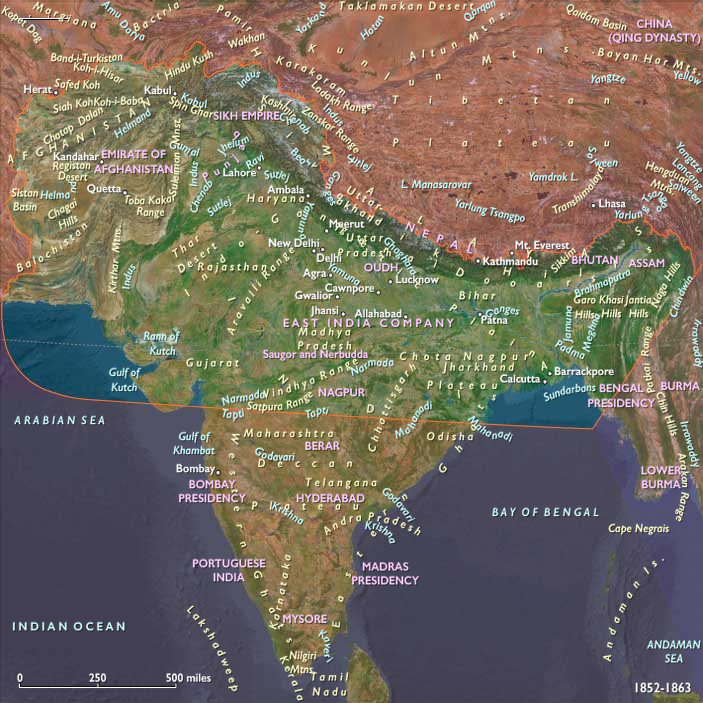
First was the annexation in 1856 of Oudh, a wealthv princelv state that generates huge revenue and represented a vestige of Mughal authority.
The second was the British blunder in using cartridges for the Lee-Enfield rifle that were allegedly greased with animal fat, which is offensive to the religious beliefs of Muslim and Hindu sepoys.
The rebellion soon engulfs much of North India, including Oudh and various areas once under the control of Maratha princes.
Isolated mutinies also occur at military posts in the center of the subcontinent.
Initially, the rebels, although divided and uncoordinated, gain the upper hand, while the unprepared British are terrified, and even paralvzed, without replacements for the casualties.
The civil war inflicts havoc on both Indians and British as each vents its fury on the other: each community suffers humiliation and triumph in battle as well, although the final outcome is victory for the British.
The last major sepoy rebels surrender on June 21, 1858, at Gwalior (Madhva Pradesh), one of the principal centers of the revolt.
A final battle is fought at Sirwa Pass on May 21, 1859, and the defeated rebels flee into Nepal.
Groups
Topics
Regions