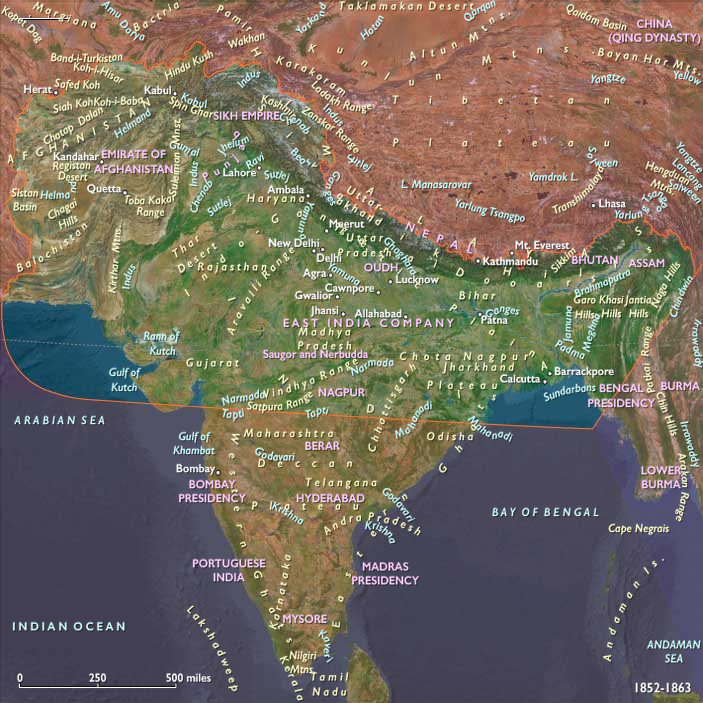
The uprising precipitates a dramatic reappraisal of…
1852 CE to 1863 CE
The uprising precipitates a dramatic reappraisal of British policy—in effect a retreat from the reformist and evangelical zeal that had accompanied the rapid territorial expansion of British rule.
This policy is codified in Queen Victoria's proclamation of 1858 delivered to "The Princes, Chiefs, and Peoples of India."
Formal annexations of princely states virtually cease, and the political boundaries between British territories and the princely states become frozen.
By this time the British territories occupy about sixty percent of the subcontinent, and some five hundred and sixty-two princely states of varying size occupy the remainder.
The relationship the British maintain with the princely states is governed by the principle of paramountcy, whereby the princely states exercise sovereignty in their internal affairs but relinquish their powers to conduct their external relations to Britain, the paramount power.
Britain assumes responsibility for the defense of the princely states and reserves the right to intervene in cases of maladministration or gross injustice.
Locations
People
Groups
Topics
Regions
South Asia
View →Subregions