The small, square steatite seals engraved with…
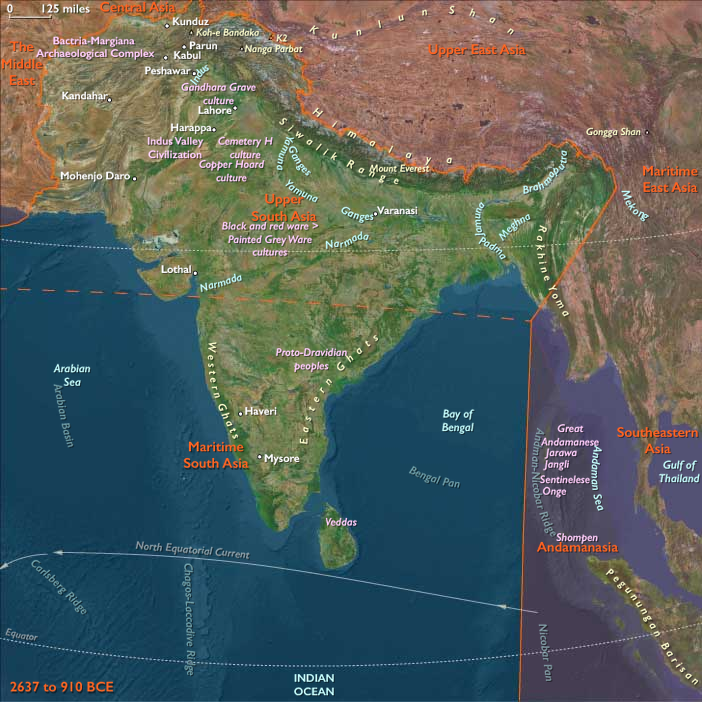
2637 BCE to 910 BCE
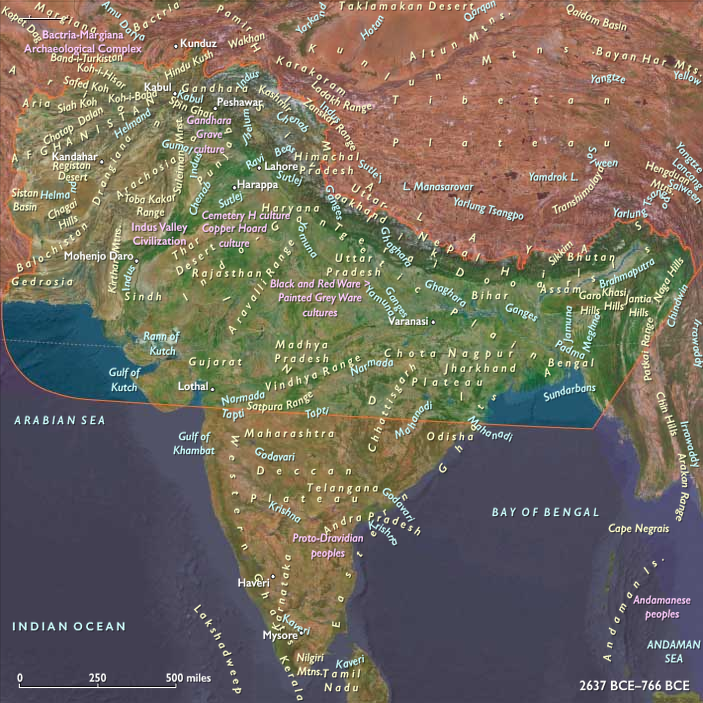
Large numbers of the seals have been found at Mohenjo-daro, many bearing pictographic inscriptions generally thought to be a kind of script.
Despite the efforts of philologists from all parts of the world, however, and despite the use of computers, the script remains undeciphered, and it is unknown if it is proto-Dravidian or proto-Sanskrit.
Nevertheless, extensive research on the Indus Valley sites, which has led to speculations on both the archaeological and the linguistic contributions of the pre-Aryan population to Hinduism's subsequent development, has offered new insights into the cultural heritage of the Dravidian population still dominant in southern India.
Artifacts with motifs relating to asceticism and fertility rites suggest that these concepts entered Hinduism from the earlier civilization.
Although historians agree that the civilization ceased abruptly, at least in Mohenjo-daro and Harappa, there is disagreement on the possible causes for its end.
Conquering hordes of Aryan invaders from central and western Asia have long been thought by historians to have been the "destroyers" of Indus Valley civilization, but this view is increasingly open to scientific scrutiny and reinterpretation.
Other, perhaps more plausible explanations include recurrent floods caused by tectonic earth movement, soil salinity, and desertification.
Locations
Commodities
Regions
South Asia
View →Subregions