
Interior East Africa (1252 – 1395 CE): …
Years: 1252 - 1395
Interior East Africa (1252 – 1395 CE): Solomonic Restoration, Lake Monarchies, and Zambezi Trade
Geographic and Environmental Context
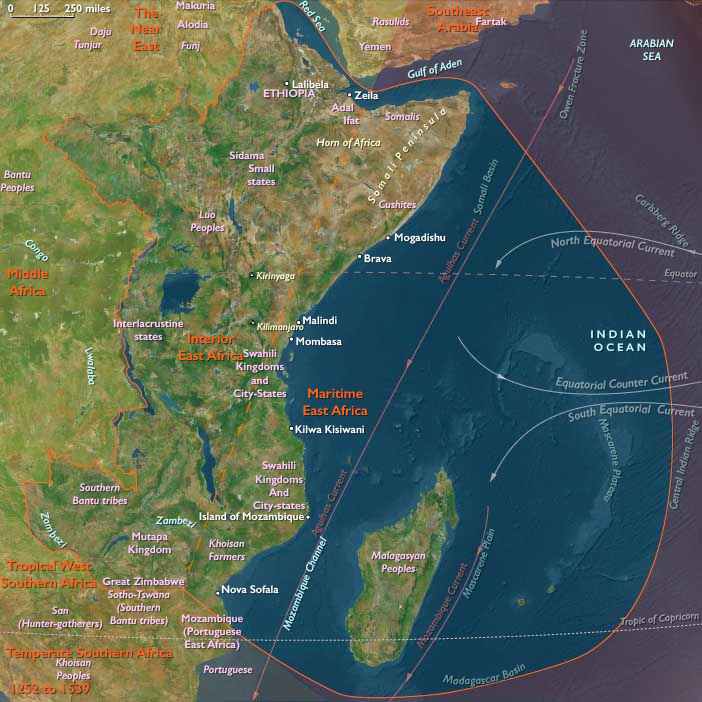
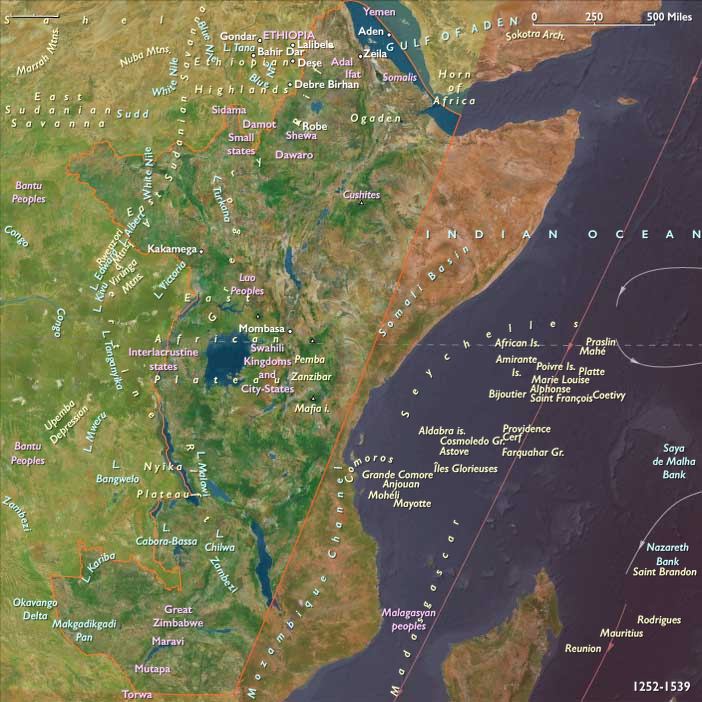
Interior East Africa includes Eritrea, Djibouti, Ethiopia, South Sudan, Uganda, Rwanda, Burundi, Zambia, northern Zimbabwe, northern Malawi, northwestern Mozambique, inland Tanzania, and inland Kenya.
-
Anchors: the Ethiopian Highlands, the Upper Nile basin, the Great Lakes region, the Rift Valley, and the Zambezi–Zimbabwe plateau corridor.
Climate and Environmental Shifts
-
With the onset of the Little Ice Age (~1300), rainfall became more variable.
-
Ethiopian terraces buffered erratic monsoons.
-
Great Lakes fisheries and banana groves offered resilience against drought.
-
The Zambezi plateau and northern Zimbabwe experienced periodic dry years, but mixed farming and cattle sustained populations.
Societies and Political Developments
-
Ethiopia (Solomonic dynasty, from 1270):
-
Founded by Yekuno Amlak, claiming descent from Solomon and the Queen of Sheba.
-
The Solomonic kings shifted power from the Zagwe centers of Lasta to the central Amhara highlands.
-
Christianity flourished under royal patronage; monasteries gained land and influence.
-
-
Great Lakes kingdoms:
-
Buganda, Bunyoro, Rwanda, Burundi grew stronger; centralized kingship (mwami, mukama) became entrenched.
-
Clan federations structured social and political life, balancing lineage power with royal authority.
-
-
South Sudan (Nilotic cattle peoples):
-
Dinka, Nuer, and Shilluk expanded pastoral economies; ritual chiefs legitimized through cattle and rainmaking.
-
-
Northern Zimbabwe and Zambia:
-
Regional farming and copper-producing communities were tied into the sphere of Great Zimbabwe (in Temperate Southern Africa), which reached its peak in the 14th century.
-
Northern suppliers contributed ivory, copper, and cattle to Great Zimbabwe’s trade routes.
-
-
Inland Tanzania and Mozambique:
-
Nyamwezi and related groups acted as caravan traders and smiths, linking interior goods to the Swahili coast.
-
Economy and Trade
-
Agriculture: Ethiopian Highlands (teff, wheat, barley, ensete); Great Lakes (bananas, beans, millet); Zambezi plateau (sorghum, millet, cattle).
-
Metals: copper from Zambia, iron tools throughout the region.
-
Exports: ivory, gold, copper, slaves, and hides moved via the Zambezi valley to Kilwa and Sofala.
-
Red Sea trade: Ethiopian goods (ivory, slaves, salt) exchanged via Massawa and Zeila for Egyptian textiles and beads.
-
Great Lakes: banana and iron economies created surpluses that supported elite courts and regional trade.
Subsistence and Technology
-
Terrace farming and reservoirs supported Ethiopia.
-
Canoe networks on Lakes Victoria, Tanganyika, and Malawi enabled exchange and transport.
-
Iron smelting widespread in Zambia and Tanzania.
-
Fishing gear: nets, traps, hooks for lake and river systems.
Movement and Interaction Corridors
-
Nile corridors: cattle and ivory moved from South Sudan northward.
-
Red Sea routes: connected Ethiopia to Cairo and Aden.
-
Great Lakes waterways: supported internal exchange.
-
Zambezi valley: linked northern Zimbabwe and Zambia into Great Zimbabwe’s sphere and Indian Ocean trade via Sofala and Kilwa.
Belief and Symbolism
-
Christianity: Solomonic kingship rooted legitimacy in Old Testament traditions and monastic patronage.
-
Sacred kingship: Great Lakes rulers fused fertility, justice, and military leadership.
-
Cattle cults: Nilotic and plateau societies celebrated cattle in ritual sacrifice and clan identity.
-
Ancestor veneration and rain shrines unified communities during environmental uncertainty.
Adaptation and Resilience
-
Ecological diversity buffered climatic instability: terraces, lakes, savannas, and wetlands provided alternatives.
-
Trade redundancy: multiple corridors (Red Sea, Swahili coast, Zambezi valley) ensured continuity even during drought or conflict.
-
Monastic networks in Ethiopia and clan systems in Great Lakes reinforced cultural resilience.
-
Integration with Great Zimbabwe: northern suppliers stabilized the flow of resources into the Indian Ocean system.
Long-Term Significance
By 1395, Interior East Africa was a region of consolidated monarchies and dynamic trade:
-
The Solomonic dynasty reestablished Christian kingship in Ethiopia.
-
The Great Lakes kingdoms expanded sacred monarchy and centralized authority.
-
Nilotic herders thrived in cattle cultures of the Upper Nile.
-
Zambezi and northern Zimbabwe were crucial suppliers to Great Zimbabwe’s golden age.
This age firmly tied the interior to both Red Sea and Indian Ocean trade systems, ensuring its place in Afro-Eurasian exchanges.

Interior East Africa (with civilization) ©2024-25 Electric Prism, Inc. All rights reserved.
People
Groups
- Arab people
- Jews
- Ethiopian Orthodox Tewahedo Church
- Coptic Orthodox Church of Alexandria
- Islam
- Amhara people
- Christians, Eastern Orthodox
- Ethiopia, Zagwe Dynasty of
- Ifat, Sultanate of
- Hadiya Sultanate
Commodoties
Subjects
Regions
Subregions
Related Events
Showing 1 events out of 1 total
Years: 1252 - 1395
Interior East Africa (with civilization) ©2024-25 Electric Prism, Inc. All rights reserved.
People
Groups
- Arab people
- Jews
- Ethiopian Orthodox Tewahedo Church
- Coptic Orthodox Church of Alexandria
- Islam
- Amhara people
- Christians, Eastern Orthodox
- Ethiopia, Zagwe Dynasty of
- Ifat, Sultanate of
- Hadiya Sultanate
Commodoties
Subjects
Regions
Subregions