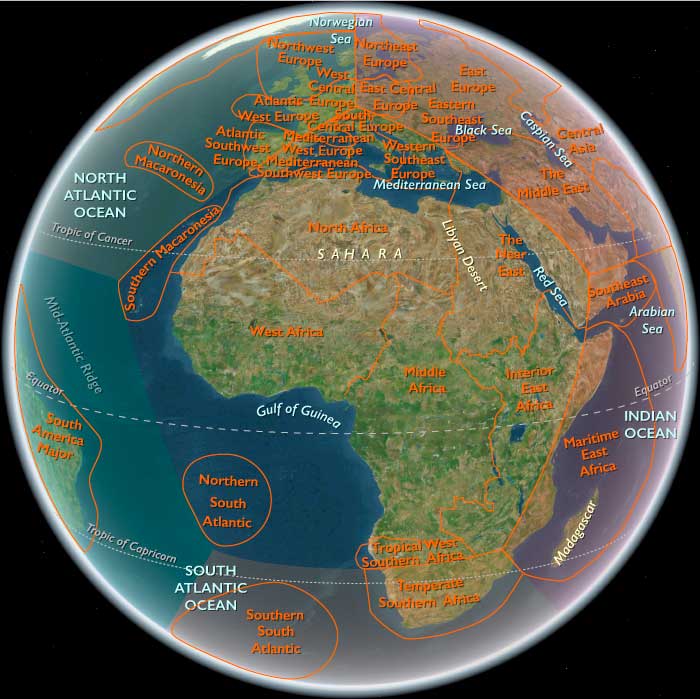
Event
Interior East Africa (1396–1539 CE): Territorial Competition,…
Interior East Africa (1396–1539 CE): Territorial Competition, Sacred States, and Specialized Landscapes
Geographic and Environmental Context
Highland Ethiopia, the Great Lakes, East African Rift, Upper Nile, and southern interior remained environmentally distinct but increasingly connected by political and commercial interaction.
Agricultural intensification occurred in several highland and Rift districts without creating one unified regional economy.
Productive Landscapes
Highland grain cultivation, ensete, livestock, terracing, and monastery-linked agriculture remained fundamental.
Great Lakes societies combined banana groves, grain fields, beans, cattle, fishing, and ironworking.
Inland Tanzania supported complex irrigated and terraced landscapes, including systems associated with Engaruka and comparable Rift communities.
Southern woodland societies maintained sorghum, millet, cattle, fishing, and iron production.
Societies and Political Development
The Solomonic monarchy strengthened during the fifteenth century, particularly under Zara Yaqob.
Royal authority increasingly intersected with Christian doctrine, monasteries, military organization, tribute, and frontier expansion.
Christian and Muslim states remained closely intertwined through commerce, diplomacy, competition, and warfare.
In 1529, Ahmad ibn Ibrahim al-Ghazi began campaigns against the Christian kingdom. By 1539, the Ethiopian–Adal war was still underway and had already disrupted fields, settlements, and churches.
In the Great Lakes, Bunyoro-related political formations became increasingly substantial. Buganda, Rwanda, and Burundi continued different trajectories of consolidation and should not be treated as synchronized mature monarchies.
Economy and Exchange
Trade widened through networks moving salt, cattle, iron, copper, ivory, cloth, beads, agricultural produce, and fish.
Indian Ocean-linked goods reached the interior through successive intermediary markets.
Large nineteenth-century style caravan systems had not yet formed.
Religion and Cultural Systems
Ethiopian Christianity became increasingly intertwined with royal authority and ecclesiastical discipline.
Great Lakes rulers and chiefs drew legitimacy from cattle, fertility, rain, clan shrines, and territorial ritual.
Pastoral societies maintained cattle ceremonies, age systems, and lineage authority.
Movement and Interaction Corridors
Highland roads linked royal courts, monasteries, agricultural provinces, and eastern trade approaches.
Rift paths connected irrigated communities and grazing zones.
Lake routes continued to integrate fishing and farming settlements.
Adaptation and Resilience
Irrigation, terracing, perennial cultivation, grazing mobility, fish preservation, and distributed trade created resilience against localized drought and warfare.
Legacy of the Age
By 1539, Interior East Africa had entered an age of sharper territorial competition.
The principal new organizing system was intensified state rivalry and specialized landscape management, especially in the Ethiopian highlands and Rift zones.

-
{# Image navigates to the detail page; the magnifying-glass chip is the only Fancybox lightbox trigger (kept a separate sibling — anchors can't nest). #}
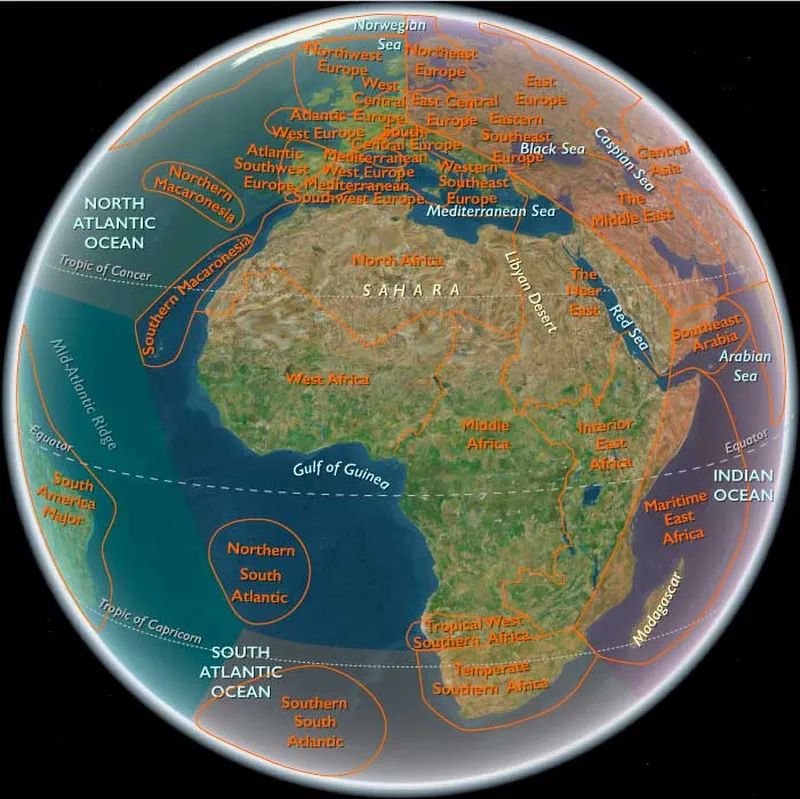 The Middle of The Earth
World
-
{# Image navigates to the detail page; the magnifying-glass chip is the only Fancybox lightbox trigger (kept a separate sibling — anchors can't nest). #}
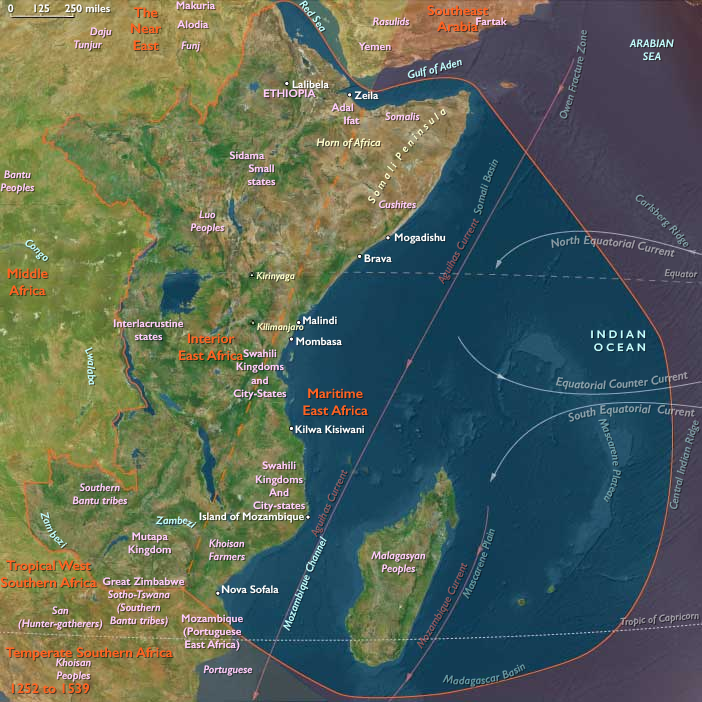 East Africa
Region
-
{# Image navigates to the detail page; the magnifying-glass chip is the only Fancybox lightbox trigger (kept a separate sibling — anchors can't nest). #}
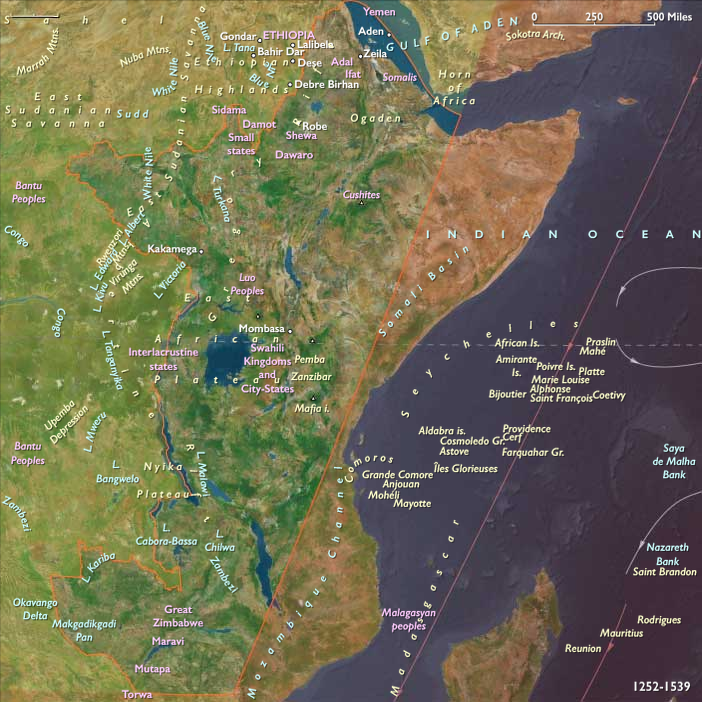 Interior East Africa
Subregion