
Interior East Africa (1108 – 1251 CE): …
Years: 1108 - 1251
Interior East Africa (1108 – 1251 CE): The Zagwe Golden Age and Expanding Great Lakes Polities
Geographic and Environmental Context
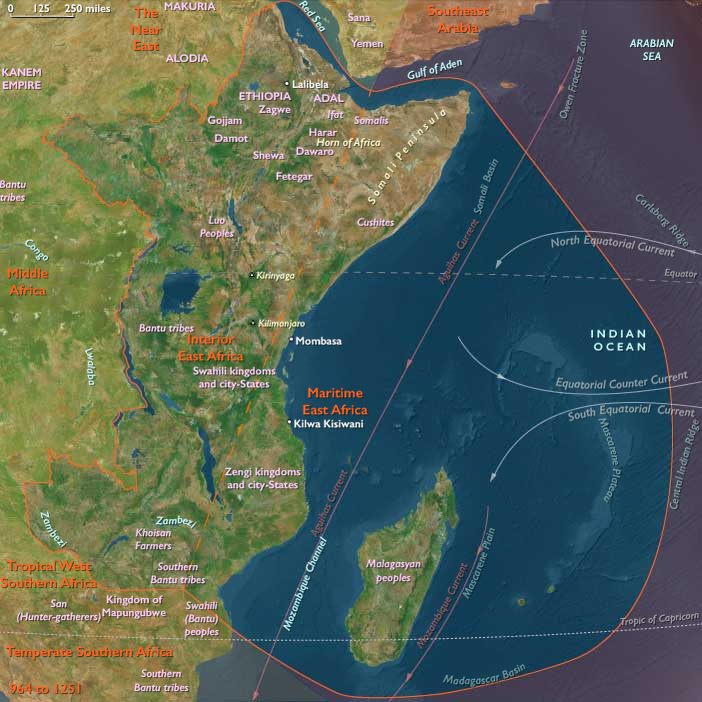
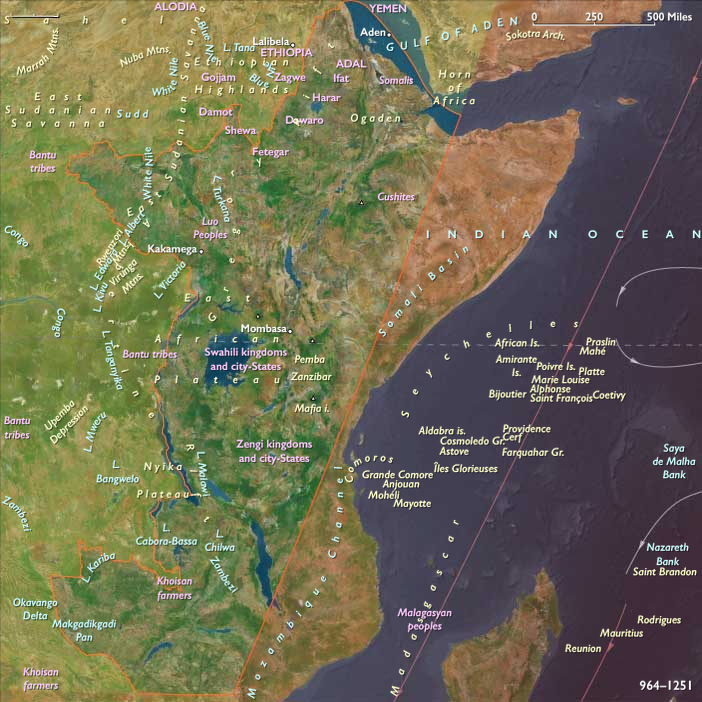
Interior East Africa includes Eritrea, Djibouti, Ethiopia, South Sudan, Uganda, Rwanda, Burundi, Zambia, northern Zimbabwe, northern Malawi, northwestern Mozambique, inland Tanzania, and inland Kenya.
-
Anchors: the Ethiopian Highlands, Upper Nile basin, Great Lakes region, and the Zambezi–Zimbabwe plateau corridor.
Climate and Environmental Shifts
-
Rainfall was mostly favorable, though the first hints of variability appeared by the 13th century.
-
Ethiopian terraces buffered dry spells; Rift Valley lakes and Great Lakes fisheries ensured stability.
-
The Zambezi plateau alternated between productive years and localized drought, shaping herding and farming cycles.
Societies and Political Developments
-
Ethiopia (Zagwe dynasty, 1137–1270):
-
The Zagwe emerged from regional highland lords, establishing their capital at Roha (later Lalibela).
-
Under King Lalibela (late 12th–early 13th century), the dynasty commissioned monumental rock-hewn churches, symbolizing divine kingship and Christian continuity.
-
Monasteries expanded, linking faith to farming and literacy.
-
Dynastic legitimacy rested on piety and monumental patronage rather than Aksumite descent.
-
-
Great Lakes region:
-
Early monarchies crystallized — Buganda, Bunyoro, Rwanda, Burundi — with centralized kingship (mwami, mukama).
-
Clan federations structured land tenure, ritual life, and military obligations.
-
-
South Sudan (Nilotic cattle peoples):
-
Dinka, Nuer, and Shilluk ancestors flourished, with herding cycles tied to floodplains.
-
-
Northern Zimbabwe and Zambia:
-
Agricultural and cattle-based chiefdoms expanded.
-
Early centers in northern Zimbabwe interacted with copper-producing communities in Zambia, feeding regional exchange networks.
-
Economy and Trade
-
Ethiopia: highland farming of teff, barley, wheat, and ensete; salt and ivory exchanged via Red Sea ports (Massawa, Zeila).
-
Great Lakes: bananas, beans, millet, cattle, and iron crafts underpinned subsistence; surplus fueled political consolidation.
-
Northern Zimbabwe/Zambia: copper ingots, ivory, hides, and grain entered caravan routes tied to the Swahili coast and Sofala.
-
South Sudan: cattle, hides, and ivory integrated into Upper Nile trade.
Subsistence and Technology
-
Terrace farming and irrigation in Ethiopia; monasteries acted as agricultural centers.
-
Banana plantations in Great Lakes supported demographic growth.
-
Iron smelting widespread in Zambia and Tanzania.
-
Fishing technologies: nets, baskets, dugouts in Rift and Great Lakes.
Movement and Interaction Corridors
-
Red Sea–highland routes: connected Zagwe Ethiopia to Alexandria via Coptic Church ties.
-
Nile corridors: linked Nilotic cattle cultures northward.
-
Great Lakes waterways: fostered canoe-based transport and exchange.
-
Zambezi valley: integrated northern Zimbabwe/Zambia with Sofala and Swahili commerce.
Belief and Symbolism
-
Ethiopian Christianity: Zagwe kingship sanctified by monumental rock churches; pilgrimage to Lalibela tied state to sacred geography.
-
Great Lakes: sacred kingship bound fertility, warfare, and justice.
-
Cattle cults: central among Nilotic and Zimbabwe plateau societies.
-
Ancestor worship: common thread linking farming, herding, and political legitimacy.
Adaptation and Resilience
-
Highland terraces and reservoirs insulated Ethiopian agriculture from climate shocks.
-
Banana–cattle–iron systems in the Great Lakes diversified food bases.
-
Wetland–savanna complementarity sustained Nilotic and Zimbabwe plateau peoples.
-
Regional trade redundancy: copper, ivory, and salt moved through multiple corridors (Red Sea, Zambezi, Swahili coast).
Long-Term Significance
By 1251, Interior East Africa was a flourishing cultural and political landscape:
-
Zagwe Ethiopia embodied Christian monumentalism and stable rule.
-
Great Lakes monarchies consolidated sacred kingship.
-
Zambezi plateau chiefdoms integrated into Indian Ocean trade.
-
Nilotic cattle cultures thrived in the Upper Nile.
This age cemented the region’s role as a bridge between Christian highlands, lake monarchies, savanna herders, and global trade circuits, setting the stage for the Solomonic restoration in 1270 and the rising power of Great Zimbabwe to the south.
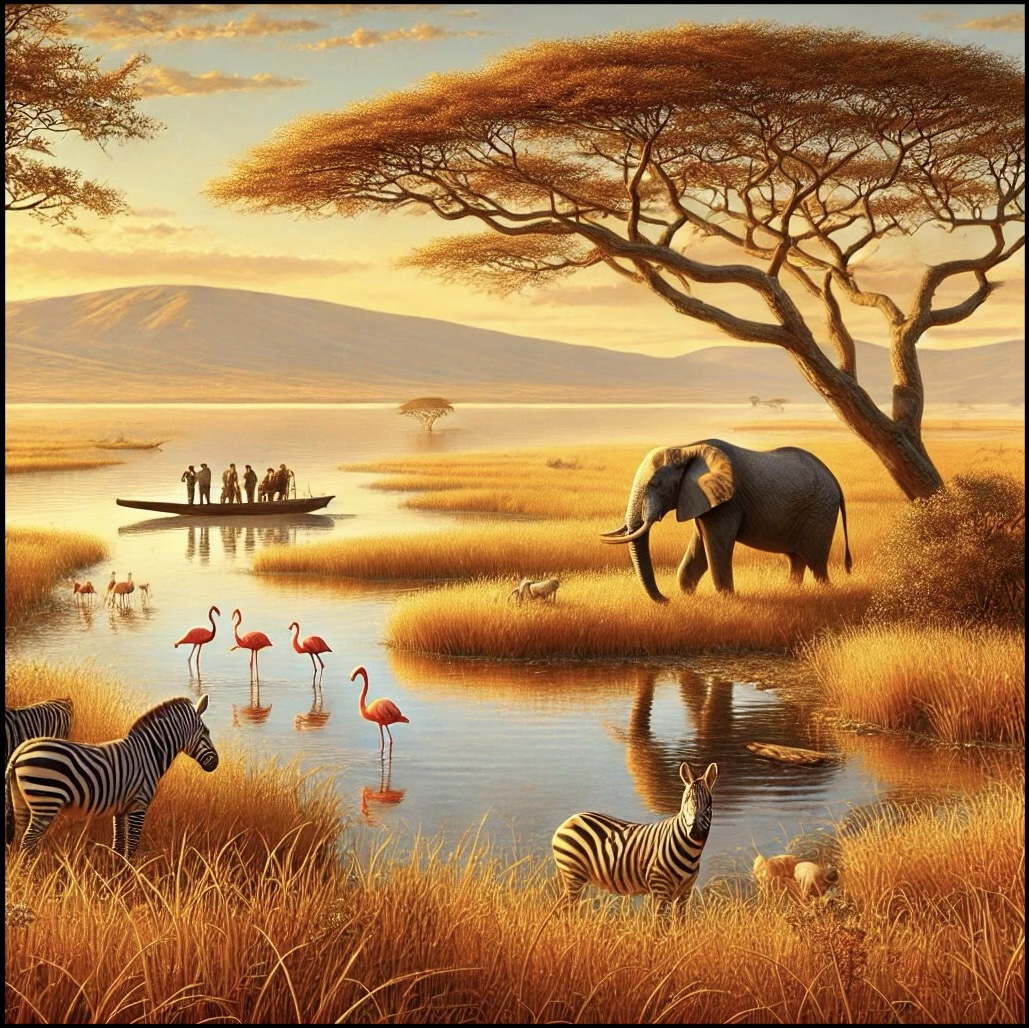
Interior East Africa (with civilization) ©2024-25 Electric Prism, Inc. All rights reserved.
Groups
- Dinka people
- Nuer people
- Bantu peoples
- Arab people
- Jews
- Nilotic peoples
- Ethiopian Orthodox Tewahedo Church
- Coptic Orthodox Church of Alexandria
- Swahili people
- Islam
- Amhara people
- Christians, Eastern Orthodox
- Mapungubwe, Kingdom of
- Shilluk people (Nilotic tribe)
- Ethiopia, Zagwe Dynasty of
- Ifat, Sultanate of
- Zimbabwe, Kingdom of
Topics
Commodoties
Subjects
Regions
Subregions
Related Events
Showing 6 events out of 6 total
Years: 1108 - 1251
Interior East Africa (with civilization) ©2024-25 Electric Prism, Inc. All rights reserved.
Groups
- Dinka people
- Nuer people
- Bantu peoples
- Arab people
- Jews
- Nilotic peoples
- Ethiopian Orthodox Tewahedo Church
- Coptic Orthodox Church of Alexandria
- Swahili people
- Islam
- Amhara people
- Christians, Eastern Orthodox
- Mapungubwe, Kingdom of
- Shilluk people (Nilotic tribe)
- Ethiopia, Zagwe Dynasty of
- Ifat, Sultanate of
- Zimbabwe, Kingdom of
Topics
Commodoties
Subjects
Regions
Subregions