
Italian princess Maria Amalia of Naples and …
Years: 1809 - 1809
Italian princess Maria Amalia of Naples and Sicily had been educated in the Catholic tradition, which she appears to have taken to heart.
Her mother, Maria Carolina, like her famous mother before her, Empress Maria Theresa, had made an effort to be a part of her daughter's life, though she was cared for daily by her governess, Donna Vicenza Rizzi.
As a child, Maria Amalia's mother and her aunt, Marie Antoinette, had arranged for her to be engaged to Marie Antoinette's son, the future king of France, due to which, her mother encouraged her to remember that she would someday be his queen.
Tragically, her young fiancé died in 1789.
Maria Amelia had faced chaos and upheaval from a young age.
The death of her aunt Marie Antoinette during the French Revolution and her mother's subsequent dramatic actions had emblazoned the event in the young girl's memory.
On the outbreak of the French Revolution in 1789, the Neapolitan court was not hostile to the movement.
When the French monarchy was abolished and her aunt and uncle were executed, her parents had joined the First Coalition against France in 1793.
Although peace was made with France in 1796, by 1798 conflict was again fierce.
It was decided that the royal family flee to the Kingdom of Sicily.
The family left Naples on December 21, 1798 on board the HMS Vanguard, a British Royal navy vessel that was in turn protected by two Neapolitan warships.
It was on board the warship that her younger brother Alberto, age six, died of exhaustion on Christmas Day, 1798.
He was buried in Palermo soon after the family arrived there; his funeral was the first official engagement his family attended in Sicily.
Forced to leave her home at the age of eighteen, Maria Amalia had spent the next few years jumping from various royal dwellings to escape turbulent times in Italy.
While in flight, she had encountered her future husband, Louis Philippe d'Orléans, also forced from his home in France due to political complications of the French Revolution and the rise of Napoleon.
Louis-Philippe's father, the previous Duke of Orléans, had been guillotined during the French Revolution, though he had advocated it in the early years.
The two are married in 1809, three years after they met in Italy, whereupon Marie-Amelie becomes the Duchess of Orléans.
Locations
People
Groups
- Britain (United Kingdom of Great Britain and Ireland)
- France, (first) Empire of
- Naples, Bonapartist Kingdom of
Subjects
Regions
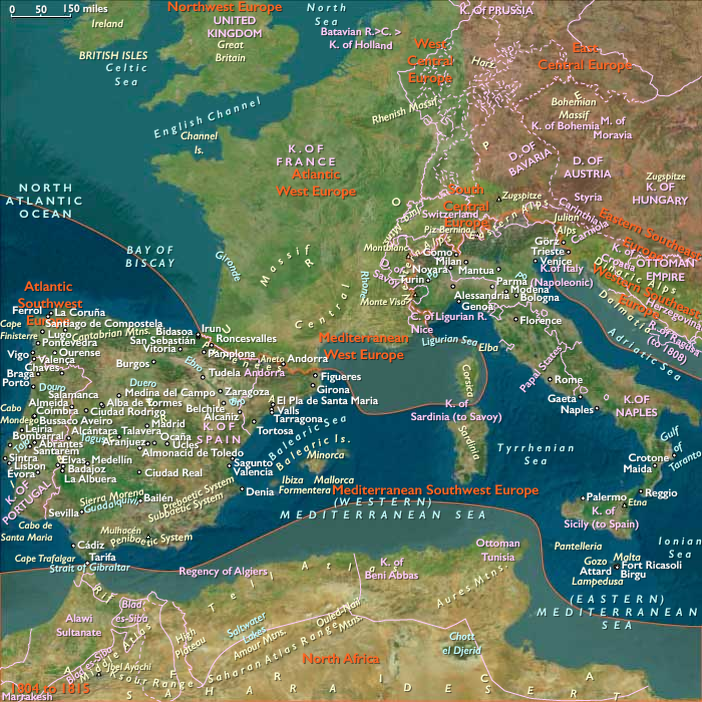
Subregions
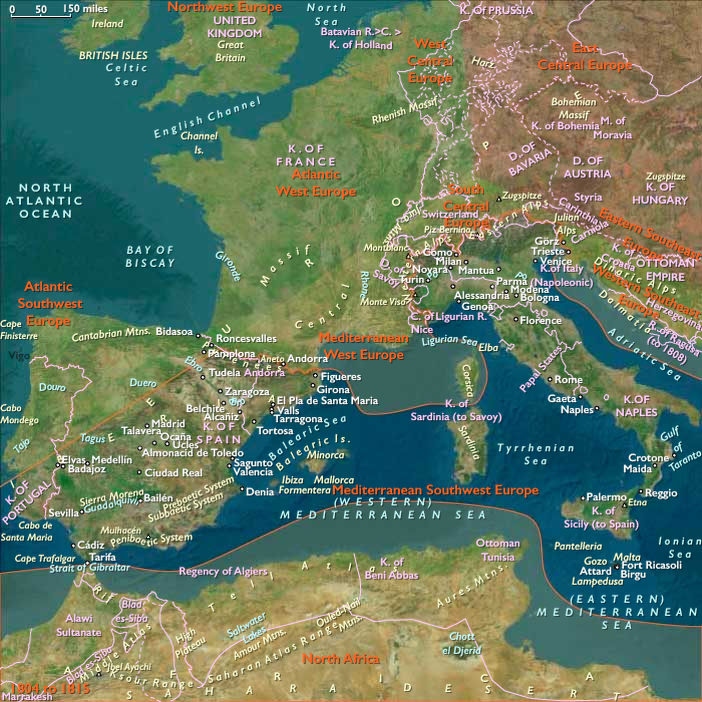
Related Events
Showing 10 events out of 21748 total
Years: 1809 - 1809
Locations
People
Groups
- Britain (United Kingdom of Great Britain and Ireland)
- France, (first) Empire of
- Naples, Bonapartist Kingdom of
Subjects
Regions
Subregions