A custom house, used for the collection…
February 1814 CE
The site has long been nown as "Wool Quay", and, from the medieval period, a custom house was necessary there to levy the duty payable on exported wool.
Such a building is recorded as early as 1377.
The quay and the buildings on it were privately owned.
Around 1380, one John Churchman built a custom house there to collect dues for the City of London, and in 1382 the Crown came to an agreement to use its facilities.
Churchman’s custom house remained in use until 1559, the freehold passing through various hands. Its replacement was erected under the direction of William Paulet, Marquess of Winchester, the Lord High Treasurer.
A print from 1663 shows it as a three-storey building, with octagonal staircase towers.
This structure was destroyed in the Great Fire of 1666.
The post-fire replacement was on a rather larger scale, to the designs of Christopher Wren.
The original estimate was for £6,000, but the eventual cost was more than £10,000.
The new building was short-lived: in January 1715 a fire, which began in a nearby house, damaged the it beyond repair, and a new, larger structure was built to the designs of Thomas Ripley, "Master-Carpenter" to the board of Customs.
This necessitated the acquisition of ground to the north, fronting onto Thames Street, and the east. The main body of the new building, however, had the same plan as Wren’s, and may have re-used its foundations, but was of three, rather than two storeys.
With the growth of trade, the opening of the docks, and the increases in duties during the Napoleonic wars, larger premises became necessary in the early nineteenth century.
To meet this need, a new building had been begun to the designs of David Laing in October 1813, on a site immediately to the west of Ripleys's building, where Bear Quay, Crown Quay, Dice Quay, and Horner's Quay had once been.
Laing had held the position of surveyor to HM Customs since 1810.
On February 12, 1814 the old building was destroyed by fire, resulting in the explosion of gunpowder and spirits.
s a result, papers are retrieved from as far as Hackney Marshes.
Locations
Subjects
Regions
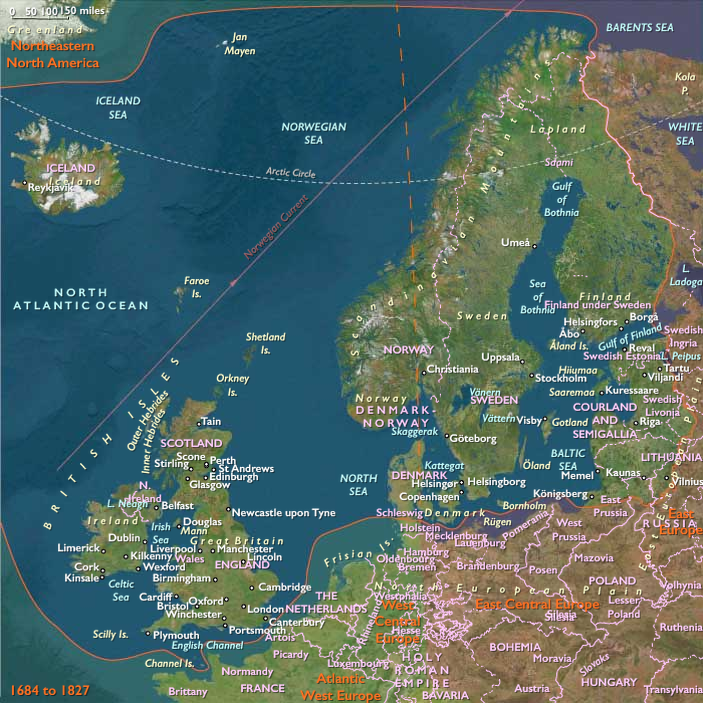
North Europe
View →Subregions