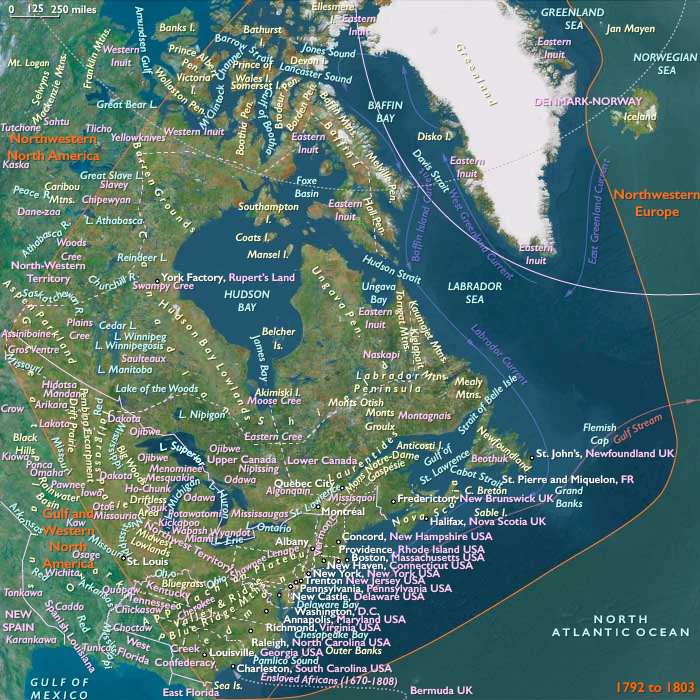
Simcoe realizes that Newark makes an unsuitable…
August 1793 CE
He has proposed moving the capital to a more defensible position, in the middle of Upper Canada's southwestern peninsula between Lake Erie and Lake Huron.
He names the new location London, and renames the river there the Thames in anticipation of the change.
Dorchester rejects this proposal, but accepts Simcoe's second choice, the present site of Toronto, Ontario.
Simcoe moves the capital here in 1793, and renames the settlement York after Frederick, Duke of York, King George III's second son.
The town is severely underdeveloped at the time of its founding so he brings with him politicians, builders, Nova Scotia timber men, and Englishmen skilled in whipsawing and cutting joists and rafters.
Simcoe begins construction of two roads through Upper Canada, for defense and to encourage settlement and trade.
Yonge Street (named after British Minister of War Sir George Yonge) runs north-south from York to Lake Simcoe.
Soldiers of the Queen's Rangers begin cutting the road in August 1793; they will reach Holland Landing in 1796.
Dundas Street (named for Colonial Secretary Henry Dundas) runs east-west, between York and London.
Locations
People
Regions
Northern North America
View →Subregions