
Chin Gee Hee starts the Quong Tuck…
1888 CE
Chin Gee Hee starts the Quong Tuck Company in 1888 to supply construction workers to North American railroads (the Great Northern Railway, the Seattle and Walla Walla Railroad and Transportation Company) and to Seattle's regrading projects.
He provides work crews (and is involved entrepreneurially) in rail lines along what are now Alaskan Way (along the Seattle waterfront) and a cable car perpendicular to the waterfront along Yesler Way as far as 14th Avenue.
He also provides Chinese masons to help build the Burke Building, a full city block at Second Avenue and Marion Street.
Born the son of a maker of soy sauce crocks in a village in what is now the city of Taishan, Chin had come to the attention of an old man because of his calm after some other boys smashed crocks that he was carrying to market.
The man brought him along on his passage to America, where Chin worked in a placer mine before making his way to Port Gamble, Washington, where he worked in a lumber mill.
While still in North Kitsap, he learned a reasonable amount of English, and made friends with several Suquamish, including the family of Chief Seattle. He also met and befriended Henry Yesler, owner of a mill in the young city of Seattle, who persuaded him to move there.
In 1873, he arrived in Seattle, a settlement that was about twenty years old at the time.
After meeting Chin Chun Hock, who was from the same village in Taishan, he became a junior partner in the Wa Chong company (Huá Chāng, "Chinese Prosperity"), the city's leading Chinese enterprise of the time.
The Wa Chong company imported or manufactured goods including sugar, tea, rice, cigars, opium (legal at the time), and fireworks.
At this time, there are few Chinese women in America.
While still in North Kitsap, Chin imported a wife from China.
Their son Chin Lem (Chén Lín), later known as Tew Dong (Qiūzōng), born 1875 in Seattle, was the first known Chinese child born in Washington Territory (now Washington State).
At the Wa Chong company, he acquired labor contracts from coal mines, railroads, farming, and the Puget Sound mosquito fleet.
As one of the major labor suppliers for Northern Pacific Railway in the Puget Sound district, Chin also helped with payroll and discipline of the Chinese labor.
He also placed Chinese house-boys and cooks. His partnership with Chin Ching-hock was somewhat uneasy: Chin Ching-hock was more interested in imports and exports than in the labor contracting that became Chin Gee Hee's specialty.
Chin Gee Hee had been a central figure in the efforts at political and diplomatic defense against the anti-Chinese riots of November 1885.
During the crisis, he represented the community and exchanged telegrams with Chinese consul general Ow-yang Ming (Ōuyáng Míng) in San Francisco, California.
He kept careful records of damages to Chinese businesses, and, partly as a result, Seattle's Chinese community fared far better than that of neighboring Tacoma, ultimately remaining in the city and collecting $700,000 in damages through a favorable ruling by judge Thomas Burke.
People
Groups
Subjects
Regions
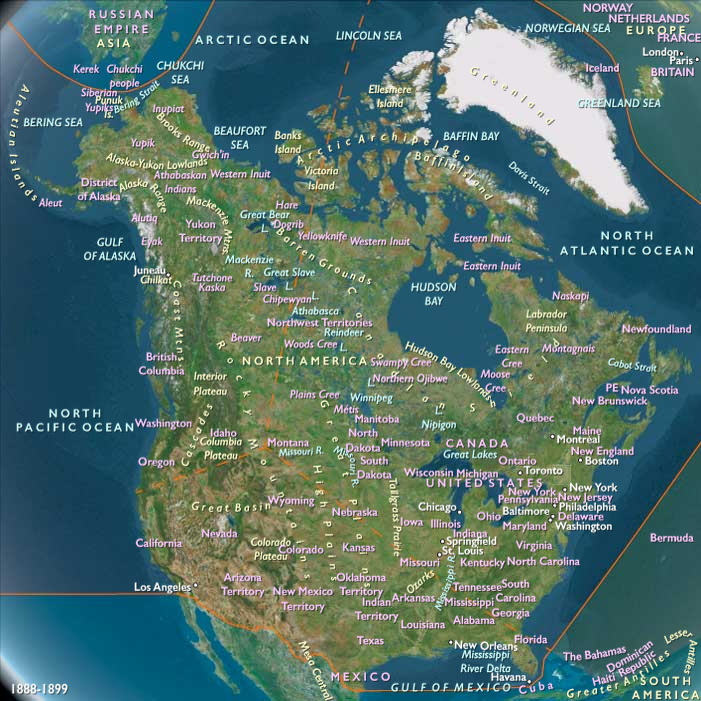
Northern North America
View →Subregions
