The cornerstone of the United States Executive…
1792 CE
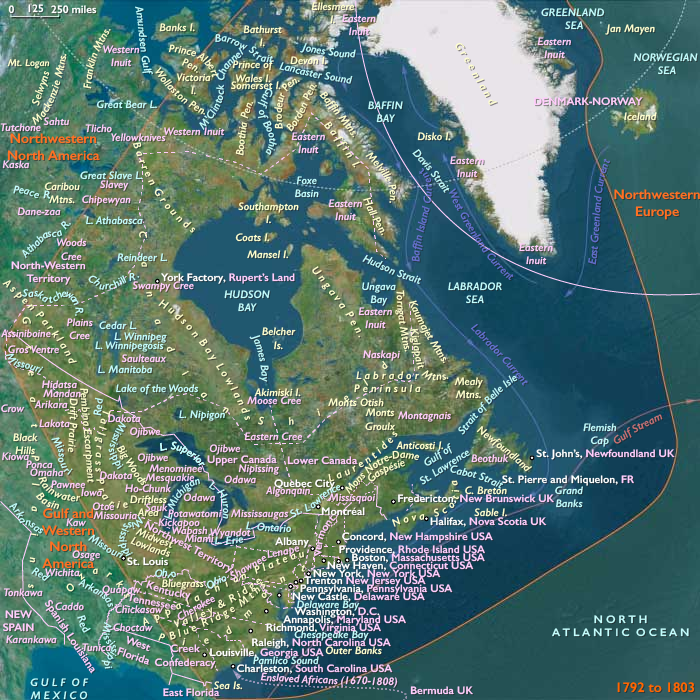
The cornerstone of the United States Executive Mansion (known as the White House after 1818) is laid on October 13, 1792, considered the foundation of Washington, D.C.
Washington had dismissed Pierre L’Enfant from the capital project earlier in the year because of the architect’s insistence on complete control of the project
President Washington admired James Hoban's work on his Southern Tour, may have met with him in Charleston in May 1791, and had summoned the architect to Philadelphia, Pennsylvania (the temporary national capital) in June 1792.
In July, Hoban had been named winner of the design competition for the White House.
His initial design seems to have had a three-story facade, nine bays across (like the Charleston courthouse).
Under Washington's influence, Hoban amends this to a two-story facade, eleven bays across, and, at Washington's insistence, the whole presidential mansion is faced with stone.
It is unclear whether any of Hoban's surviving drawings are actually from the competition.
Hoban is also one of the supervising architects who serves on the Capitol, carrying out the design of Dr. William Thornton.
Raised on an estate belonging to the Earl of Desart in Cuffesgrange, near Callan in Co. Kilkenny, Hoban han had worked there as a wheelwright and carpenter until his early twenties, when in 1780 he had received an 'advanced student' place in the Dublin Society's Drawing School on Lower Grafton Street, where he excelled in his studies and received the prestigious Duke of Leinster's medal for drawings of "Brackets, Stairs, and Roofs."
Hoban had later found a position as an apprentice to the headmaster of the Dublin Society School the Cork-born architect Thomas Ivory from 1759 to 1785.
Following the American Revolutionary War, Hoban had immigrated to the United States, and established himself as an architect in Philadelphia in 1785.
Hoban was in South Carolina by April 1787, where he has designed numerous buildings including the Charleston County Courthouse (1790–92), built on the ruins of the former South Carolina Statehouse (1753, burned 1788).
Subjects
Regions
Northern North America
View →Subregions