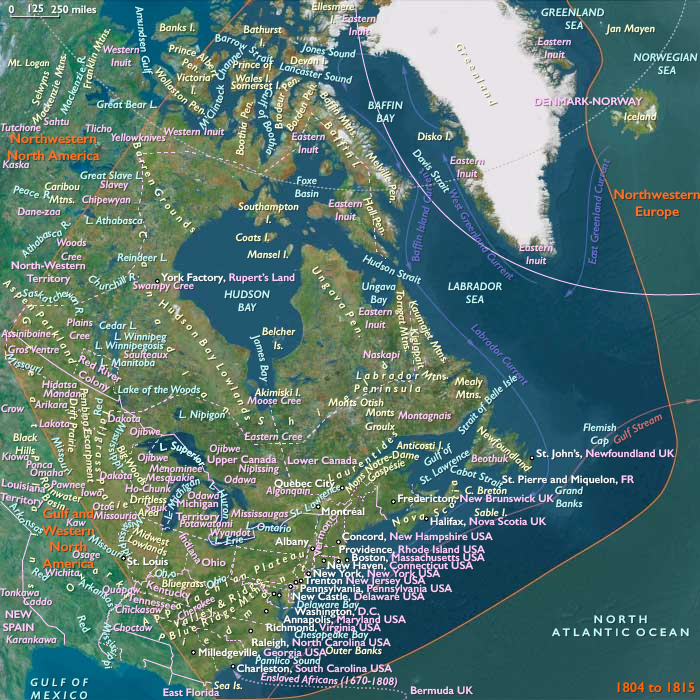
President James Madison had learned, just over…
February 1815 CE
President James Madison had learned, just over a month after General Andrew Jackson's victory over the British at New Orleans in January, that his negotiators had reached the Treaty of Ghent on December 24, ending the war without major concessions by either side.
Additionally, both sides had agreed to establish commissions to settle Anglo-American boundary disputes.
Madison had quickly sent the Treaty of Ghent to the Senate, and the Senate ratifies the treaty on February 16, 1815.
To most Americans, the quick succession of events at the end of the war, including the burning of the capital, the Battle of New Orleans, and the Treaty of Ghent, appear as though American valor at New Orleans had forced the British to surrender.
This view, while inaccurate, will strongly contribute to the post-war euphoria that is to persist for a decade.
It also helps explain the significance of the war, even if it was strategically inconclusive.
Madison's reputation as president improves and Americans finally believe the United States has established itself as a world power.
Groups
Commodities
Regions
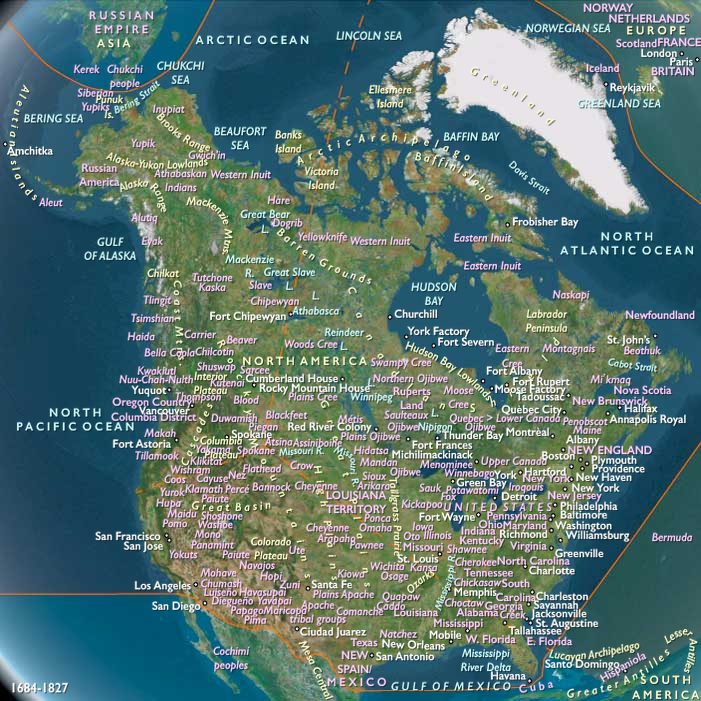
Northern North America
View →Subregions