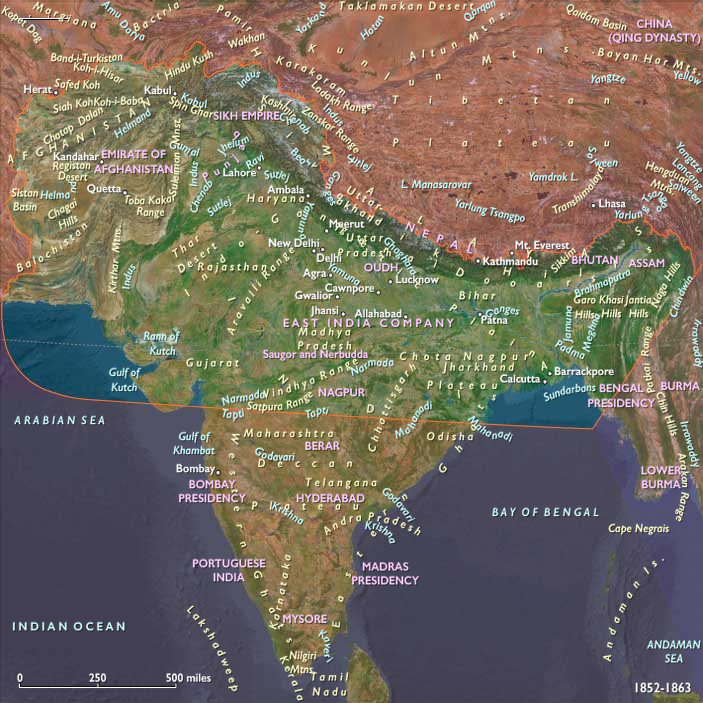
Nepal begins to experience some successes in…
1852 CE to 1863 CE
Nepal begins to experience some successes in international affairs during the tenure of Jung Bahadur.
To the north, relations with Tibet had been mediated through China since Nepal's defeat in 1792, and during the early nineteenth century embassies had to make the arduous journey to Beijing every five years with local products as tribute to the Qing emperor.
By 1854, however, China is in decline and has fallen into a protracted period of disturbances, including the Taiping Rebellion (1851-64), revolts by Muslim ethnic groups north of Tibet, and war with European powers.
The Nepalese mission to Beijing in 1852, just after the death of the sixth Panchen Lama, had allegedly been mistreated in Tibet.
Because of this slight, the Nepalese government had sent a protest letter to Beijing and Lhasa outlining several grievances, including excessive customs duties on Nepalese trade.
In 1855 Nepalese troops overrun the Kuti and Kairang areas.
Hostilities lasts for about a year, with successes and failures on both sides, until a treaty negotiated by the Chinese resident and ratified in March 1856 gives Nepalese merchants duty-free trade privileges, forces Tibet to pay an annual tribute of ten thousand rupees to Nepal, and allows a Nepalese resident in Lhasa.
In return, Nepal gives up territorial gains and agrees that it, as well as Tibet, will remain a tributary state subject to China.
As the Qing Empire disintegrates later in the century, this tributary status will be allowed to lapse, and even Tibet will begin to shake off its subordination.
Locations
People
Groups
Topics
Regions
South Asia
View →Subregions