Jeanne Bécu, comtesse du Barry, the last…
December 1793 CE
Zamor, given to Madame du Barry by Louis XV as a young Bengali boy, had joined the Jacobin club along with another member of du Barry's domestic staff, becoming a follower of the revolutionary Grieve, then an office-bearer in the Committee of Public Safety.
He had begun began to detest Countess du Barry and deplored her lavish lifestyle.
He also protested her repeated visits to England with the intention of retrieving her lost jewellery and warned her against protecting aristocrats.
As an informant to the Committee of Public Safety, Zamor got the police to arrest the Countess in 1792, on her return from one of her many visits to England.
The Countess, however, had secured her release from jail and found out that the arrest was the handiwork of her page.
She had given Zamor three days’ notice to quit her service.
This he had done without hesitation, then denounced his mistress to the Committee.
When the Revolutionary Tribunal of Paris accused her of treason and condemned her to death, she had vainly attempted to save herself by revealing the hiding places of the gems she had hidden.
During the trial, Zamor had given Chittagong as his birthplace.
His testimony sends the Comtesse to the guillotine, along with many others.
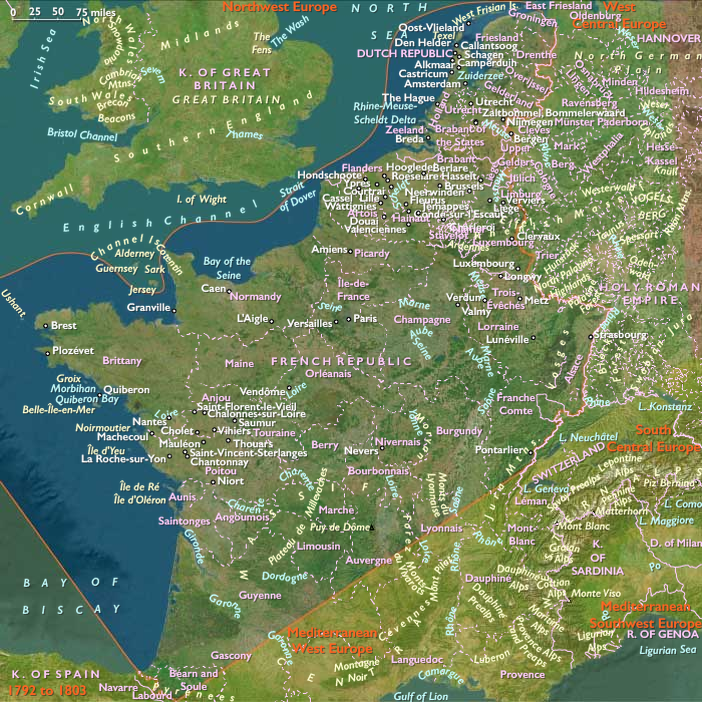
On December 8, 1793, Madame du Barry is beheaded on the Place de la Révolution (today the Place de la Concorde).
On the way to the guillotine, she collapses in the tumbrel and cries "You are going to hurt me! Why?!"
Terrified, she screams for mercy and begs the indifferent crowd for help.
Her last words to the executioner are: "One more moment, Mr. Executioner, I beg you!"
She is buried in the Madeleine Cemetery, like many other victims of the Terror—including Louis XVI and Marie Antoinette.
Although her French estate goes to the Tribunal de Paris, the jewels she had smuggled out of France to England will be sold by auction at Christie's in London in 1795.
Colonel Johann Keglevich, the brother of Major General Stephan Bernhard Keglevich, will take part in the Battle of Mainz in 1795 with Hessian mercenaries financed by the British Empire with the money from this sale.
Soon after the execution of the Countess, Zamor himself will be arrested by the Girondins on suspicion of being an accomplice of the Countess and a Jacobin.
He will be tried and imprisoned, but will be able to secure his release.
He will then flee France, reappearing only in 1815 after the fall of Napoleon.
Zamor will buy a house in Rue Maître-Albert near the Latin Quarter of Paris and will spend a few years as a schoolteacher before dying in poverty on February 7, 1820.
Locations
Topics
Regions
West Europe
View →Subregions