
Johan van Oldenbarnevelt, who had served as …
Years: 1600 - 1600
June
Johan van Oldenbarnevelt, who had served as a volunteer for the relief of Haarlem (1573) and again at Leiden (1574), had in 1576 obtained the important post of pensionary of Rotterdam, an office which carried with it official membership of the States of Holland.
In this capacity his industry, singular grasp of affairs, and persuasive powers of speech had speedily gained for him a position of influence.
He had been active in promoting the Union of Utrecht (1579) and the offer of the countship of Holland and Zeeland by William I, Prince of Orange (prevented by Williams death in 1584).
A fierce opponent of the policies of the Earl of Leicester, the governor‐general at the time, he had instead favored Maurice of Nassau, a son of William.
Leicester’s departure in 1587 had left the military power in the Netherlands to Maurice.
During the governorship of Leicester, Van Oldenbarnevelt had been the leader of the strenuous opposition offered by the States of Holland to the centralizing policy of the governor.
On March 16, 1586, van Oldenbarnevelt, in succession to Paulus Buys, had become Land's Advocate of Holland for the States of Holland, an office he will hold for thirty-two years.
This great office gives to a man of commanding ability and industry unbounded influence in a many-headed republic without any central executive authority.
Though nominally the servant of the States of Holland, he has made himself politically the personification of the province which bears more than half the entire charge of the union, and as its mouthpiece in the States-General he practically dominates that assembly.
In a brief period he had become entrusted with such large and far-reaching authority in all the details of administration, as to be virtually Prime minister of the Dutch republic.
During the two critical years which followed the withdrawal of Leicester, it had been the statesmanship of the Advocate which had kept the United Provinces from falling asunder through their own inherent separatist tendencies, and prevented them from becoming an easy conquest to the formidable army of Alexander of Parma.
Fortunately for the Netherlands, the attention of Philip II was at their time of greatest weakness riveted upon his contemplated invasion of England, and a respite had been afforded which enabled Oldenbarnevelt to supply the lack of any central organized government by gathering into his own hands the control of administrative affairs.
His task has been made the easier by the wholehearted support he has received from Maurice of Nassau, who, from 1589, has held the Stadholderate of five provinces, and is likewise Captain-General and Admiral of the Union.
The interests and ambitions of the two men have not clashed, for Maurice's thoughts are centered on the training and leadership of armies and he has no special capacity as a statesman or inclination for politics.
The first rift between them comes in 1600, when Maurice is forced against his will by the States-General, under the Advocate's influence, to undertake an expedition into Flanders.
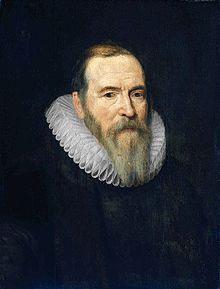
Johan van Oldenbarnevelt, attributed to Michiel Jansz. van Miereveld, Oil on panel 62.5 × 48.7 cm (24.61 × 19.17 in)Rijksmuseum Amsterdam
Locations
People
Groups
- Christians, Roman Catholic
- Protestantism
- Spain, Habsburg Kingdom of
- Netherlands, Southern (Spanish)
- Netherlands, United Provinces of the (Dutch Republic)
Topics
- Counter-Reformation (also Catholic Reformation or Catholic Revival)
- Eighty Years War (Netherlands, or Dutch, War of Independence)
- Nieuwpoort (the Dunes), Battle of
Commodoties
Subjects
Regions
Subregions
Years: 1600 - 1600
June
Johan van Oldenbarnevelt, attributed to Michiel Jansz. van Miereveld, Oil on panel 62.5 × 48.7 cm (24.61 × 19.17 in)Rijksmuseum Amsterdam
Locations
People
Groups
- Christians, Roman Catholic
- Protestantism
- Spain, Habsburg Kingdom of
- Netherlands, Southern (Spanish)
- Netherlands, United Provinces of the (Dutch Republic)
Topics
- Counter-Reformation (also Catholic Reformation or Catholic Revival)
- Eighty Years War (Netherlands, or Dutch, War of Independence)
- Nieuwpoort (the Dunes), Battle of
Commodoties
Subjects
Regions
Subregions