
John Duns Scotus had studied at Oxford…
1308 CE
John Duns Scotus had studied at Oxford until 1302, when he had gone to Paris to repeat his lectures on the “Sentences” of Peter Lombard.
As he is among the theologians in 1303 who had objected to the appeal by King Philip IV to an ecumenical council opposing Pope Boniface VIII, he had been banished from France.
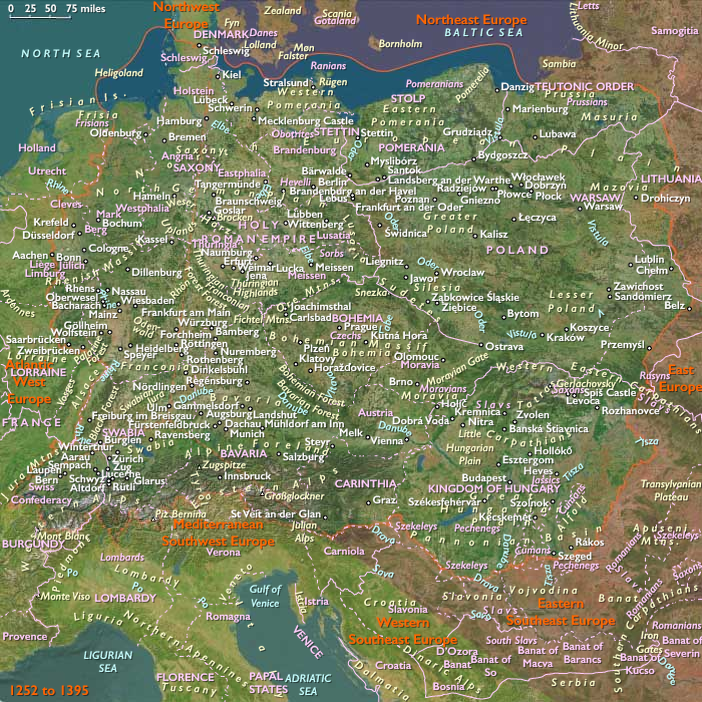
Allowed to return after Boniface’s death, he had become a master of theology in 1305 and lectured in Paris until his assignment in 1307 to Köln (Cologne), where he dies on November 8, 1308, at only forty-three.
He leaves a definitive version of his various commentaries on the “Sentences” in his “Ordinatio” or “Opus Oxoniense.” Theologically a staunch theological champion of the Immaculate Conception of the Virgin Mary, his philosophy, which relies heavily on Plato and Avicenna, is notable for its subtlety and multiplicity of formalities and distinctions.
Scotus has also developed a complex argument for the existence of God.
Departing from Avicenna’s postulation of the necessary emanation of all things from God, Scotus, taking a position called voluntarism, posits the absolute primacy of God's free will.
One of the most important theologians and philosophers of the High Middle Ages, Scotus was nicknamed Doctor Subtilis for his penetrating and subtle manner of thought.
Scotus is to have considerable influence on Roman Catholic thought.
The doctrines for which he is best known are the "univocity of being", that existence is the most abstract concept we have, applicable to everything that exists; the formal distinction, a way of distinguishing between different aspects of the same thing; and the idea of haecceity, the property supposed to be in each individual thing that makes it an individual.
Subjects
Regions
Central Europe
View →Subregions
