John Ross, also called Coowescoowe, leads the…
1828 CE
John Ross, also called Coowescoowe, leads the Cherokees against the Creek confederacy in the War of 1812.
Ross (also known by his Cherokee name, Guwisguwi) was born in Turkeytown, Alabama, along the Coosa River, near Lookout Mountain, to Mollie McDonald, a Cherokee woman of partial Scots ancestry, and Daniel Ross, a Scots immigrant trader.
Born to a Cherokee mother, John Ross was considered born into her Bird Clan.
Ross' mother and grandmother were of mixed Scots-Cherokee ancestry.
His great-grandmother Ghigooie, a "full-blood" Cherokee, married William Shorey, a Scottish interpreter.
Their daughter Anna married John McDonald, a Scots trader.
In 1786 Anna and John's daughter Mollie McDonald married Daniel Ross, a Scots trader who had begun to live among the Cherokee during the American Revolution.
Ross spent his childhood with his parents in the area of Lookout Mountain.
He saw much of Cherokee society as he encountered the full-blood Cherokee who frequented his father's trading company.
As a child, Ross participated in Cherokee events, such as the Green Corn Festival.
The elder Ross was determined that John also receive a rigorous classical education.
After being educated at home, Ross pursued higher studies with the Reverend Gideon Blackburn, who established two schools in southeast Tennessee for Cherokee children.
Classes were in English and students were mostly of mixed race, like Ross.
The young Ross finished his education at an academy in South West Point, Tennessee.
Business activities At the age of twenty, having completed his education and with bilingual skills, Ross was appointed as US Indian Agent to the western Cherokee and sent to their territory in present-day Arkansas.
During the War of 1812, he served as an adjutant in a Cherokee regiment.
He took part in fighting under General Andrew Jackson at the Battle of Horseshoe Bend against the British-allied Upper Creek warriors, known as the Red Sticks.
Ross began a series of business ventures.
He derived the majority of his wealth from cultivating one hundred and seventy acres (0.69 square kilometers) tobacco in Tennessee worked by twenty slaves.
In 1816 he founded Ross's Landing (now Chattanooga, Tennessee), served by a ferry crossing.
In addition, Ross established a trading firm and warehouse.
In total, he earned upwards of one thousand dollars a year (thirteen thousand seven hundred in today's terms).
After Ross and the Cherokee are removed to Oklahoma, European-American settlers will change the name of Ross's Landing to Chattanooga.
People
Groups
Commodities
Subjects
Regions
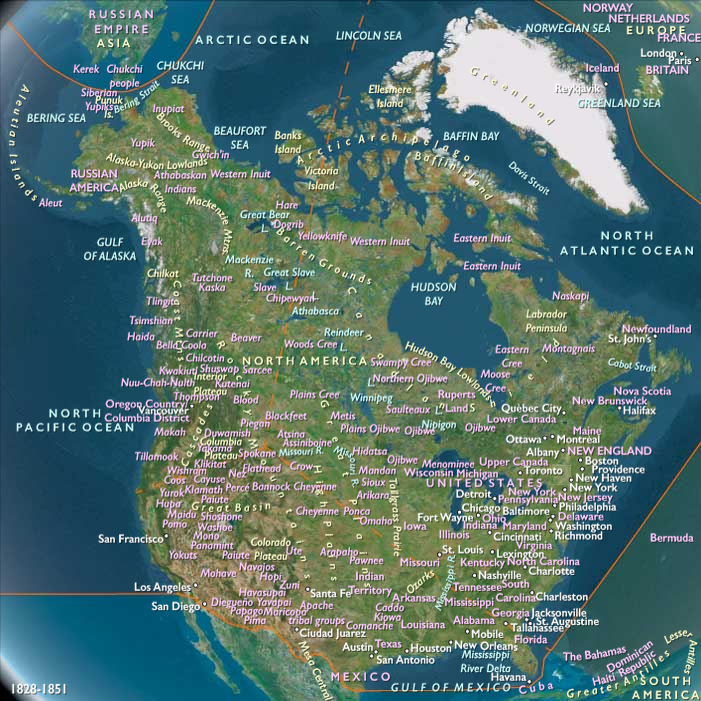
Northern North America
View →Subregions