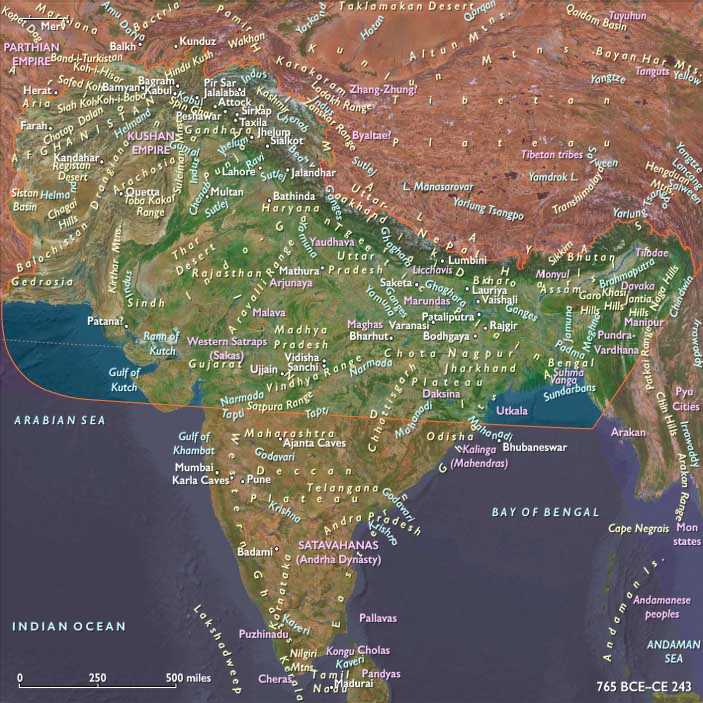
…Kalinga, a feudal republic located on the…
261 BCE to 250 BCE
…Kalinga, a feudal republic located on the coast of the present-day Orissa state, which prides itself on its sovereignty and democracy.
With its monarchical parliamentary democracy, it as an exception to the concept of Rajdharma, meaning the duty of the rulers, which is intrinsically entwined with the concept of bravery and Kshatriya dharma.
The Kalinga War, the only major war Ashoka fights after his accession to throne, occurs eight years after Ashoka’s coronation, probably in 261 BCE.
His thirteenth inscription tells that the battle was massive and caused the deaths of more than one hundred thousand soldiers and many civilians who rose up in defense.
The edicts record that an even larger number later perished, presumably from wounds and famine.
Over one hundred and fifty thousand were deported.
When Ashoka was walking the grounds of Kalinga after his conquest, rejoicing in his victory, he was moved by the number of bodies strewn there and the wails of the kith and kin of the dead.
Quickly becoming appalled at the suffering and death resulting from his campaign, and sickened by the sight of burnt houses and scattered corpses resulting from the brutal conquest, Ashoka renounces warfare and converts from Brahmanism to Buddhism, vowing never again to use weapons or armies to rule or extend his empire.
He uses his position to propagate the relatively new religion to new heights, eventually as far as ancient Rome and Egypt.
Locations
People
Topics
Commodities
Subjects
Regions
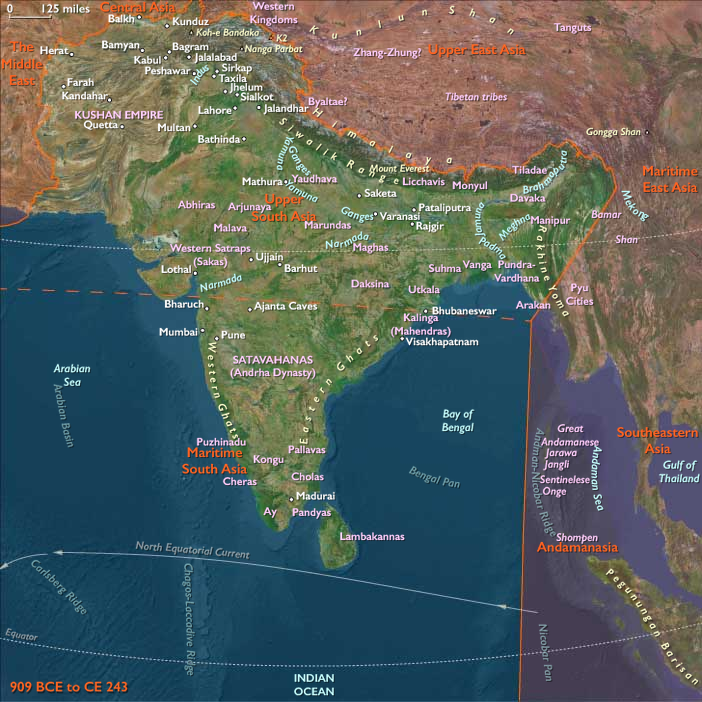
South Asia
View →Subregions