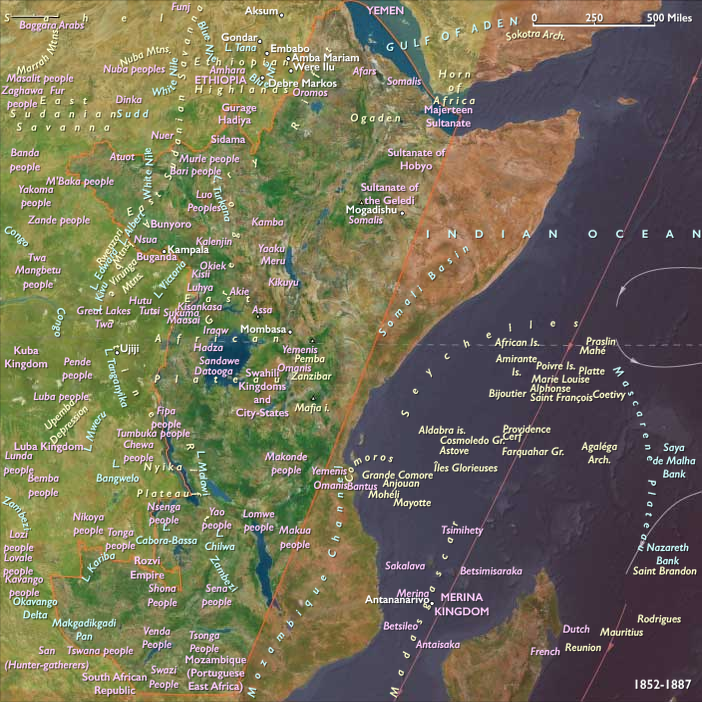
Richard Francis Burton and John Hanning Speke…
February 1855 CE
The Royal Geographical Society had funded the expedition, in which Burton had set off from Zanzibar to explore an "inland sea" that had been described by Arab traders and slavers.
His mission is to study the area's tribes and to find out what exports might be possible from the region.
It is hoped that the expedition might lead to the discovery of the source of the River Nile, although this is not an explicit aim.
John Hanning Speke has again accompanied Burton and on June 27, 1857, they had set out from the east coast of Africa heading west in search of the lake or lakes.
They are helped greatly by the Omani Arabs who live and trade in the region.
They have followed the traditional caravan routes, hiring professional porters and guides who have been making similar treks for years.
Both men are beset by a variety of tropical diseases on the journey.
Speke is rendered blind by a disease for some of the journey and deaf in one ear (due to an infection caused by attempts to remove a beetle).
The expedition arrives at Lake Tanganyika in February 1858.
Burton is awestruck by the sight of the magnificent lake, but Speke, who had been temporarily blinded, is unable to see the body of water.
By this point much of their surveying equipment has been lost, ruined, or stolen, and they are unable to complete surveys of the area as well as they wish.
Locations
Groups
Subjects
Regions
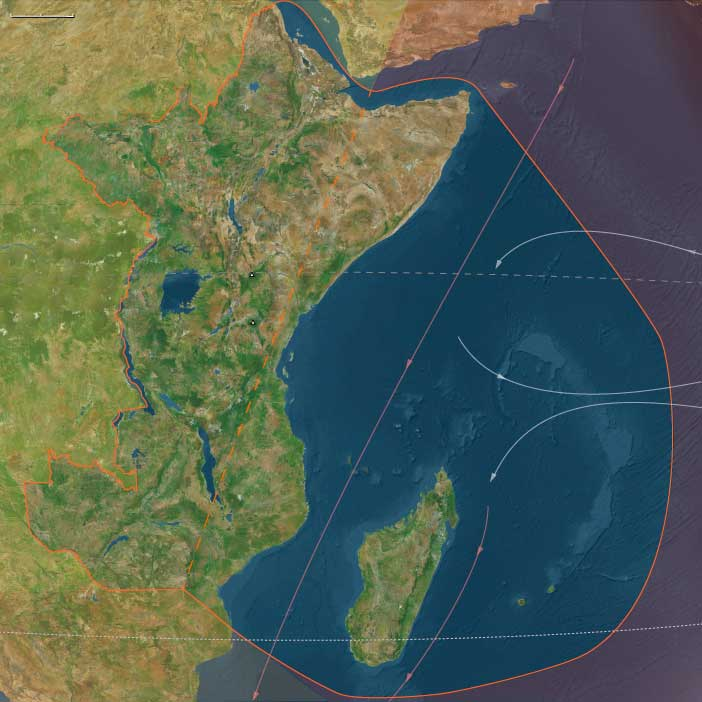
East Africa
View →Subregions