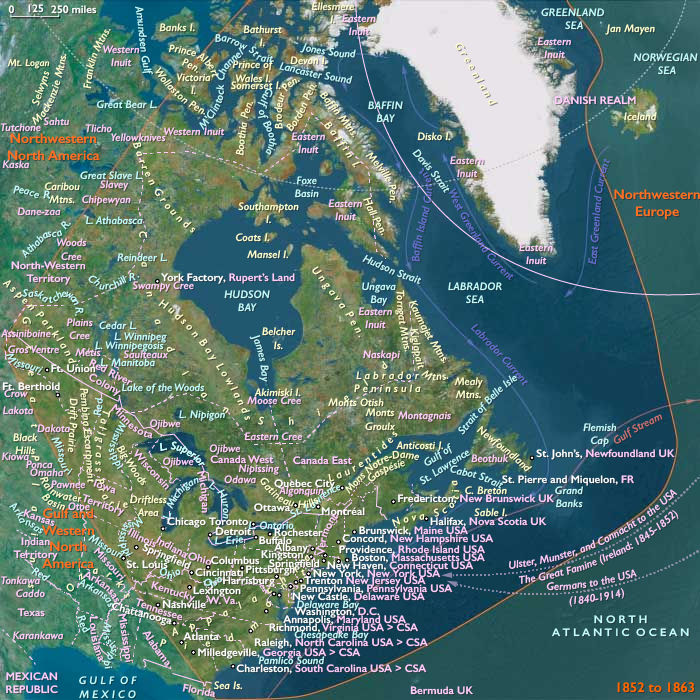
Abraham Lincoln accepts the Republican Party nomination…
June 1858 CE
The speech became the launching point for his unsuccessful campaign, which will climax with the Lincoln-Douglas debates of 1858.
Lincoln's remarks in Springfield depict the danger of slavery-based disunion, and it will rally Republicans across the North.
Along with the Gettysburg Address and his second inaugural address, the speech will become one of the best-known speeches of his career.
The best-known passage of the speech is this:
A house divided against itself, cannot stand. I believe this government cannot endure, permanently, half slave and half free. I do not expect the Union to be dissolved — I do not expect the house to fall — but I do expect it will cease to be divided. It will become all one thing or all the other. Either the opponents of slavery will arrest the further spread of it, and place it where the public mind shall rest in the belief that it is in the course of ultimate extinction; or its advocates will push it forward, till it shall become lawful in all the States, old as well as new — North as well as South.
Lincoln's goals are to differentiate himself from Douglas—the incumbent—and to voice a prophecy publicly.
Douglas has long advocated popular sovereignty, under which the settlers in each new territory would decide their own status as a slave or free state; he has repeatedly asserted that the proper application of popular sovereignty will prevent slavery-induced conflict and will allow northern and southern states to resume their peaceful coexistence.
Lincoln, however, responds that the Dred Scott decision has closed the door on Douglas's preferred option, leaving the Union with only two remaining outcomes: the country will inevitably become either all slave or all free.
Now that the North and the South have come to hold distinct opinions in the question of slavery, and now that the issue has come to permeate every other political question, the Union will soon no longer be able to function.
Images
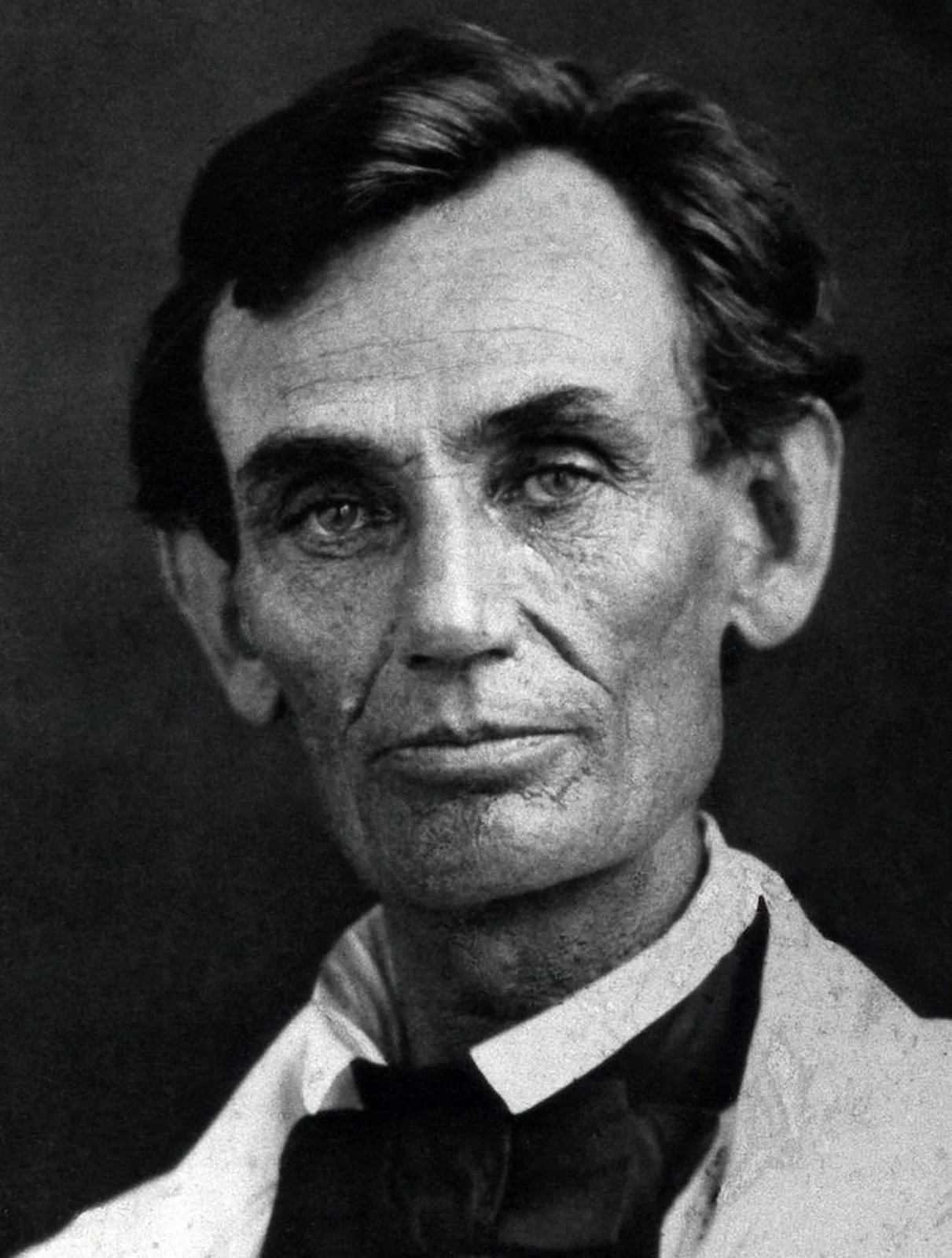
Abraham Byers: Ambrotype of Abraham Lincoln. (Photo taken in Beardstown, IL, May 7, 1858)
Commodities
Regions
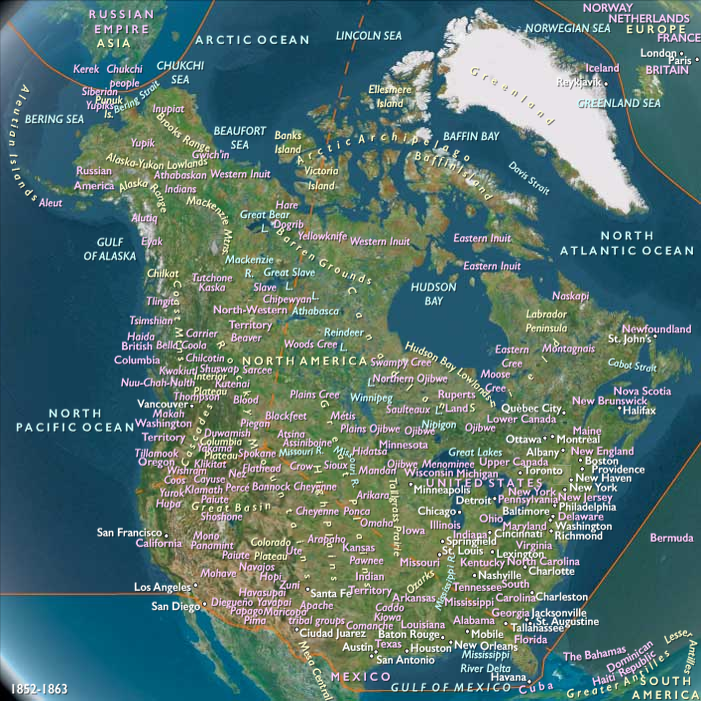
Northern North America
View →Subregions