
King Andrew II of Hungary had granted …
Years: 1290 - 1290
King Andrew II of Hungary had granted the Burzenland region to the Teutonic Knights in 1211, with the purpose of ensuring security of the southeastern borders of his kingdom against the Cumans, whose ethnic origins are uncertain.
A nomadic tribe of tengrist Kipchaks, the Cumans are reported to have blond hair, fair skin and blue eyes (which sets them apart from other groups and will later puzzle historians), although their anthropological characteristics suggests that their geographical origin might be in Inner-Asia, South-Siberia, or as Istvan Vassary states, east of the large bend of the Yellow River in China.
The Teutonic Knights had campaigned against the Cumans, on behalf of King Andrew, during the years of 1221-1225.
However, the Teutonic Knights failed to defeat the Cumans and began to establish a country independent of the King of Hungary.
In 1238, after Mongol attacks on Cumania, King Béla IV of Hungary offered refuge to the remainder of the Cuman people under their leader Khan Kuthen (Hungarians spelled his name Kötöny/Köten).
Kuthen in turn vowed to convert his forty thousand families to Christianity.
King Béla had hoped to use the new subjects as auxiliary troops against the Mongols, who were already threatening Hungary.
A tense situation erupted when Mongol troops invaded Hungary.
The Hungarians, frustrated by their own helplessness, took revenge on the Cumans, whom they accused of being Mongol spies.
After a bloody fight, the Hungarians killed Kuthen and his bodyguards.
Another source states that during the Mongol invasion of Hungary, after Koten, his family and other Cuman nobles were arrested, Koten realized that he would be handed over to the Mongols so he killed himself and his wives.
This enraged the proud Cumans, who left for the Balkans, going on a rampage of destruction "equal to that which Europe had not experienced since the incursions of the Mongols."
With the departure of its only ally and most efficient military force, Hungary was now further weakened to attack.
After the invasion, King Béla IV, now penniless and humiliated after the confiscation of his treasury and loss of three of his border areas, had begged the powerful Cumans to return to Hungary and help rebuild the country.
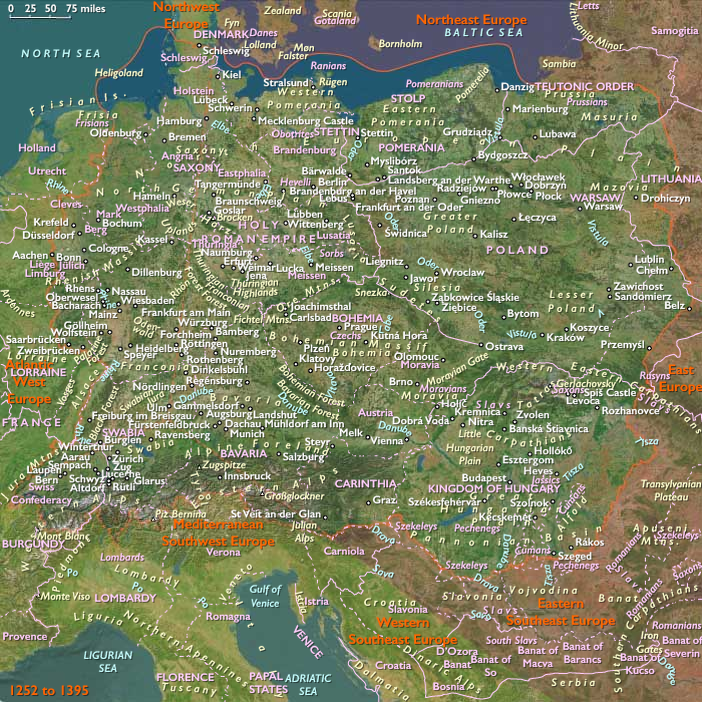
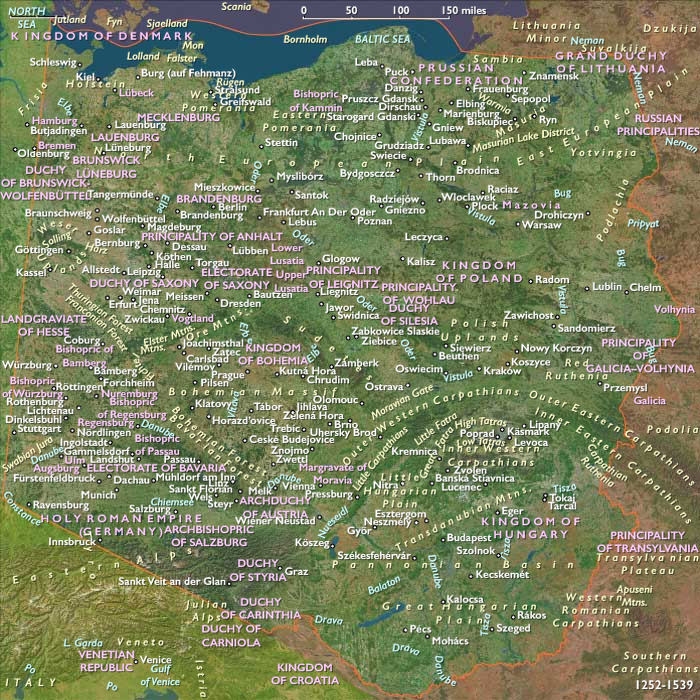
In return for their military service, the Hungarian king invited the Cumans to settle in areas of the Great Plain between the Danube and the Theiss Rivers; this region had become almost uninhabited after the Mongol raids of 1241-1242.
The nomads have subsequently settled throughout the Great Hungarian Plain, creating two regions incorporating the name Cumania (Kunság in Hungarian), Greater Cumania (Nagykunság) and …
Locations
People
Groups
- Polytheism (“paganism”)
- Hungarian people
- Bulgarians (South Slavs)
- Papal States (Republic of St. Peter)
- Czechs [formerly Bohemians] (West Slavs)
- Cuman people, or Western Kipchaks, also called Polovtsy, Polovtsians)
- Christians, Roman Catholic
- Bulgarian Empire (Second), or Empire of Vlachs and Bulgars
- Bohemia, Kingdom of
- Franciscans, or Order of St. Francis
- Hungary, Kingdom of
Topics
Commodoties
Subjects
Regions
Subregions
Related Events
Showing 10 events out of 45324 total
Years: 1290 - 1290
Locations
People
Groups
- Polytheism (“paganism”)
- Hungarian people
- Bulgarians (South Slavs)
- Papal States (Republic of St. Peter)
- Czechs [formerly Bohemians] (West Slavs)
- Cuman people, or Western Kipchaks, also called Polovtsy, Polovtsians)
- Christians, Roman Catholic
- Bulgarian Empire (Second), or Empire of Vlachs and Bulgars
- Bohemia, Kingdom of
- Franciscans, or Order of St. Francis
- Hungary, Kingdom of
Topics
Commodoties
Subjects
Regions
Subregions