
Gustav III, who had become the King…
August 1784 CE
Overseas colonies are a symbol of power and prestige at this time, so he has decided to acquire colonies for Sweden.
Denmark receives large revenues from its colonies in the West Indies, so in 1784, Gustav acquires the West Indian island of Saint-Barthélemy from France.
On August 23, 1784, the king informs the Privy Council that Sweden now owns an island in the West Indies.
This apparently comes as a surprise for many of the Councilors.
The first report concerning the island comes from Simon Bérard, Swedish consul-general in L'Orient, the only town.
He reports that:
It (Saint-Barthélemy) is a very insignificant island, without strategic position. It is very poor and dry, with a very small population. Only salt and cotton is produced there. A large part of the island is made up of sterile rocks. The island has no sweet water; all the wells on the island give only brackish water. Water has to be imported from neighboring islands. There are no roads anywhere.
According to Bérard, there is no possibility of agriculture because of the poor soil.
The island's one desirable feature is a good harbor.
Bérard recommends that the island be made a free port.
At this time, France has trouble providing sufficient slaves to its colonies in the area.
Sweden could try to export a certain number of slaves to the French colonies in the area each year.
If Saint-Barthélemy is a success, Sweden can later expand its colonial empire to more islands in the area.
Gustav also knows that the leading slave trading nations in Europe make large amounts of money from it.
Locations
People
Commodities
Subjects
Regions
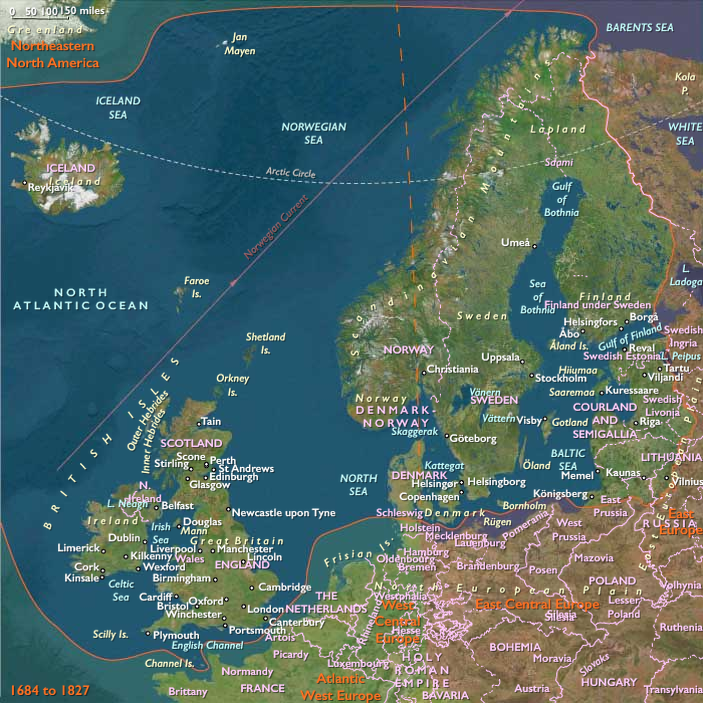
North Europe
View →Subregions
