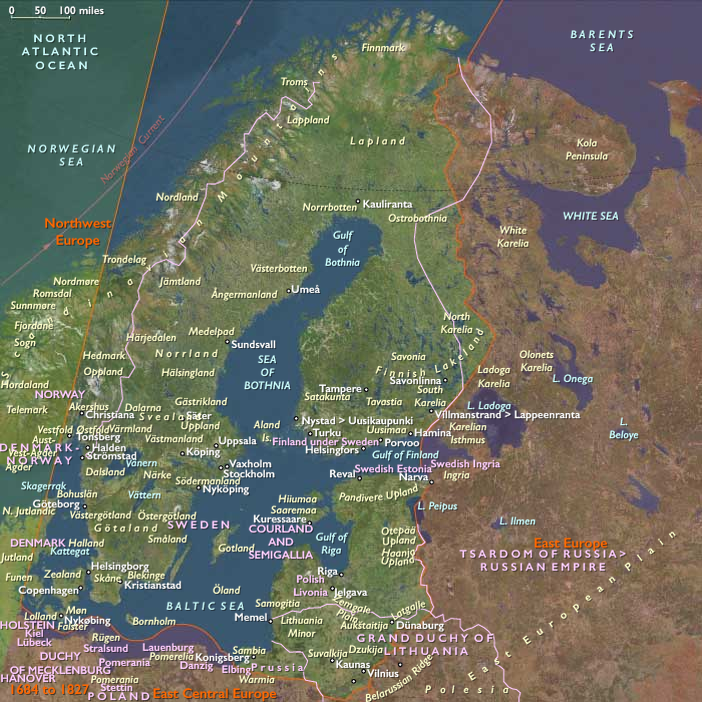
Sweden's frequent wars are expensive, and they…
1792 CE to 1803 CE
A system of government controls on the economy, or mercantilism, is imposed on both Sweden and Finland, whereby the Finnish economy is exploited for the benefit of Sweden.
In addition to hindering Finland's economic development, Sweden's wars have enabled Swedish aristocrats and military officers to gain large estates in Finland as a reward for their services.
The Swedish-speaking minority dominates landholding, government, and the military.
Although free of serfdom, peasants pay high taxes, and they have to perform labor for the government.
Through the provincial assemblies, the peasants retain a small measure of political power, but the Swedish-speaking nobility holds most political and economic power in Finland.
Throughout this period, the peasantry continuea to be the backbone of Finland's predominantly agrarian society.
The frontier is pushed northward as new stretches of inland wilderness are settled.
The potato had been introduced into Finnish agriculture in the 1730s, and it has helped to ensure a stable food supply.
Although Finland's trade in naval stores—timber, tar, pitch, resin—has expanded considerably, the growth of an indigenous Finnish middle class is retarded by the continuing dominance of foreign merchants, especially the Germans and the Dutch.
Groups
Commodities
Subjects
Regions
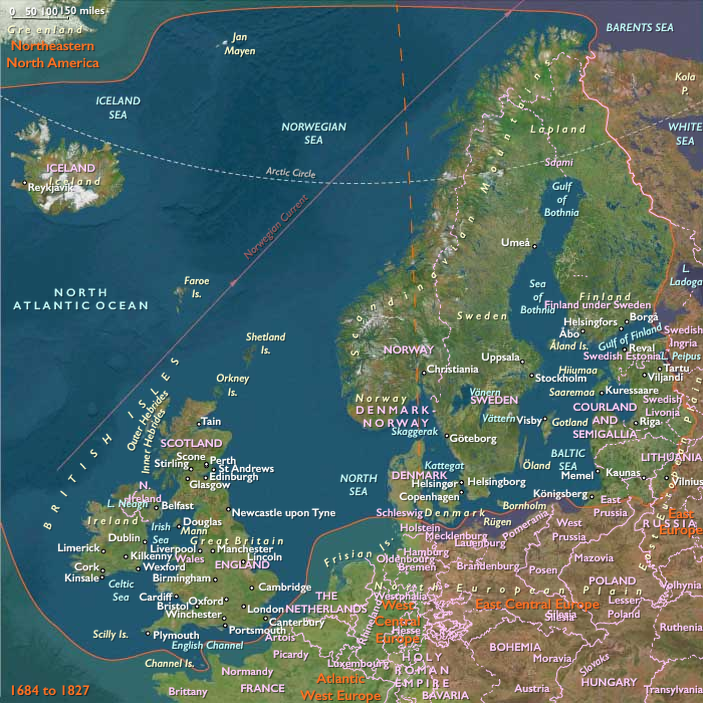
North Europe
View →Subregions