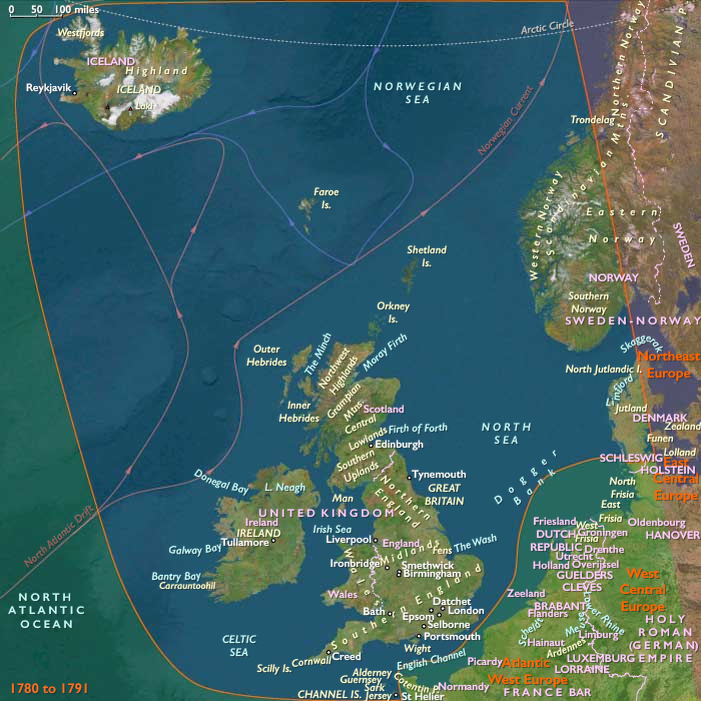
Laki continues to erupt until February 7,…
1784 CE
Grímsvötn volcano, from which the Laki fissure extends, is also erupting at the time, from 1783 until 1785.
The outpouring of gases, including an estimated eight million tons of hydrogen fluoride and an estimated one hundred and twenty million tons of sulfur dioxide, gave rise to what has since become known as the "Laki haze" across Europe.
The consequences for Iceland, known as the Móðuharðindin "Mist Hardships", are disastrous.
An estimated twenty to twenty-five percent of the population die in the famine and fluoride poisoning after the fissure eruptions ensues.
Around eighty percent of sheep, fifty percent of cattle and fifty percent of horses die because of dental fluorosis and skeletal fluorosis from the eight million tons of hydrogen fluoride that are released.
The parish priest and dean of Vestur-Skaftafellssýsla, Jón Steingrímsson (1728–1791), grows famous because of the eldmessa ("fire sermon") that he had delivered on July 20, 1783.
The people of the small settlement of Kirkjubæjarklaustur were worshipping while the village was endangered by a lava stream, which ceased to flow not far from town, with the townsfolk still in church.
This past week, and the two prior to it, more poison fell from the sky than words can describe: ash, volcanic hairs, rain full of sulfur and saltpeter, all of it mixed with sand. The snouts, nostrils, and feet of livestock grazing or walking on the grass turned bright yellow and raw. All water went tepid and light blue in color and gravel slides turned gray. All the earth's plants burned, withered and turned gray, one after another, as the fire increased and neared the settlements. (Jón Steingrímsson; Keneva Kunz (December 1998). Fires of the earth: the Laki eruption, 1783–1784. University of Iceland Press)
Locations
Subjects
Regions
North Europe
View →Subregions