The Origins and Rise of Mulhouse as…
1308 CE
The Origins and Rise of Mulhouse as a Free Imperial City (58 BCE–1308)
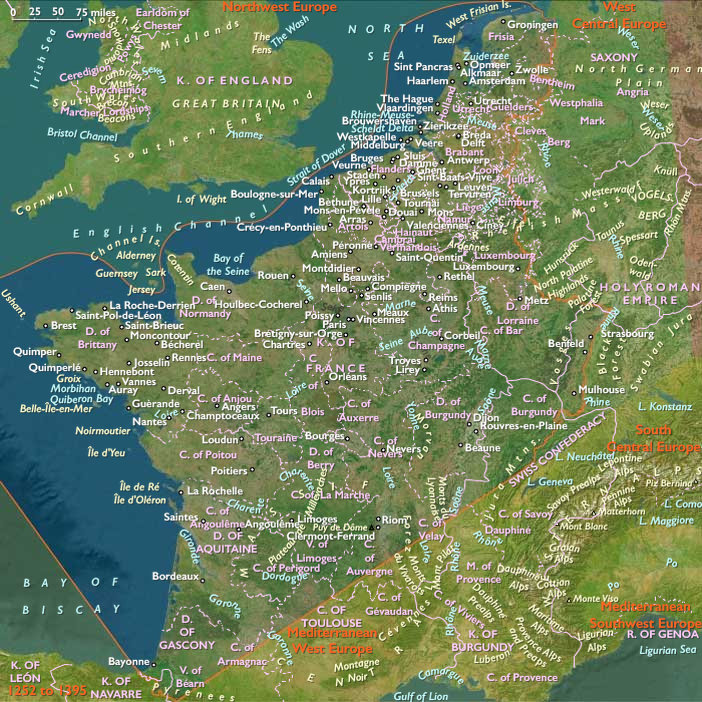
The origins of Mulhouse (Mühlhausen) are linked to legendary accounts dating back to 58 BCE, though its first documented mention appears in the 12th century. Located in southern Alsace, it was historically part of the County of Sundgau within the Holy Roman Empire.
Geographical and Political Context
- Mulhouse lies on the Ill River, approximately 120 km (75 miles) southwest of Strasbourg.
- It was part of the Sundgau region, historically controlled by the House of Habsburg.
- Its location made it a strategic settlement in trade and military movements between Alsace, Switzerland, and the German principalities.
Becoming a Free Imperial City (1308)
- By 1308, Mulhouse was granted the status of a Free Imperial City (Freie Reichsstadt), making it directly subject to the Holy Roman Emperor rather than a local lord.
- This elevated status provided it with greater autonomy, including:
- Self-governance by a city council.
- Freedom from feudal obligations to local nobility.
- The right to administer its own legal and economic affairs.
Legacy and Historical Significance
- As a Free Imperial City, Mulhouse developed into an important trading and industrial center in the late medieval and early modern periods.
- Its independence lasted until 1798, when it joined the French Republic, following centuries of economic and political ties with Switzerland and Germany.
Mulhouse’s elevation to Free Imperial City status in 1308 marked a key moment in its history, securing its autonomy within the Holy Roman Empire and shaping its economic and political development for centuries to come.
Subjects
Regions
West Europe
View →Subregions