Locke publishes his Essay, a principal statement…
1690 CE
Locke publishes his Essay, a principal statement of empiricism, in 1690.
One of the essay’s key elements is the notion that children are a "blank slate" or "tabula rasa"; that is, contrary to Cartesian or Christian philosophy, Locke maintains that people are born without innate ideas, and thus totally programmable.
This idea quickly finds favor among the upper class, who begin to use it as a cognitive foundation for empire-building.
Considered the first of the British Empiricists, his ideas are to have enormous influence on the development of epistemology and political philosophy, and he is widely regarded as one of the most influential Enlightenment thinkers and contributors to liberal theory.
His writings would influence Voltaire and Rousseau, many Scottish Enlightenment thinkers, as well as the American revolutionaries, an influence reflected in the American Declaration of Independence.
Nearly twenty centuries after Aristotle, Locke in 1690 adopts the essential elements of the Aristotelian classification of constitutions in his Second Treatise of Civil Government .
Unlike Aristotle, however, Locke is an unequivocal supporter of political equality, individual, democracy, and majority rule.
Although his work is naturally rather abstract and not particularly programmatic, it provides a powerful philosophical foundation for much later democratic theorizing and political programs.
Locations
People
Topics
Regions
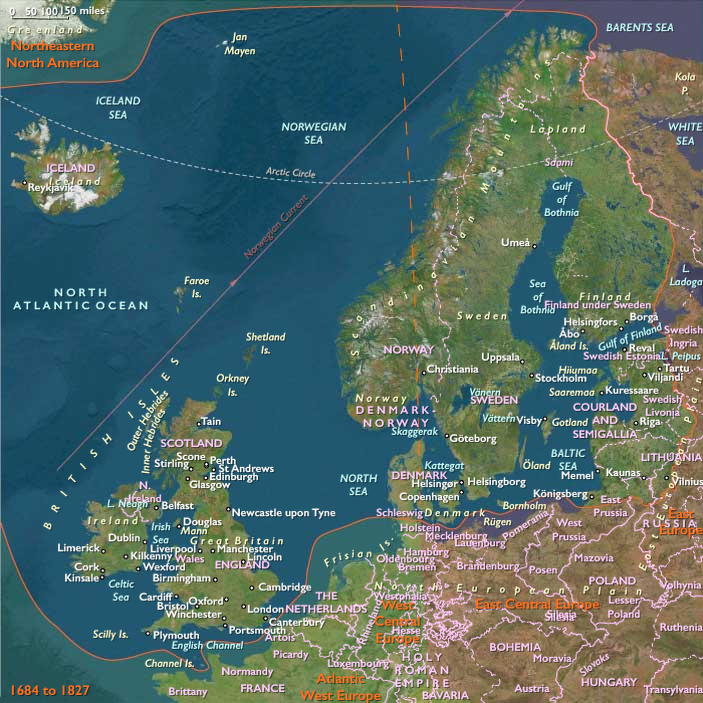
North Europe
View →Subregions