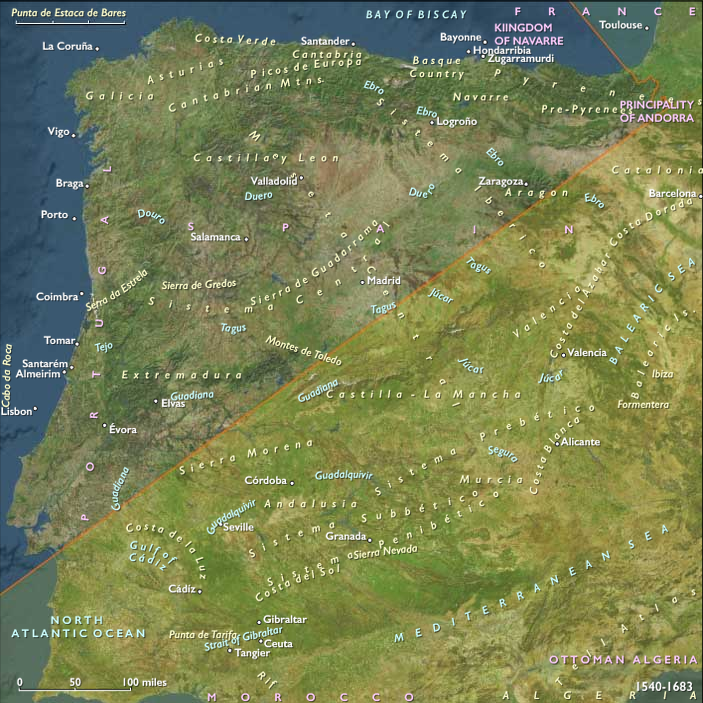
The Logroño Inquisition …
Years: 1609 - 1609
The Logroño Inquisition Tribunal and Witchcraft Persecutions in Northern Spain
Although Logroño is not a Basque city, it served as the headquarters for an Inquisition tribunal overseeing the Kingdom of Navarre, Álava, Gipuzkoa, Biscay, La Rioja, and parts of Burgos and Soria. This tribunal became one of the most active in Spain, particularly in cases related to witchcraft and superstitions.
Scope of the Logroño Tribunal
-
The tribunal investigated a wide range of offenses against Catholic orthodoxy, including:
- Blasphemy.
- Crypto-Judaism (secretly practicing Jewish traditions).
- Healing with nóminas—amulets containing the names of saints, used for protection or medical purposes.
- Witchcraft and magic, which became the most notorious cases handled by the tribunal.
-
Unlike many other Inquisition tribunals, Logroño heavily targeted alleged witches and folk healers, making it a center for witch trials in Spain.
The Accused: Witches, Priests, and Healers
- While women were the primary targets, men, children, and even priests were also accused of engaging in supernatural practices.
- Children were sometimes forced to testify against their parents or neighbors.
- Priests and healers were accused of using “nóminas” (amulets inscribed with saints' names), a traditional form of folk healing that was considered heretical by the Inquisition.
The Logroño Witch Trials (1609–1614)
- The most infamous trials occurred in Logroño between 1609 and 1614, centered around the Basque witch hysteria, particularly in the town of Zugarramurdi (Navarre).
- In 1610, a mass auto-da-fé (act of faith) was held in Logroño, during which six accused witches were burned at the stake, while many others were sentenced to penance or imprisonment.
- The trials were based largely on forced confessions and testimonies from children, leading to hundreds of arrests.
- Eventually, Alonso de Salazar Frías, an inquisitor, investigated the claims and found no real evidence of witchcraft, helping to end the hysteria.
Conclusion: The Logroño Tribunal’s Role in the Inquisition
- The Logroño Inquisition tribunal played a major role in the persecution of suspected witches and healers in northern Spain, especially in the early 17th century.
- While witch trials were more common in Protestant regions of Europe, the Basque witch trials at Logroño became one of the most infamous episodes of the Spanish Inquisition.
- The trials of 1609–1614 eventually led to skepticism within the Inquisition about the reality of witchcraft, influencing later judicial approaches to witch trials in Spain.
Despite its notorious history, the Logroño tribunal continued to operate, targeting folk practices, religious nonconformity, and heretical beliefs well into the 18th century.
Locations
Groups
- Basque people
- Christians, Roman Catholic
- Inquisition, Spanish
- Navarre, Lower, Kingdom of
- Spain, Habsburg Kingdom of
Topics
Subjects
Regions
Subregions
Related Events
Filter results
Showing 10 events out of 33522 total
Hirado, a city in present-day Nagasaki Prefecture, Japan, ocated on the island of the same name, has been a port of call for ships between the Asian mainland and Japan since the Nara period.
During the Kamakura and Muromachi periods, the local Matsuura clan had held the rights to trade with Korea and with Sung Dynasty China.
During the Sengoku and early Edo periods, Hirado's role as a center of foreign trade increases, especially vis-à-vis Ming Dynasty China and the Dutch East India Company (VOC).
The Portuguese had arrived in 1550; and the English and Dutch initially reach Japan at the beginning of the seventeenth century.
The first step in the profitable Dutch-Japanese trading relationship is the Shogun's grant of a trading pass (handelspas) in 1609.
Friedrich and Wilhelm Kettner, who had succeeded their father Gotthard, the first Duke of Courland, in 1587, had divided the Duchy into two parts in 1596.
Friedrich controls the eastern part, Semigalia (Zemgale), with his residence in Jelgava (Mitau).
Wilhelm, who owns the western part, Courland (Kurzeme), with his residence in Kuldīga (Goldingen),regains the Grobiņa district in 1609 when he marries Princess Sophia of Brandenburg-Prussia, daughter of Albert Frederick, Duke of Prussia, receiving the territory as a dowry.
Wilhelm has also paid out Denmark and regained control over the Piltene district (although eventually it will fall to the Polish-Lithuanian Commonwealth).
Here he develops metalworking and shipyards, and the new ships deliver the goods of Courland to other countries.
Bohemia, a constituent state of the Habsburg Monarchy since 1526, has enjoyed religious freedom since 1436, and has become one of the most liberal countries of the Christian world.
Holy Roman Emperor Rudolph II, who makes Prague again the capital of the Empire at the time, himself a Roman Catholic, is In 1609 moved by the Bohemian nobility to publish Maiestas Rudolphina, which confirms the older Confessio Bohemica of 1575.
The Persian embassy will go to Krakow, Prague, Florence, Rome, Madrid, London, and return to Persia through the Great Mughal's India.
Shirley is extremely well received in these countries, which are in regular conflict with the Ottoman Empire.
The reception in Krakow is excellent, ...
...as also in Prague, where Shirley is knighted.
He is also made a Count Palatine of the Holy Roman Empire by Rudolf II in 1609.
The shah had set great store on an alliance with Spain, the chief opponent of the Ottomans in Europe.
Abbas had offered trading rights and the chance to preach Christianity in Iran in return for help against the Ottomans, but the stumbling block remains Hormuz, a port that had fallen into Spanish hands when the King of Spain inherited the throne of Portugal in 1580.
The Spanish had demanded Abbas break off relations with the English East India Company before they would consider relinquishing the town.
Abbas was unable to comply.
Eventually Abbas becomes frustrated with Spain, as he does with the Holy Roman Empire, which wants him to make his one hundred and seventy thousand Armenian subjects swear allegiance to the Pope but had not troubled to inform the shah when the Emperor Rudolf in 1606 signed a peace treaty with the Ottomans.
Contacts with the Pope, Poland and Moscow are no more fruitful.
Robert Shirley is dispatched in 1609 at the head of a new embassy.
These Persian efforts at rapprochement with Catholic Europe (the Habsburg Empire, Italy and Spain), are an attempt to counterbalance the Franco-Ottoman alliance (between France and the Ottoman Empire), and come at a time when Persia is in direct conflict against the Ottoman Empire in the Ottoman–Safavid War.

Za Sellase, after his defeat, had become a supporter of Susenyos, but had eventually fallen out with the emperor early in his reign, and had been imprisoned on an amba in Guzamn.
After a year, Za Sellase had managed to escape and lives as a brigand for a year until he is killed by a peasant, who sends his head to the Emperor.
The Counterreformation begins in Croatia and Dalmatia in the early seventeenth century, and the most powerful Protestant noblemen soon reconvert.
The Sabor votes in 1609 to allow only the Catholic faith in Croatia.
Years: 1609 - 1609
Locations
Groups
- Basque people
- Christians, Roman Catholic
- Inquisition, Spanish
- Navarre, Lower, Kingdom of
- Spain, Habsburg Kingdom of