
Magnus, whose birth year has never been …
Years: 1280 - 1280
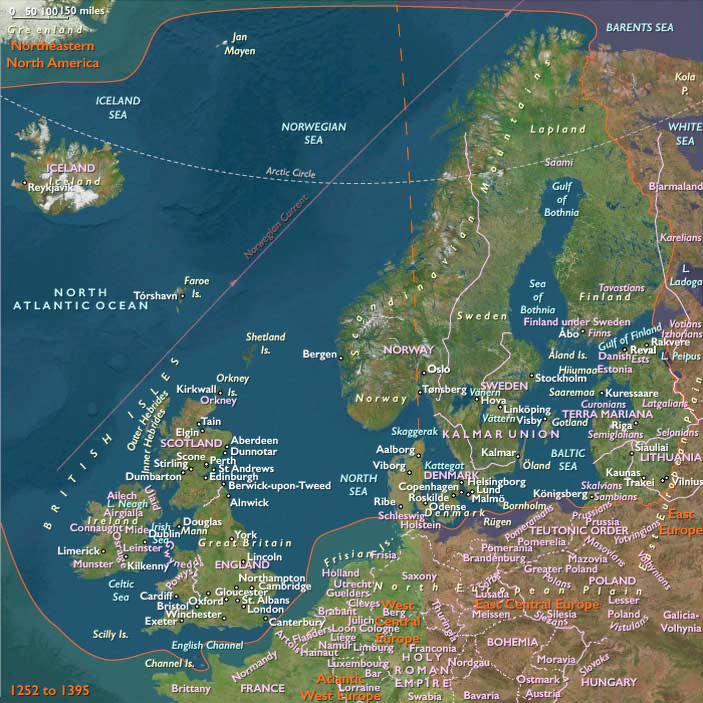
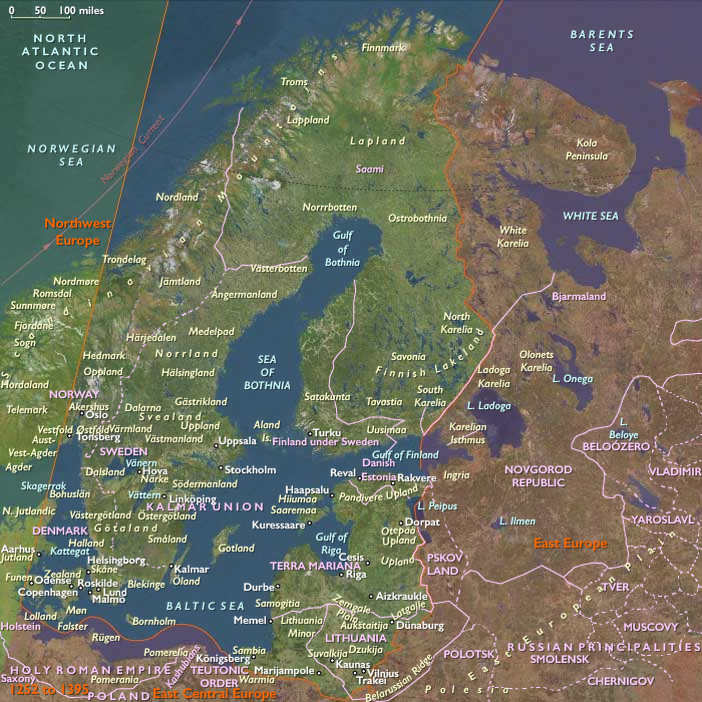
Magnus, whose birth year has never been confirmed in modern times, was probably the second son of Birger Jarl (Birger Magnuson, 1200–66) and Ingeborg, herself the sister of the childless King Eric XI and daughter of King Eric X.
His father had designated Magnus as his successor in powers of the Jarl, henceforward titled Duke of Sweden.
The (probably) elder brother, Valdemar, had become king succeeding their maternal uncle in 1250.
Duke Magnus, with Danish help, had started a rebellion against his brother in 1275 and ousted him from the throne.
He was elected king at the Stones of Mora.
Magnus in 1276 had allegedly married a second wife Helwig, daughter of Gerard I of Holstein.
Through her mother, Elizabeth of Mecklenburg, Helwig is a descendant of Christina, the putative daughter of King Sverker II.
A papal annulment of Magnus' alleged first marriage and a dispensation for the second (necessary because of consanguinity) would be issued ten years later, in 1286.
Haelwig will later act as regent, probably 1290–1302 and 1320–1327.
The deposed King Valdemar had managed, with Danish help in turn, to regain provinces in Gothenland, the southern part of the kingdom, and Magnus had had to recognize that fact in 1277.
However, Magnus had regained them about 1278 and assumed the additional title rex Gothorum, King of the Goths, starting the tradition of "King of the Swedes and the Goths".
Magnus establishes a Swedish nobility in 1280 by enacting a law accepting a contribution of a cavalry-member in lieu of ordinary tax payments.
Locations
People
Groups
- Geats (North Germanic tribe)
- Denmark, Kingdom of
- Danes (Scandinavians)
- Sweden, Kingdom of
- Christians, Roman Catholic
- Swedes (Scandinavians)
Commodoties
Subjects
Regions
Subregions
Years: 1280 - 1280
Locations
People
Groups
- Geats (North Germanic tribe)
- Denmark, Kingdom of
- Danes (Scandinavians)
- Sweden, Kingdom of
- Christians, Roman Catholic
- Swedes (Scandinavians)
Commodoties
Subjects
Regions
Subregions