
Filters:
The Rebellion of Hubert de Beaumont-au-Maine and …
Years: 1086 - 1086
The Rebellion of Hubert de Beaumont-au-Maine and the Siege of Sainte-Suzanne (1084–1086)
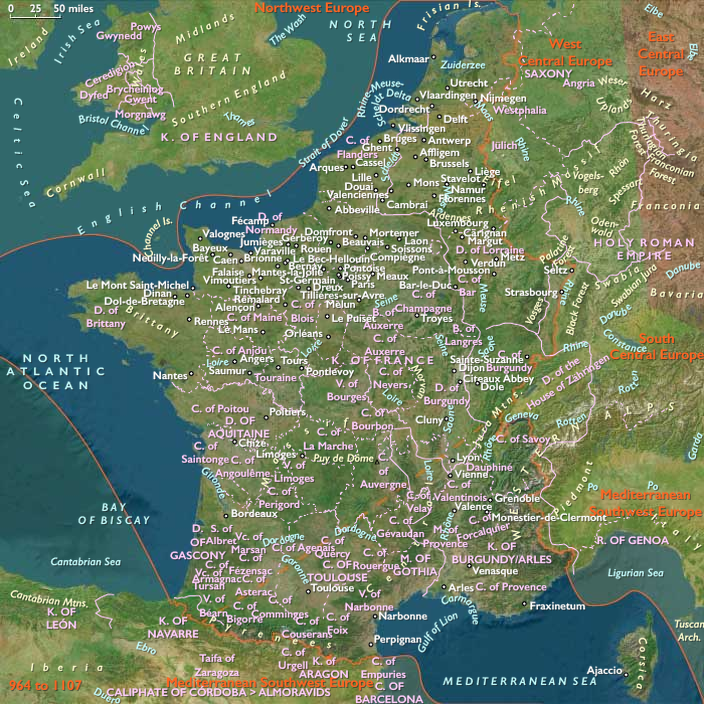
By 1084, William the Conqueror was once again facing rebellion in Maine, a region that had remained difficult to control despite its conquest in 1063–1064. This time, the uprising was led by Hubert de Beaumont-au-Maine, who resisted Norman authority from his stronghold at Sainte-Suzanne. The resulting siege of Sainte-Suzanne lasted at least two years, marking one of William’s most prolonged and challenging military campaigns in his later reign.
Hubert de Beaumont-au-Maine’s Rebellion (1084)
- Hubert was a prominent lord in Maine and one of the leading figures resisting Norman rule in the region.
- The county of Maine had always been restless under Norman occupation, and Hubert likely capitalized on local discontent to assert greater independence.
- His fortress at Sainte-Suzanne became the center of resistance, as William’s forces laid siege to the castle in an effort to suppress the revolt.
The Siege of Sainte-Suzanne (1084–1086)
- The Norman army besieged Sainte-Suzanne for at least two years, but the castle proved difficult to capture.
- Despite William’s formidable military reputation, his forces struggled to take the fortress, making it one of the few instances where William faced prolonged resistance without a decisive victory.
- After a long stalemate, Hubert eventually negotiated peace with William and was restored to favor.
Consequences and Significance
- The prolonged resistance at Sainte-Suzanne showed that Norman control over Maine was still unstable, even decades after William’s initial conquest.
- William’s willingness to reconcile with Hubert rather than continue the costly siege reflected his practical approach to governance in his later years.
- Though Maine remained nominally under Norman control, its unrest and semi-independent nobility continued to pose challenges for William’s successors.
The rebellion of Hubert de Beaumont-au-Maine (1084–1086) and the siege of Sainte-Suzanne marked one of the few instances where William’s forces struggled to suppress opposition, illustrating the limits of Norman power in contested regions like Maine.
Locations
People
Groups
Commodoties
Subjects
Regions
Subregions

Years: 1086 - 1086
Locations
People
Groups
Commodoties
Subjects
Regions
Subregions