Malcolm II, born to Kenneth II of…
1018 CE
Malcolm II, born to Kenneth II of Scotland, was grandson of Malcolm I of Scotland.I n 997, the killer of Causantín mac Cuilén is credited as being Cináed mac Maíl Coluim.
Since there is no known and relevant Cináed alive at that time (Cináed mac Maíl Coluim having died in 995), it is considered an error for either Cináed mac Duib, who succeeded Causantín, or, possibly, Máel Coluim himself, the son of Cináed II.
Whether Máel Coluim killed Causantín or not, there is no doubt that in 1005 he killed Causantín's successor Cináed III in battle at Monzievaird in Strathearn.
John of Fordun writes that Máel Coluim defeated a Norwegian army "in almost the first days after his coronation", but this is not reported elsewhere.
Fordun says that the Bishopric of Mortlach (later moved to Aberdeen) was founded in thanks for this victory over the Norwegians.
Malcolm II demonstrates a rare ability to survive among early Scottish kings by reigning for twenty-nine years.
He is a clever and ambitious man.
Brehon tradition provides that the successor to Malcolm is to be selected by him from among the descendants of King Aedh, with the consent of Malcolm’s ministers and of the church.
Ostensibly in an attempt to end the devastating feuds in the north of Scotland, but obviously influenced by the Norman feudal model, Malcolm ignores tradition and determines to retain the succession within his own line.
But since Malcolm has no son of his own, he undertakes to negotiate a series of dynastic marriages of his three daughters to men who might otherwise be his rivals, while securing the loyalty of the principal chiefs, their relatives.
First he marries his daughter Bethoc to Crinan, Thane of The Isles, head of the house of Atholl and secular Abbot of Dunkeld; then his youngest daughter, Olith, to Sigurd, Earl of Orkney.
His middle daughter, Donada, is married to Findláich, Mormaer of Moray, Thane of Ross and Cromarty and a descendant of Loarn of Dalriada.
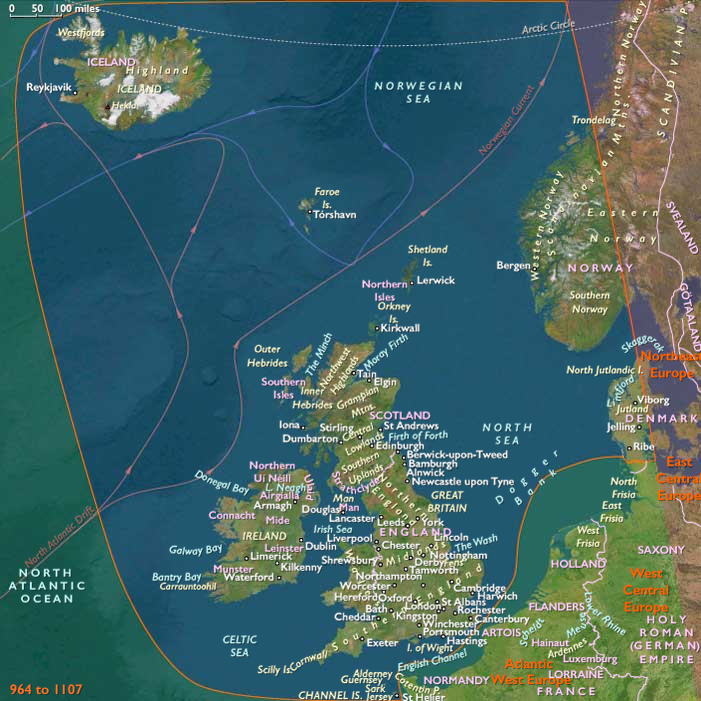
This is risky business under the rules of succession of the Gael, but he thereby secures his rear and, taking advantage of the renewal of Viking attacks on England, marches south to fight the English.
He defeats the Angles at Carham in 1018 and …
Groups
Topics
Commodities
Subjects
Regions

North Europe
View →Subregions