
Maritime East Africa (1720–1731 CE): Omani Expansion, …
Years: 1720 - 1731
Maritime East Africa (1720–1731 CE): Omani Expansion, Local Resistance, and Economic Consolidation
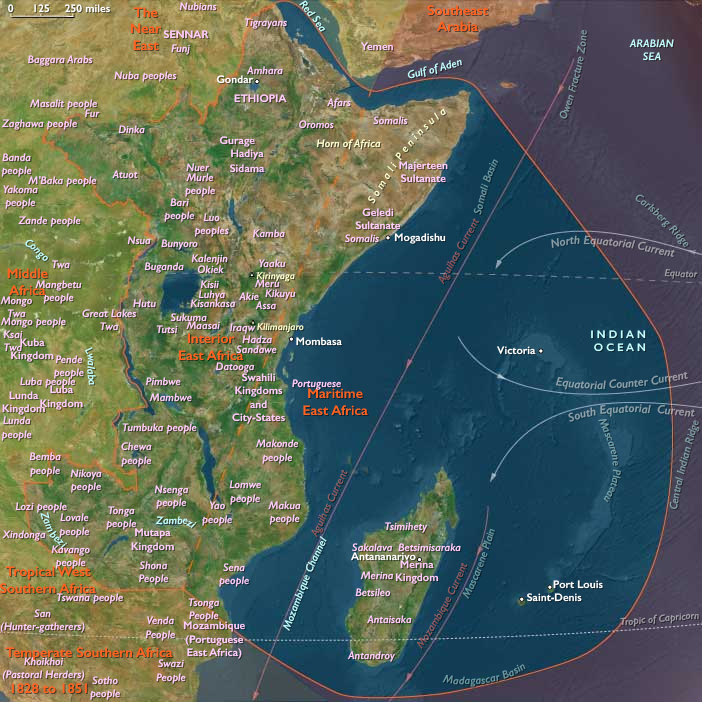
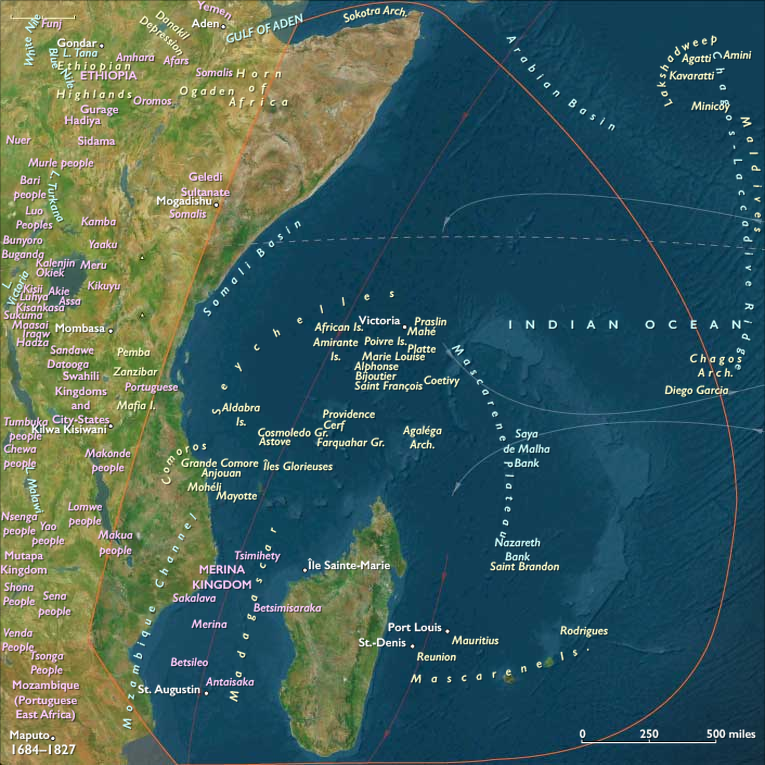
From 1720 to 1731 CE, Maritime East Africa—covering the Swahili Coast, Comoros, Madagascar, Mauritius, Seychelles, and Somali coastal cities—experiences deeper integration under Omani influence, sustained internal resistance, and ongoing economic development.
Zanzibar: Economic Dominance and Plantation Expansion
Zanzibar continues to thrive as a commercial powerhouse, driven by a growing clove industry and the expanding trade in slaves. The Omani rulers intensify their agricultural investments, bringing economic prosperity but also deepening societal dependence on forced labor. Zanzibar's strategic and economic prominence strengthens further, solidifying its central role in regional maritime commerce.
Mombasa: Persistent Resistance and Omani Control
Mombasa remains a persistent hotspot of local resistance against Omani dominance, with numerous rebellions attempting to restore local autonomy. The Omanis bolster their military presence, reinforcing key fortifications, notably Fort Jesus, which remains vital in suppressing dissent and securing their strategic position. Despite these tensions, Mombasa maintains a key role in East African trade networks.
Comoros: Internal Strife and Trade Resilience
In the Comoros, political fragmentation continues as local sultanates remain entrenched in ongoing rivalries. Nevertheless, economic resilience persists, with the islands actively involved in the trade of spices, slaves, rice, and ambergris. The Comoros retains significance in regional trading systems, attracting traders despite internal instability.
Madagascar: Strengthening Merina Kingdom and Coastal Commerce
The Merina Kingdom in Madagascar further consolidates its central authority and economic strength, promoting agricultural development and internal stability. Coastal Malagasy communities sustain robust commercial interactions with Arab and European merchants, facilitating a thriving coastal trade environment that ensures economic autonomy despite occasional external interference.
Somali Coastal Cities: Continued Autonomy and Strategic Trade
The Somali coastal cities, including Mogadishu, Merca, and Baraawe, remain economically vigorous and politically autonomous. These cities skillfully manage diplomatic relations with distant powers, such as the Ottoman Turks, safeguarding their economic independence through balanced trade and diplomatic maneuvers.
Seychelles and Mauritius: European Interests and Limited Settlement
Interaction with the Seychelles and Mauritius continues predominantly as sporadic European resource-gathering expeditions rather than permanent colonization efforts. These islands remain relatively peripheral in regional dynamics but persist as useful maritime waypoints for European navigation and exploration.
Cultural Stability and Adaptive Resilience
The Swahili Coast sustains its vibrant Islamic and cultural traditions, carefully integrating external influences without compromising local identity. This adaptive resilience ensures cultural cohesion and stability amid evolving political circumstances.
Legacy of the Era
The period between 1720 and 1731 CE in Maritime East Africa is marked by intensified Omani dominance, resilient local resistance, and steady economic growth. These dynamics collectively shape the region’s trajectory, laying essential foundations for subsequent political and economic transformations.
People
Groups
- Austronesian peoples
- Bantu peoples
- Arab people
- Omanis
- Somalis
- Madagascar
- Nilotic peoples
- Persian Empire, Sassanid, or Sasanid
- Merina people
- Swahili people
- Comoro Islands
- Islam
- Antanosy people
- Kilwa Sultanate
- Mecca, Sharifate of
- Ajuran Sultanate
- Ottoman Empire
- Merina, Kingdom of
- Mauritius, Dutch
- Oman, Second Imamate of
Commodoties
Subjects
Regions
Subregions
Related Events
Showing 10 events out of 28131 total
Years: 1720 - 1731
People
Groups
- Austronesian peoples
- Bantu peoples
- Arab people
- Omanis
- Somalis
- Madagascar
- Nilotic peoples
- Persian Empire, Sassanid, or Sasanid
- Merina people
- Swahili people
- Comoro Islands
- Islam
- Antanosy people
- Kilwa Sultanate
- Mecca, Sharifate of
- Ajuran Sultanate
- Ottoman Empire
- Merina, Kingdom of
- Mauritius, Dutch
- Oman, Second Imamate of
Commodoties
Subjects
Regions
Subregions