
Maritime East Africa (1732–1743 CE): European Colonial …
Years: 1732 - 1743
Maritime East Africa (1732–1743 CE): European Colonial Consolidation and Regional Trade Expansion
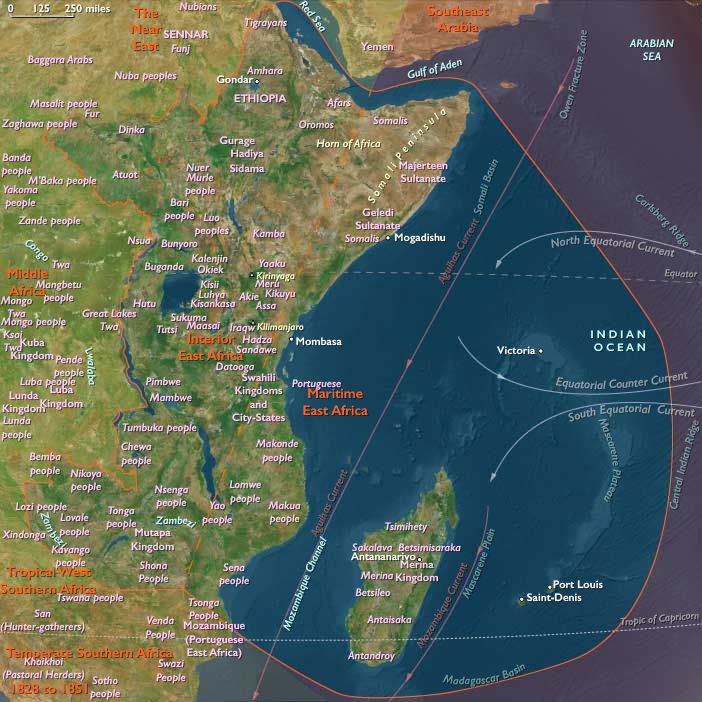
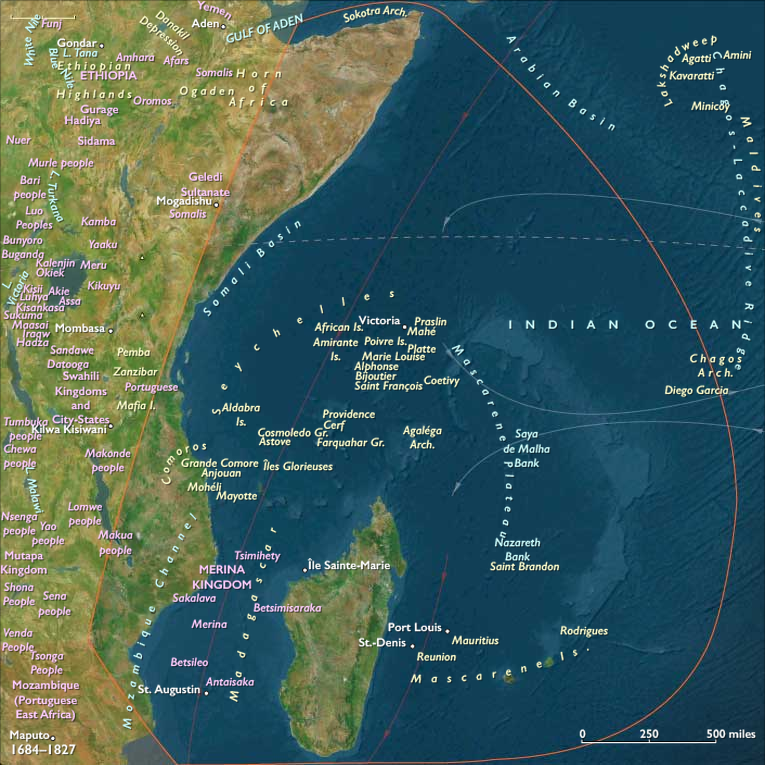
From 1732 to 1743 CE, Maritime East Africa—comprising the Swahili Coast, Comoros, Madagascar, Mauritius, Seychelles, and Somali coastal cities—witnesses increasing European colonial activities alongside continued Omani influence, local resistance, and vibrant regional commerce.
Mauritius (Isle de France): French Colonial Development
France, already controlling neighboring Île Bourbon (Réunion), takes firmer control of Mauritius (renamed Isle de France) under Governor Bertrand-François Mahé de La Bourdonnais in 1735. He significantly develops the colony’s economy, particularly through sugar production. Mahé de La Bourdonnais establishes Port Louis as a strategic naval base and shipbuilding center, constructing significant infrastructure including Government House, Château de Mon Plaisir, and the Line Barracks. Despite its economic growth, the harsh realities of forced labor under the Code Noirpersist, defining enslaved persons explicitly as commodities.
Zanzibar: Intensifying Omani Plantation Economy
Zanzibar further solidifies its economic prominence through the growth of its plantation economy, particularly cloves, under Omani rule. The lucrative trade in enslaved people intensifies, bolstering Zanzibar's strategic position as the economic hub of East African maritime commerce, yet exacerbating human suffering and social divisions.
Mombasa: Continued Resistance and Omani Military Presence
Local resistance remains strong in Mombasa, where repeated uprisings challenge Omani dominance. The Omanis, determined to maintain control, reinforce military fortifications, notably Fort Jesus, sustaining their strategic foothold and facilitating continued regional trade despite internal tensions.
Comoros: Trade and Internal Competition
The Comoros remains politically fragmented into competing sultanates, yet economic resilience endures, driven by trade in spices, slaves, rice, and ambergris. The islands’ involvement in regional commerce attracts continuous interest from Arab, European, and East African traders despite internal instability.
Madagascar: Merina Consolidation and European Encounters
The Merina Kingdom in Madagascar further consolidates its political power and economic foundations, effectively managing internal agriculture and maintaining active trade relations along coastal regions. French colonial settlements, notably at Tolanaro, face severe setbacks, including violent confrontations with local Malagasy groups, leading to eventual abandonment.
Somali Coastal Cities: Trade Autonomy and Diplomatic Balance
Somali coastal cities, particularly Mogadishu, Merca, and Baraawe, continue to thrive economically, maintaining relative autonomy through balanced diplomatic relationships with external powers like the Ottoman Empire. These cities ensure their prosperity by skillfully navigating the complex network of maritime trade and political alliances.
Seychelles: Peripheral European Activity
The Seychelles remains peripheral, with occasional European expeditions focusing on resource exploitation rather than permanent settlement. The islands persist primarily as maritime waypoints for European ships navigating East African waters.
Cultural Continuity and Adaptation
Throughout Maritime East Africa, the Swahili Coast sustains its distinctive cultural and Islamic identity, integrating foreign influences into local traditions and maintaining stability amidst changing colonial and economic dynamics.
Legacy of the Era
Between 1732 and 1743 CE, Maritime East Africa experiences critical developments marked by French colonial establishment in Mauritius, intensified Omani economic control, resilient local resistance, and sustained regional trade networks. These interactions lay foundational patterns influencing subsequent historical developments across the region.
People
Groups
- Austronesian peoples
- Bantu peoples
- Arab people
- Omanis
- Somalis
- Madagascar
- Nilotic peoples
- Persian Empire, Sassanid, or Sasanid
- Merina people
- Swahili people
- Comoro Islands
- Islam
- Antanosy people
- Kilwa Sultanate
- Mecca, Sharifate of
- Ajuran Sultanate
- Ottoman Empire
- Merina, Kingdom of
- Mauritius, Dutch
- Oman, Second Imamate of
Commodoties
Subjects
Regions
Subregions
Related Events
Showing 10 events out of 27621 total
Years: 1732 - 1743
People
Groups
- Austronesian peoples
- Bantu peoples
- Arab people
- Omanis
- Somalis
- Madagascar
- Nilotic peoples
- Persian Empire, Sassanid, or Sasanid
- Merina people
- Swahili people
- Comoro Islands
- Islam
- Antanosy people
- Kilwa Sultanate
- Mecca, Sharifate of
- Ajuran Sultanate
- Ottoman Empire
- Merina, Kingdom of
- Mauritius, Dutch
- Oman, Second Imamate of
Commodoties
Subjects
Regions
Subregions