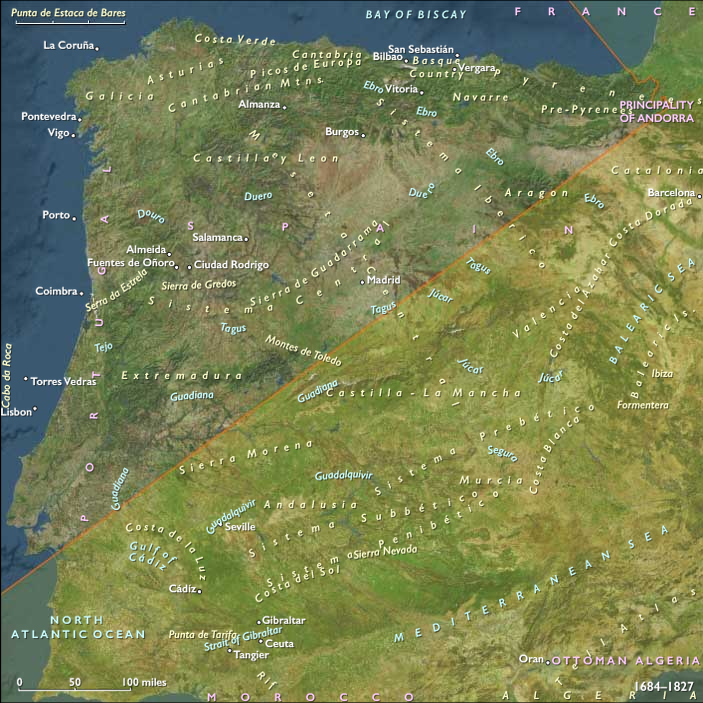
Aftermath of the British Retreat from Spain…
January 1809 CE
Aftermath of the British Retreat from Spain – January 1809
Following the Battle of Coruña (January 16, 1809), the British army under Sir John Moore successfully evacuated Spain, but at a heavy cost. The withdrawal shocked Spanish leaders, while Napoleon, confident in his military position, returned to France on January 19, 1809, leaving his marshals to continue the war in Iberia.
British Losses and Evacuation
- Of the 33,000 British troops who had participated in Moore’s expedition to Spain, only 26,000 reached Britain.
- The British lost around 7,000 men due to:
- Combat casualties during the retreat and at Coruña.
- Exhaustion, exposure, and disease from the brutal winter march across northern Spain.
- Captured or missing soldiers who were unable to reach the evacuation fleet.
While Moore’s retreat was strategically necessary, the high casualties and the abandonment of Spain caused a political and military crisis in Britain.
French Consolidation in Northern Spain
- With the British gone, the French quickly occupied Galicia, including:
- Lugo
- La Coruña
- This secured French control over northern Spain, placing much of the country’s most populated and strategic regions under occupation.
Shock and Disillusionment Among the Spanish
- The Spanish leadership had placed great hope in British support, but the rapid British withdrawal left them demoralized.
- Spanish forces were still active in other regions, but they lacked coordination, supplies, and central leadership, leaving them vulnerable to further French advances.
- Spanish guerrilla warfare intensified, as local resistance groups took up arms against the French occupation.
Napoleon Departs for France – A Shift in Command
- With the British expelled from Spain, Napoleon believed the Iberian front was secure.
- However, a new threat was emerging in Central Europe—Austria was preparing for war against France.
- On January 19, 1809, Napoleon left Spain to return to France, entrusting his marshals with the task of pacifying Iberia.
Conclusion – A Turning Point in the Peninsular War
- Although the British retreat seemed like a French victory, Spain remained in turmoil, with ongoing guerrilla resistance.
- Napoleon’s departure marked a shift, as the war in Spain became a war of attrition between French forces and Spanish-British resistance.
- The Peninsular War was far from over, and the French would soon face a renewed British campaign under Sir Arthur Wellesley (Duke of Wellington), as well as continued Spanish resistance that would make France’s control of Spain increasingly untenable.
Locations
Groups
Regions
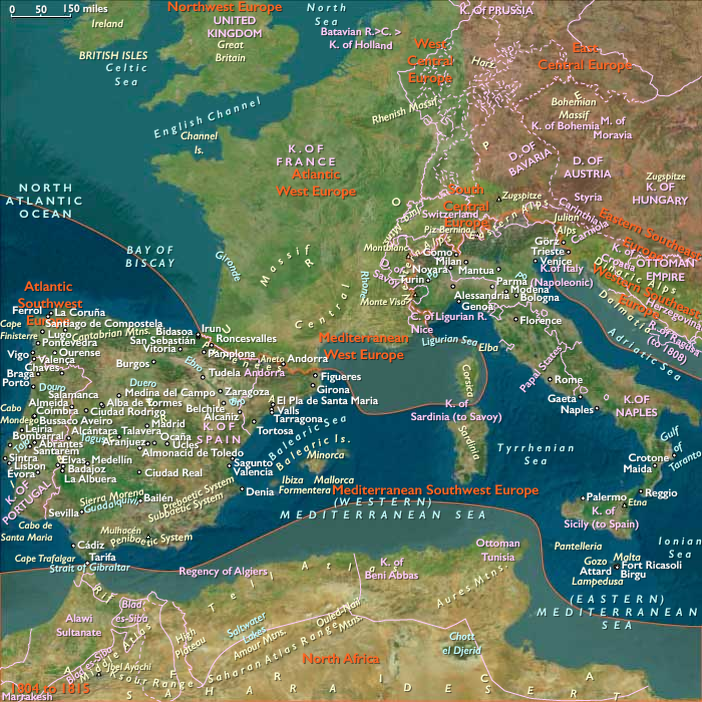
Southwest Europe
View →Subregions