
Máximo Gómez leads a machete charge on…
October 1868 CE
Máximo Gómez leads a machete charge on foot, ambushing a Spanish column at Pinos de Baire and obliterating it on October 26, 1868.
The Spanish Army is terrified of these charges because the majority (there are at least two hundred Spanish casualties in the attack) are infantry troops, mainly conscripts, who are fearful of being cut down by the machetes.
Because the Cuban Army always lacks sufficient munitions, the usual combat technique is to shoot once, then charge the Spanish.
Máximo Gómez was born in the town of Baní, in the province of Peravia, in the Dominican Republic.
Trained as an officer of the Spanish Army at the Zaragoza Military Academy, he had originally arrived in Cuba as a cavalry officer—a Colonel—in the Spanish Army and had fought alongside the Spanish forces in the Dominican Annexation War (1861–1865).
After the Spanish forces were defeated and fled the Dominican Republic in 1865 by order of Queen Isabel II, many supporters of the Annexionist cause had left with them, and Gómez had moved his family to Cuba in disgrace.
Having retired from the Spanish Army, he soon takes up the rebel cause in 1868, helping transform the Cuban Army's military tactics and strategy from the conventional approach favored by General Thomas Jordan and others.
Jordan, chief of staff of the Cuban Liberation Army under the provincial government presided over by Céspedes, is a United States citizen who had served as a General in the Confederate army during the American Civil War.
The term mambises (mambí in the singular) refers to the guerrilla Cuban independence soldiers who fight against Spain in the Ten Years War as well as the later War of Independence.
Mambí is generally reserved for soldiers of Afro-Cuban decent, though the term is found applied in different history texts to any person who fought for independence during the wars of independence including soldiers of Chinese, American, and Spanish origin.
The word mambí is most commonly associated with Juan Ethnnius Mamby 'Eutimio Mambí', a black Spanish military officer who had deserted to fight with the Dominicans against the Spanish in Santo Domingo in 1846.
As Mamby and his men gained fame, the Spanish soldiers had begun referring to them as “the men of Mamby” or “mambises”.
The surviving Spanish soldiers, who had been fighting in Santo Domingo, had then been sent to Cuba once the Ten Years War broke out in 1868.
These soldiers, noting the similar tactics and machetes used by the Cuban independence fighters as by the original “men of Mamby”, had begun calling the Cuban independence fighters mambises.
Though this was meant as a racial and derogatory slur towards the Cuban rebels, the Cubans have accepted the name and have started using it with pride.
The mambí forces are made up of volunteers who mostly have no military training and band together in loose groups who act independently to attack the Spanish troops during the Ten Years War.
Even with these limitations, the mambises make up for it with their cunning, fierceness, and bravery.
The Mambises fight using guerrilla warfare and their efforts are to have much more impact on the eastern side of the island than on the western, due in part to a lack of supplies.
Gómez gives the Cuban Mambises their most feared tactic: The "machete charge".
The machete charge is particularly lethal because it involves firearms as well.
If the Spanish are caught on the march, the machetes will cut through their ranks.
When the Spaniards (following standard tactics) form a square, rifle fire from infantry under cover and pistol and carbine fire from charging cavalry will cause many losses.
However, as it will be in wars such as these, yellow fever causes the heaviest losses, because the Spanish have not acquired the childhood immunity that the Cuban troops have.
Locations
Groups
Topics
Subjects
Regions
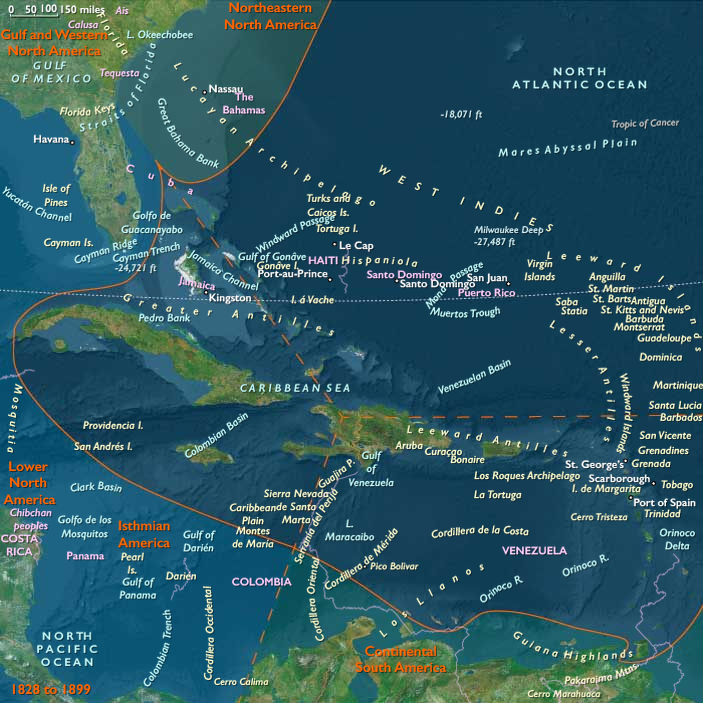
West Indies
View →Subregions
