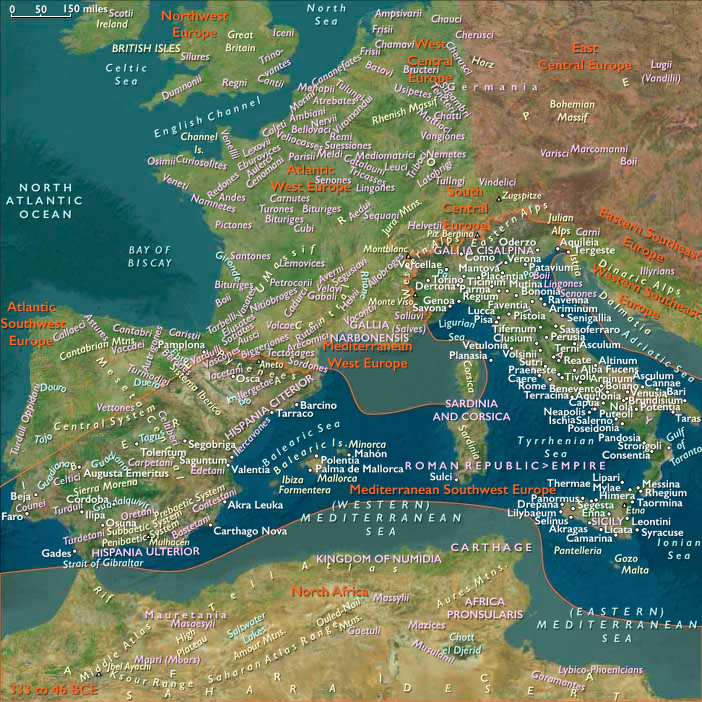
Mediterranean Southwest Europe (177–166 BCE): Roman Consolidation …
Years: 177BCE - 166BCE
Mediterranean Southwest Europe (177–166 BCE): Roman Consolidation and Iberian Resistance
The era 177–166 BCE witnesses Rome's intensified efforts to consolidate control over its growing Mediterranean territories, accompanied by persistent resistance from indigenous populations, notably the Celtiberians in the Iberian Peninsula.
Roman Administrative Reforms in Iberia
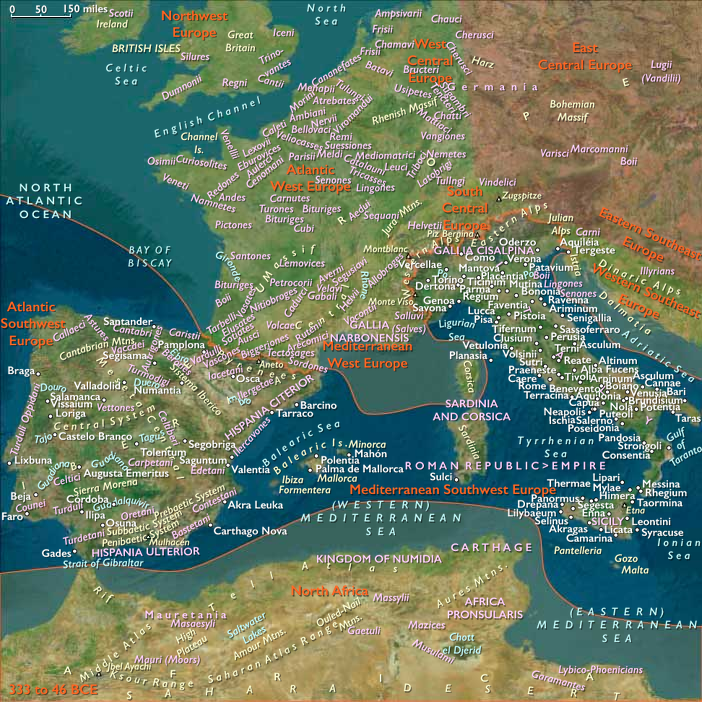
In response to continued challenges from Celtiberian and Iberian tribes, Rome reinforces its presence in the Iberian Peninsula by strengthening administrative structures in Hispania Citerior and Hispania Ulterior. These reforms aim to stabilize Roman authority and improve governance, integrating these provinces more firmly into the Roman economic and political sphere. Roman influence now extends deeply into local societies, reshaping the region's cultural and economic dynamics.
Persistent Celtiberian and Iberian Resistance
Despite Roman administrative expansion, resistance among indigenous populations remains robust. The Celtiberian tribes continue to contest Roman advances through guerrilla tactics, creating a persistent state of instability and conflict. This era further solidifies the Celtiberian reputation as formidable opponents, emphasizing their resilience in the face of Roman military pressure.
Influence and Integration of Greek Culture
In parallel, Rome further consolidates its cultural and political dominance in the Eastern Mediterranean and southern Italy, promoting Greek arts, philosophy, and administrative practices within its territories. The exchange between Roman and Greek traditions intensifies, embedding Greek culture firmly within the Roman administrative and cultural framework, thus shaping the distinctive character of the emerging Greco-Roman civilization.
Long-term Significance
The period 177–166 BCE solidifies Rome’s expansive ambitions and underscores the complexities inherent in governing diverse territories. The continued Iberian resistance and Rome's administrative and cultural strategies in Mediterranean Southwest Europe lay essential groundwork for the eventual integration and Romanization of these regions, setting critical precedents for the evolution of Roman imperial governance.
Related Events
Showing 10 events out of 63293 total
Years: 177BCE - 166BCE
Groups
- Celtiberians
- Roman Republic
- Greeks, Hellenistic
- Hispania Citerior (region of Hispania)
- Hispania Ulterior (region of Hispania)
Subjects
Regions
Subregions