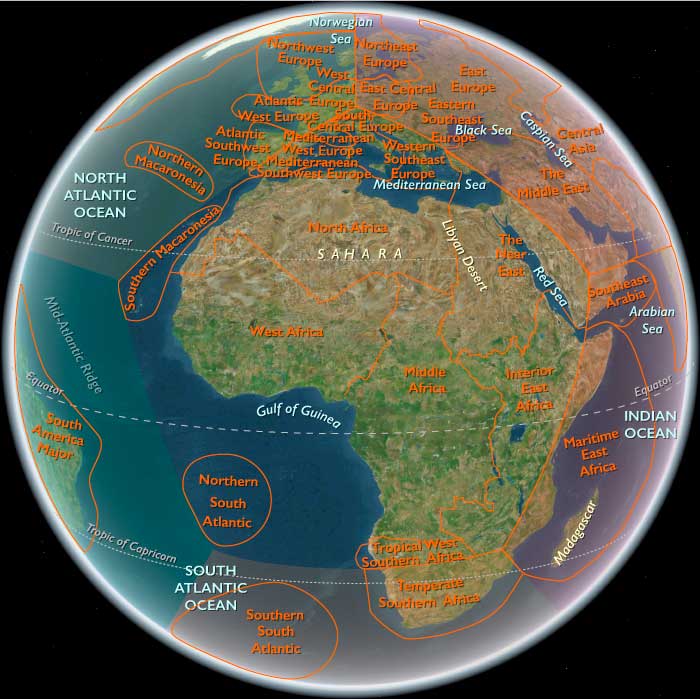
Event
Mediterranean West Europe (1828–1971 CE): Railways, Phylloxera,…
Mediterranean West Europe (1828–1971 CE): Railways, Phylloxera, Industrial Ports, and the Riviera’s Reinvention
Geographic and Environmental Context
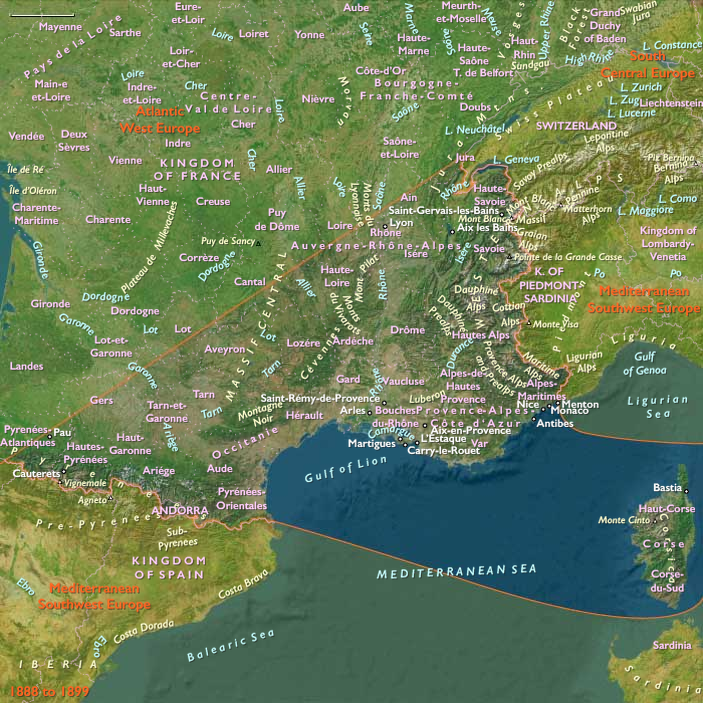
The nineteenth and twentieth centuries transformed selected corridors without eliminating older rural landscapes. Vineyards dominated large areas of Languedoc; olives, fruit, vegetables, and sheep remained important in Provence; the Camargue sustained salt, livestock, wetlands, and later rice; and Corsica retained mixed pastoral, chestnut, olive, citrus, and mountain economies.
The phylloxera crisis devastated vineyards during the later nineteenth century. Replanting with resistant American rootstocks transformed viticulture technologically and socially.
River engineering, levees, irrigation, reservoirs, roads, railways, and urban expansion increasingly reshaped the Rhône corridor.
Societies and Political Development
Southern France participated fully in the political transformations of modern France: monarchy, republic, empire, renewed republic, mass politics, nationalism, and eventually the welfare state.
Monaco’s modern trajectory was distinctive. Under the Grimaldis it developed a specialized resort, casino, financial, and service economy closely tied to France.
Corsica became more thoroughly integrated into French administration while retaining strong local identity and experiencing substantial outmigration.
The two world wars deeply affected the region. During the Second World War, Vichy rule, occupation, persecution, resistance, bombing, and the Operation Dragoon landings of 1944 transformed Provence and the Rhône corridor into an active military theater.
Economy and Exchange
The railway became the great new organizing system. The Paris–Lyon–Méditerranée network connected vineyards, farms, industries, ports, and resort towns to national markets.
Marseille expanded dramatically as an imperial port handling grain, oilseeds, manufactured products, colonial commodities, migrants, troops, and passengers. Lyon developed major silk, chemical, engineering, and manufacturing industries. Toulon remained an important naval base, while Sète and other ports served wine and agricultural exports.
After 1945, petrochemical development around Étang de Berre and Fos, road construction, mechanization, aviation, and modern port infrastructure intensified industrial integration.
Tourism and Cultural Reinvention
The Riviera emerged first as an aristocratic winter destination and later as a mass tourist landscape. Nice, Cannes, Antibes, Monaco, and other coastal towns became internationally known for hotels, promenades, beaches, casinos, art, and film.
Regional landscapes also became culturally iconic through writers and artists associated with Provence, Arles, Aix, Nice, and the Mediterranean coast.
Population and Migration
Industrialization and agriculture attracted Italian and Spanish workers. Spanish Republican refugees arrived after 1939.
After Algerian independence in 1962, pieds-noirs and North African migrants entered Marseille and the Rhône corridor in large numbers, reshaping the region’s social and cultural geography.
Environmental Adaptation
Agricultural cooperatives, grafting, irrigation, mechanization, river engineering, and flood control transformed production.
Environmental protection emerged late in the age. The creation of the Camargue Regional Natural Park in 1970 signaled a new effort to reconcile agriculture, grazing, salt, wetlands, wildlife, and tourism.
Legacy of the Age
By 1971, Mediterranean West Europe had become a landscape of railways, industrial ports, highways, modern agriculture, petrochemicals, metropolitan growth, and mass tourism, layered across still-visible vineyards, wetlands, mountain pasture, villages, olive groves, and historic ports.

-
{# Image navigates to the detail page; the magnifying-glass chip is the only Fancybox lightbox trigger (kept a separate sibling — anchors can't nest). #}
 The Middle of The Earth
World
The Middle of The Earth
World
-
{# Image navigates to the detail page; the magnifying-glass chip is the only Fancybox lightbox trigger (kept a separate sibling — anchors can't nest). #}
 West Europe
Region
West Europe
Region
-
{# Image navigates to the detail page; the magnifying-glass chip is the only Fancybox lightbox trigger (kept a separate sibling — anchors can't nest). #}
 Mediterranean West Europe
Subregion
Mediterranean West Europe
Subregion