
Mediterranean West Europe (49,293 – 28,578 BCE):…
49293 BCE to 28578 BCE
Mediterranean West Europe (49,293 – 28,578 BCE): Coastal Shelves, River Gorges, and Limestone Massifs
Geographic and Environmental Context
-
This subregion includes Languedoc-Roussillon, the French Pyrenees, Marseille–Arles–Rhone Valley, Monaco, and the island of Corsica.
-
Sea levels ~60–90 m lower expanded the Gulf of Lion’s coastal plains, exposed broad continental shelves, and brought Corsica closer to the mainland.
-
The interior features limestone plateaus, river gorges, and mountain foothills, offering abundant shelter sites and diverse ecotones.
Climate and Environmental Shifts
-
Dansgaard–Oeschger interstadials brought milder, wetter winters and partial woodland regrowth (oak, juniper) in sheltered valleys.
-
Heinrich stadials were colder and drier, with open steppe–tundra dominating; snowlines descended in the Pyrenees and Massif Central.
-
The Mediterranean Sea moderated extremes compared to Atlantic-facing regions, maintaining some refugial zones.
Subsistence and Settlement
-
Coastal foragers harvested shellfish, fish, and seabirds; estuaries yielded mullet, eels, and waterfowl.
-
Inland hunters pursued red deer, ibex, wild boar, horse, and occasionally reindeer during cold pulses.
-
River valleys provided salmon and trout, particularly in the Pyrenean drainages, and riparian plant foods in season.
-
Seasonal mobility linked lowland winter camps with upland summer hunting grounds.
Technology and Material Culture
-
Upper Paleolithic blade/bladelet industries with burins, endscrapers, and backed points; early microlithic elements in later phases.
-
Flint from Provence, Languedoc, and Pyrenean sources circulated widely; quartzite and other local stones used opportunistically.
-
Bone and antler points, awls, needles, and ornaments were common; ochre used for symbolic purposes and hide preparation.
Movement and Interaction Corridors
-
Rhone Valley connected Mediterranean West Europe with West Central Europe and the Atlantic façade.
-
Coastal routes along the Gulf of Lion linked Languedoc to Liguria and the Italian Peninsula.
-
Pyrenean passes enabled contact with Mediterranean Southwest Europe.
Cultural and Symbolic Expressions
-
Rich cave art traditions in the French Pyrenees and Languedoc reflect symbolic complexity.
-
Ornaments of shell and animal teeth indicate long-distance exchange networks.
Environmental Adaptation and Resilience
-
Coastal–inland mobility allowed year-round exploitation of multiple ecotones.
-
Marine and riverine resources buffered against variability in terrestrial game availability.
-
Knowledge of seasonal resource peaks—fish runs, plant harvests—supported long-term stability.
Toward the Last Glacial Maximum
By 28,578 BCE, Mediterranean West Europe was a significant cultural and population refugium, maintaining dense forager networks along coasts, valleys, and mountain margins as colder conditions developed across Europe.
Images
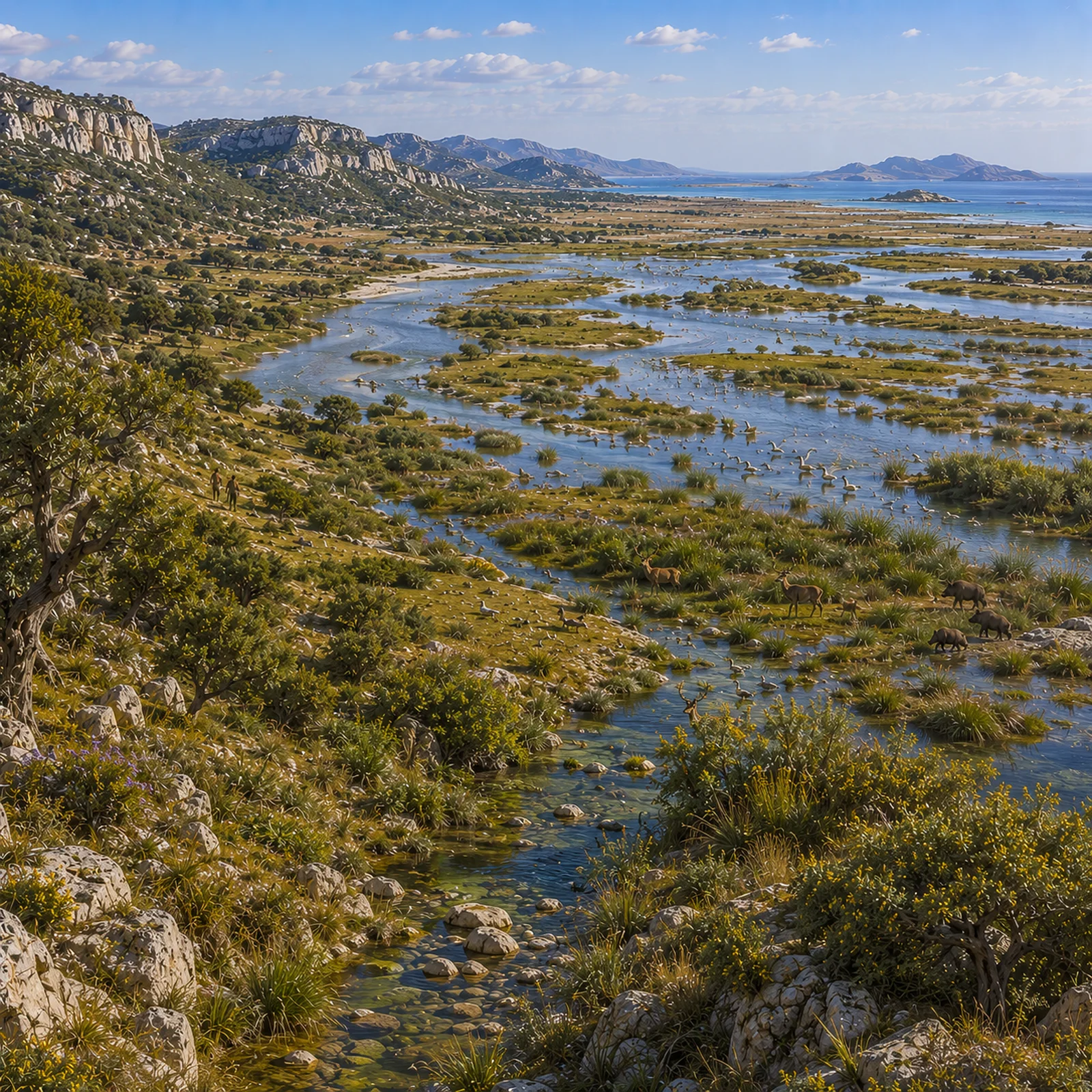
Mediterranean West Europe in the Upper Paleolithic
Commodities
Subjects
Regions

West Europe
View →Subregions
