
Middle Africa (1252–1395 CE): Dynastic Turmoil, Bilala …
Years: 1252 - 1395
Middle Africa (1252–1395 CE): Dynastic Turmoil, Bilala Incursions, and the Emergence of Borno
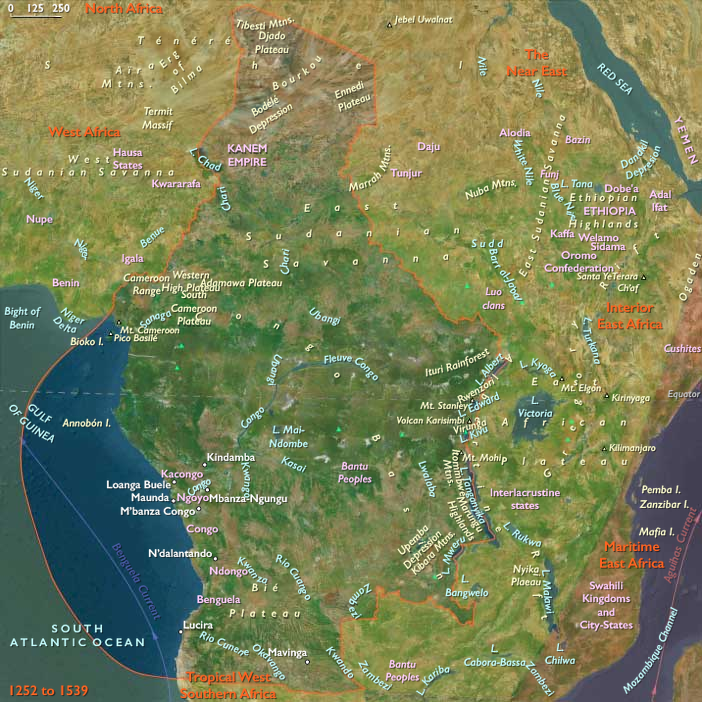
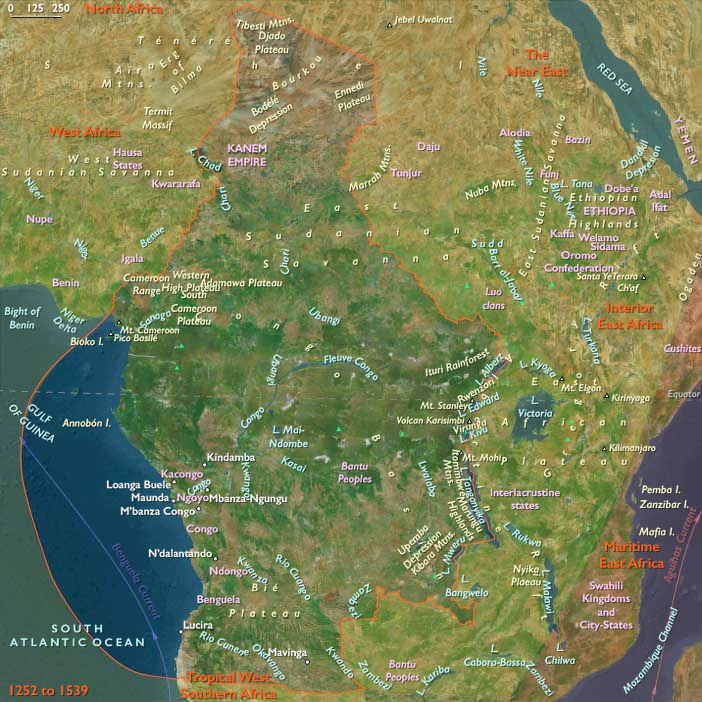
Between 1252 and 1395 CE, Middle Africa—encompassing modern Chad, Cameroon, Central African Republic, Equatorial Guinea, São Tomé and Príncipe, Gabon, Republic of the Congo, Congo, and Angola including its Cabinda enclave—experiences intense dynastic turmoil, devastating external incursions, and significant political realignments focused primarily on the Kanem Empire.
Dynastic Instability and Internal Strife in Kanem
Following the zenith under Mai Dunama Dabbalemi (ca. 1221–1259), the Kanem Empire falls into prolonged instability and internal conflict. The previously established practice of granting military commanders governance over conquered peoples increasingly evolves from merit-based positions to hereditary titles. This shift weakens central authority and fosters deep internal divisions, exacerbating rivalries within the ruling Sayfawa Dynasty. Following Dabbalemi’s death, dynastic feuds escalate into widespread civil war, fracturing Kanem and severely diminishing its imperial cohesion.
Bilala Incursions and the Shift to Borno
Towards the latter half of the 14th century, Kanem faces intense pressure from external forces. The Bilala, originating east near Lake Fitri, conduct repeated raids and invasions. Between 1376 and 1400, they prove particularly devastating, killing five of the six reigning mais during this period. These relentless assaults and ongoing dynastic conflicts culminate around 1380, when Mai Umar Idrismi is compelled to abandon Njimi, Kanem’s capital.
In a dramatic geographic and political shift, Idrismi and the Kanembu people relocate westward to Borno, establishing themselves on the western fringes of Lake Chad. This migration significantly reshapes regional demographics, with the intermarriage between Kanembu settlers and local inhabitants giving rise to a new ethnic and linguistic group—the Kanuri.
Persistent Instability in Early Borno
The establishment of the Kanuri in Borno does not immediately resolve the dynasty’s instability. The Sayfawa Dynasty remains plagued by internal power struggles, demonstrated by rapid leadership turnovers throughout the remainder of the 14th century. The continuous internal feuds hamper any effective consolidation or administration, leaving the region politically fragmented and vulnerable.
Southern Shifts and Bantu Expansions
While northern political upheavals dominate this period, southern Middle Africa witnesses ongoing demographic shifts due to the continuing Bantu migrations. Indigenous Khoisan peoples, comprising the hunter-gatherer San and pastoral Khoi, are increasingly displaced into the less fertile and less accessible territories of present-day Angola and the broader southwestern region. These movements reshape the region’s cultural and ethnic landscapes profoundly, influencing interactions and sociopolitical developments for generations to come.
This era thus marks a critical transitional phase in Middle Africa’s history, characterized by shifting political centers, dynastic instability, external pressures, and transformative migrations that significantly shape the future cultural and political trajectory of the region.
People
Groups
- Bantu peoples
- Khoikhoi
- San (Bushmen)
- Islam
- Zaghawa people
- Kanem, Empire of
- Sayfawa dynasty
- Central Sudanic peoples
- Kanembu people
- Kanuri people
- Bilala people
- Bornu, Kingdom of
Commodoties
Subjects
Regions
Subregions
Years: 1252 - 1395
People
Groups
- Bantu peoples
- Khoikhoi
- San (Bushmen)
- Islam
- Zaghawa people
- Kanem, Empire of
- Sayfawa dynasty
- Central Sudanic peoples
- Kanembu people
- Kanuri people
- Bilala people
- Bornu, Kingdom of
Commodoties
Subjects
Regions
Subregions