
Middle Africa (7,821 – 6,094 BCE) …
Years: 7821BCE - 6094BCE
Middle Africa (7,821 – 6,094 BCE) Early Holocene — Fishing Villages and Rainforest Abundance
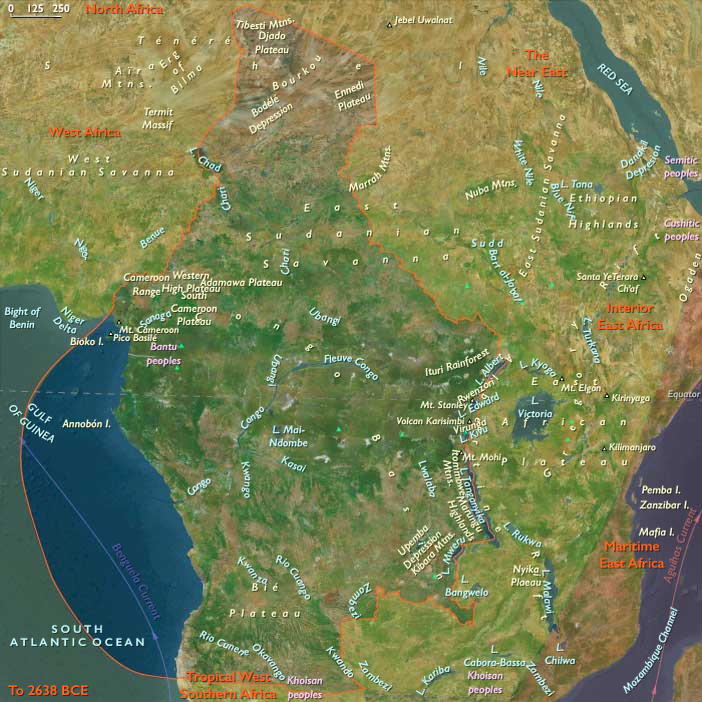
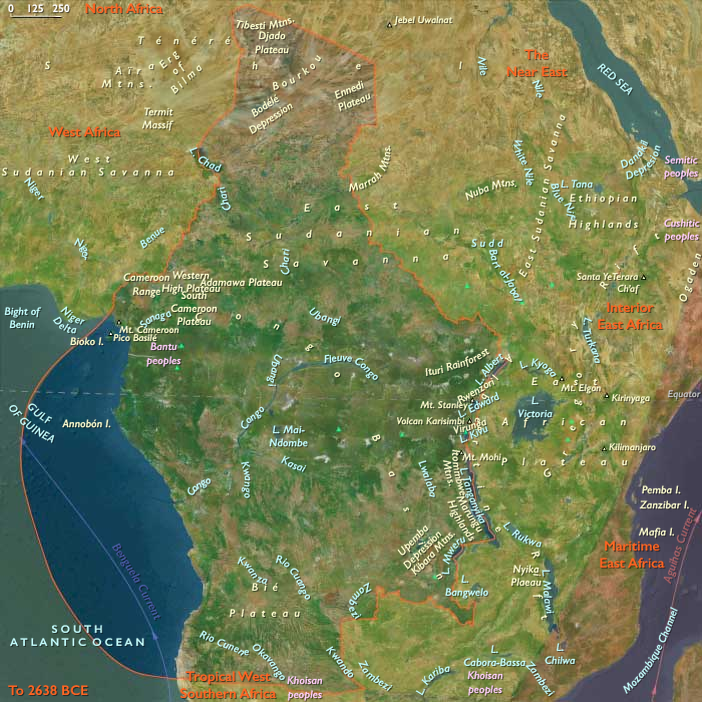
Geographic and Environmental Context
The broad equatorial–central belt of Africa including:
-
Chad and Lake Chad Basin,
-
the Central African Republic (Ubangi–Sangha region),
-
Cameroon (highlands, Adamawa Plateau, coastal plains),
-
Equatorial Guinea (islands and coast),
-
São Tomé e Príncipe,
-
Gabon,
-
the Republic of the Congo (Brazzaville),
-
the Democratic Republic of the Congo (Congo Basin, Kasai, Katanga, Ituri),
-
Angola.
Anchors: Lake Chad, Chari–Logone delta, Adamawa Plateau, Sangha–Ubangi junction, Cameroon Highlands, São Tomé e Príncipe volcanic isles, Congo River mainstem, Kasai–Katanga copperbelt, Ituri rainforest, Angolan escarpment.
-
Congo Basin forests lush; Lake Chad large; Cameroon Highlands productive.
Climate & Environmental Shifts
-
Holocene optimum: warm, wet, stable.
-
Rainforests reached maximum extent.
Subsistence & Settlement
-
Semi-sedentary fishing villages on rivers and lakes.
-
Intensive gathering of yams, oil palm, nuts, fruits.
-
Hunting of antelope, duiker, forest pig, primates.
Technology & Material Culture
-
Ground stone tools, polished axes for clearing.
-
Bark cloth, fiber nets, fish traps.
-
Early pottery appears in Chad/Cameroon ~9th millennium BCE.
Movement & Interaction Corridors
-
Congo River as arterial highway.
-
Adamawa Plateau as savanna–forest bridge.
Cultural & Symbolic Expressions
-
Ancestral burials along river terraces.
-
Rock art in Cameroon shows hunting and ritual.
Environmental Adaptation & Resilience
-
Riverine + forest resources created reliable surplus.
Transition
By 6,094 BCE, Middle Africa sustained semi-sedentary fisher–foragers with pottery.
Topics
Commodoties
Subjects
Regions
Subregions
Years: 7821BCE - 6094BCE
Topics
Commodoties
Subjects
Regions
Subregions