Anouvong, ruler of the Lao Kingdom of…
December 1826 CE
Following the fall of Vientiane by King Taksin's army in 1779, the city had been looted but spared destruction, the Emerald Buddha and several other important Buddha images had been taken to Siam, and the sons and daughter of King Siribunyasan had been taken as hostages, along with several thousand Lao families who were resettled in Saraburi, north of the Siamese capital.
King Siribunyasan had three sons, who were all to succeed him as king of Vientiane—Nanthasen, Inthavong, and Anouvong.
The Siamese and Burmese have been in almost perennial conflict between 1779 and 1826.
Siam seeks trade in weapons from Europe, and relies upon heavy conscription from the Lao, Cambodian, and Malay areas in the south to strengthen their forces.
Prince Anouvong had gained military distinction as a successful military commander and a loyal vassal of Siam during the campaigns against the Burmese near Chiang Mai.
Siam requires corvée labor in addition to military conscription.
Lao laborers have assisted in digging the canals of Bangkok, building a dam at Ang Thong in 1813, and constructing several forts along the Chao Phraya.
Siam had begun the intense cultivation of sugarcane for the European trade in 1810.
Sugar plantations are labor-intensive and require corvée labor from the Chinese, Khmer, Lao and hill tribes in their domain.
Anouvong begins actively making military preparations for rebellion in 1826.
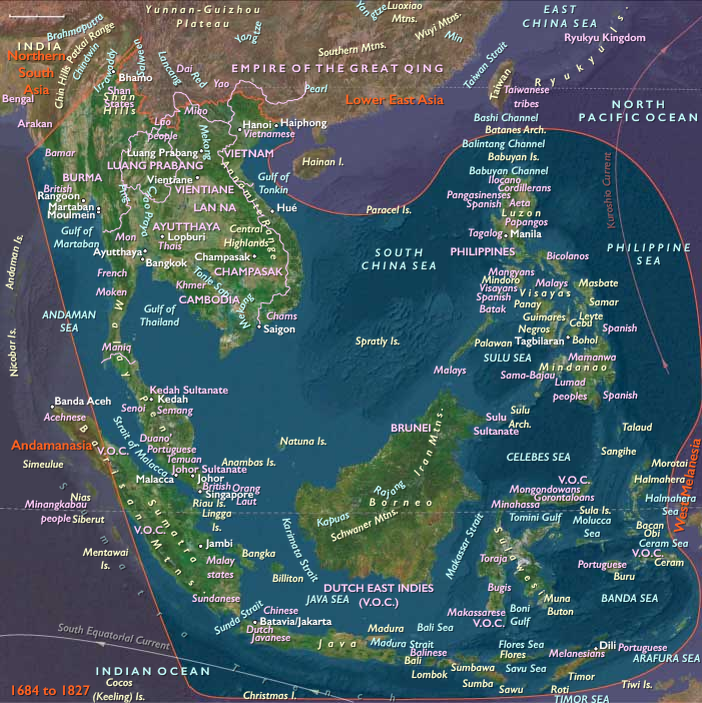
His strategy involves three key points: 1) respond to the immediate crisis caused by the popular discontent over the forced tattooing; 2) remove the ethnic Laos on the Khorat Plateau to the Kingdom of Vientiane, conducting a scorched Earth policy as he does so to slow the inevitable Siamese pursuit; 3) seek a diplomatic victory by gaining support from Vietnam, China, or Britain.
Anouvong may have believed the balance of power in Southeast Asia was turning away from Siam.
The factionalism at the Siamese court, the presence of the British in nearby Burma, the growing influence of Vietnam in the Cambodian provinces, and the regional dissatisfaction in the Lao areas suggest that Siamese power is waning.
In June 1826 the British had arrived to finalize the Burney Treaty between Siam and the British Empire, and the presence of the British fleet may have led Anouvong to believe that an invasion was imminent.
However, his most serious miscalculation is in the disparity of military power between Siam and the Laos.
From at least 1822, Siam has been purchasing large quantities of modern firearms and munitions from Britain, military surplus from the now ended Napoleonic Wars in Europe.
In December 1826, Anouvong's rebellion begins with an army of ten thousand men making its way toward Kalasin, following the path of the Siamese tattooing officials.
Locations
Groups
Khmer people
View →
Tai peoples, or Thais
View →
Malays, Ethnic
View →
Bamar or Burmans
View →
Lao people
View →
Chinese Empire, Qing (Manchu) Dynasty
View →
Vientiane, Kingdom of
View →
Myanmar (Burma), (Alaungpaya, or Konbaung dynasty) Kingdom of
View →
Siam, (Rattanakosin) Kingdom of
View →
Britain (United Kingdom of Great Britain and Ireland)
View →
Vietnam, Kingdom of
View →
Commodities
Subjects
Regions
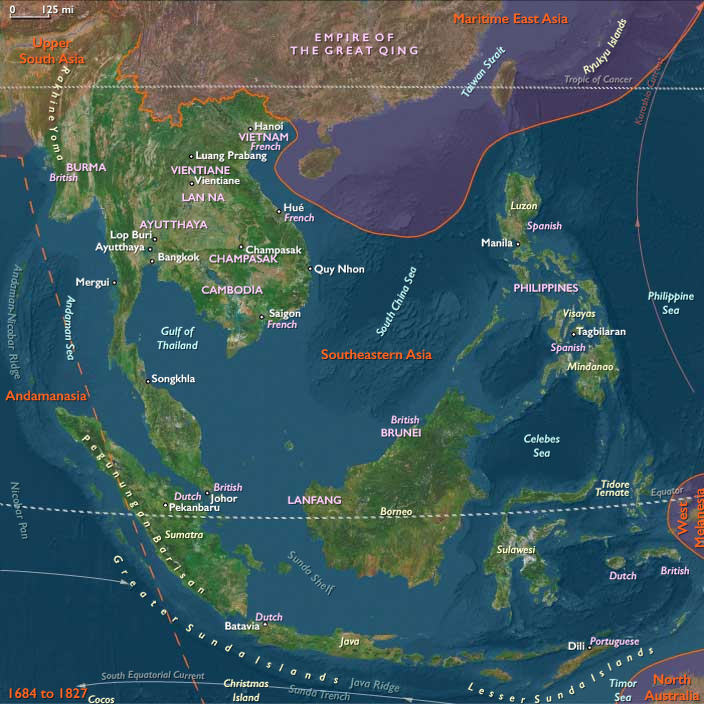
Southeast Asia
View →Subregions