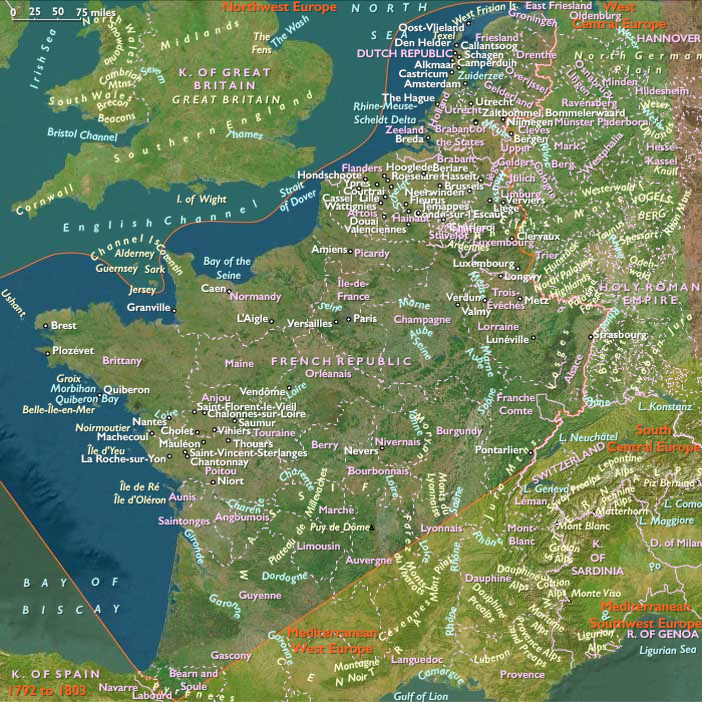
The execution of Louis XVI in January…
June 1795 CE
The execution of Louis XVI in January 1793 had left his young son, Louis Charles, as the titular King, proclaimed by the princes-in-exile proclaimed as "Louis XVII of France".
The Count of Provence, brother to King Louis XVI, had then unilaterally declared himself regent for his nephew, who was too young to be head of the House of Bourbon.
However, on June 1, Desault had died suddenly, not without suspicion of poison, and it was some days before doctors Philippe-Jean Pelletan and Dumangin were called.
Louis-Charles died on June 8, 1795.
The next day an autopsy was conducted by Pelletan, at which it was stated that a child apparently about ten years of age, "which the commissioners told us was the late Louis Capet's son", had died of a scrofulous infection of long standing.
During the autopsy, the physician Dr. Pelletan was shocked to see the countless scars that covered the body of Louis-Charles.
The scars were the result of the physical abuse the child suffered while imprisoned in the Temple.
His only surviving sibling is his imprisoned sister Marie-Thérèse, who is not considered a candidate for the throne because of France's traditional adherence to Salic Law.
Thus on June 16, the princes-in-exile declare the Count of Provence "King Louis XVIII".
The new king accepts their declaration soon after.
Locations
Groups
Austria, Archduchy of
View →
Luxemburg, Duchy of
View →
Netherlands, United Provinces of the (Dutch Republic)
View →
Habsburg Monarchy, or Empire
View →
Spain, Bourbon Kingdom of
View →
Britain, Kingdom of Great
View →
Sardinia, Kingdom of (Savoy)
View →
Naples and Sicily, Bourbon Kingdom of
View →
French First Republic
View →
Netherlands, Southern (French)
View →
Topics
Commodities
Regions
West Europe
View →Subregions