Financier E. H. Harriman, who by 1898…
May 1901 CE
Financier E. H. Harriman, who by 1898 was chairman of the executive committee of the Union Pacific, attempts to seize control of the Chicago, Burlington and Quincy Railroad in 1901 in attempt to monopolize the Chicago rail market.
James J. Hill of the Northern Pacific, allied with financier J.P. Morgan, opposes him, igniting the Panic of 1901.
The panic begins when the market crashes during the afternoon of May 8.
Investors do not see it coming, but by 1:00 pm, the decline in the market is beginning to show.
First comes the gradual decline in Burlington stock.
It had been high all morning, but suddenly a sharp weakness comes about.
Prices of stocks such as St. Paul, Missouri Pacific, and Union Pacific begin to fall.
Soon enough, the whole market is drowning.
Investors who had once held on tightly to their stocks are selling out of panic.
Others catch on and an overwhelming cry of "Sell! Sell! Sell!" is heard throughout the floor of the New York Stock Exchange.
During the selling, a rumor spread among traders that Arthur Housman, broker for J.P. Morgan, has died.
Housman, the head of A.A. Housman & Company, is brought to the floor of the New York Stock Exchange to assure traders that J.P. Morgan was still doing business.
Affected stocks include St. Paul, Union Pacific, Missouri Pacific, Amalgamated Copper, Sugar, Atchison, and United States Steel.
However, not all stocks finish the day out on a rough note.
Northern Pacific not only avoids a decline, but sees a net advance of 16+1⁄2 points.
As a result of this crash, Harriman and Hill will join forces to form a holding company, the Northern Securities Company, to control the Northern Pacific, the Great Northern, and the Burlington.
Groups
Topics
Subjects
Regions
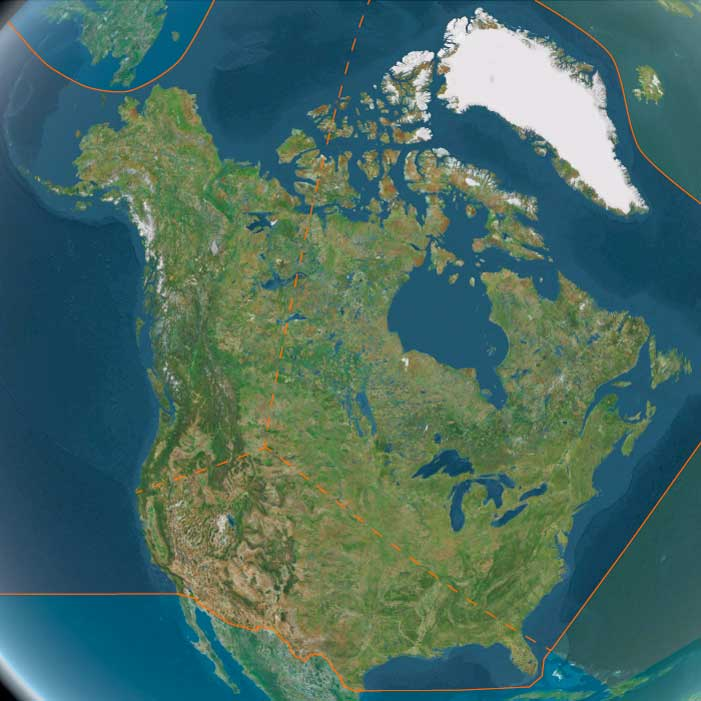
Northern North America
View →Subregions