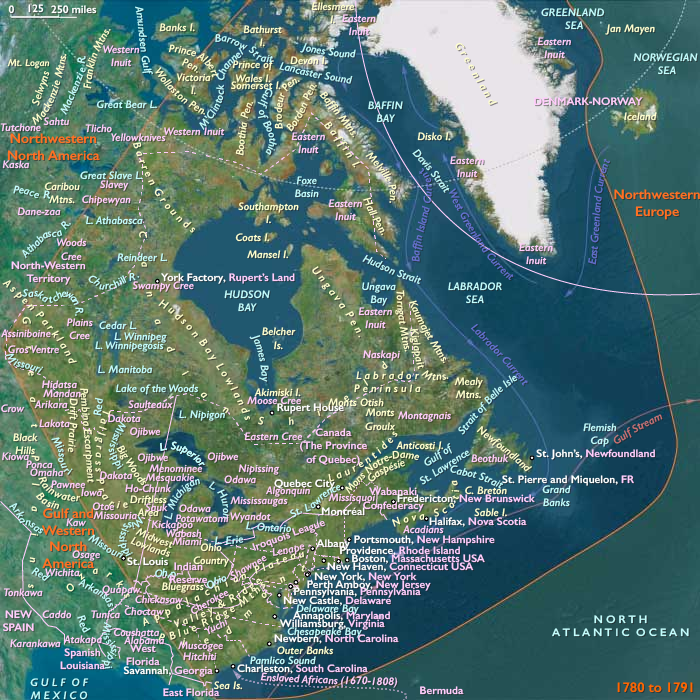
The Bank of North America, a private…
January 1782 CE
This is thus the nation's first de facto central bank.
The first financial institution chartered by the United States, the bank is funded in part by a significant quantities of gold and silver coin and bills of exchange Robert Morris had obtained from France and the Netherlands in 1781.
Morris now issues new paper currency backed by this supply.
He also manages to meet the interest obligations on the debt, which he estimates to be about thirty million dollars.
The initial role of the bank is to finance the war against Britain.
During the war the contributions of all thirteen colonies and their citizens will be roughly $800,000 dollars (about $113 million in today's dollars) and Robert Morris will personally contribute almost $740 million (about 84.2 billion in today's dollars) during the war and immediately thereafter.
As Superintendent of Finance, Morris institutes several reforms, including reducing the civil list, significantly cutting government spending by using competitive bidding for contracts, tightening accounting procedures, and demanding the federal government's full share of support (money and supplies) from the States.
Morris had obtained supplies for the army of Nathanael Greene in 1779, and does so again from 1781–1783.
He had taken an active role in helping move Washington and his army from New York State to Yorktown, Virginia; he had been in in Washington's camp the day the move was initiated.
He had acted as quartermaster for the trip and supplied over $14 million (about $198 million today) in his own credit to supply the Army.
As Agent of Marine, he had coordinated with the French Navy to get Washington's Army to the Battle of Yorktown (1781).
After Yorktown, Morris noted the war had changed from a war of bullets to a war of finances.
People
Groups
Topics
Commodities
Subjects
Regions
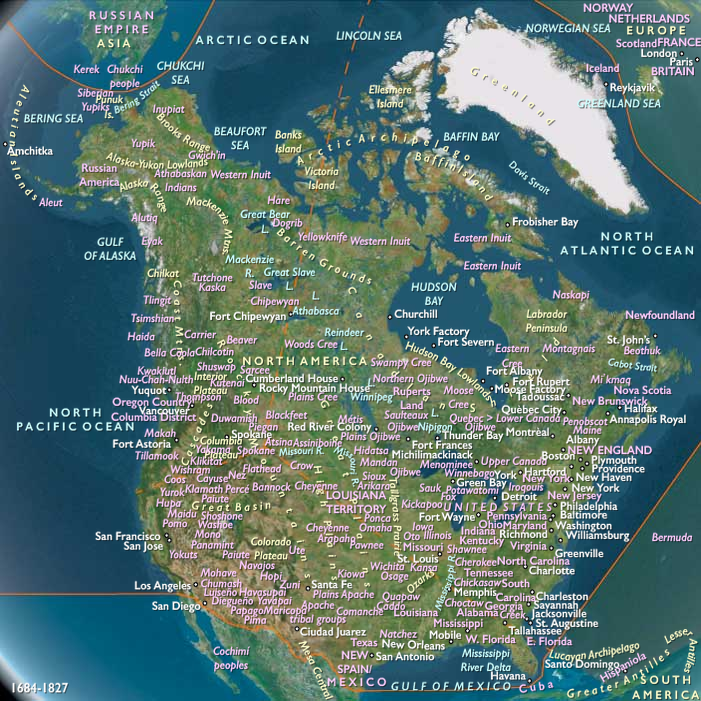
Northern North America
View →Subregions