
Filters:
Strik arrives first and immediately assaults Gazan's …
Years: 1805 - 1805
November
Strik arrives first and immediately assaults Gazan's line with three battalions, pushing the French out of Dürenstein.
Caught between two strong forces, Gazan attempts to push his way back through Dürenstein, to reach the river where the flotilla can evacuate his exhausted troops.
Withdrawing through the narrow Danube canyon and fighting off the Russian force at their rear, Gazan and his division are trapped when more of Strik's Russians appear to block their retreat.
The narrow defiles hamper the Russians; Strik's men have to march out of the canyons, form ranks and attack in waves.
Despite Strik's continuous assault in the next two to three hours, Mortier and Gazan push the Russians back up the narrow fissure in the hillside.
At this point, Dokhturov's column appears behind the French line and joins the battle.
The French are outnumbered more than three to one, assaulted in the front by Miloradovich's column, in the middle by Strik's and in the rear by Dokhturov.
Earlier in the morning Dupont had proceeded with his column south and east along the river, from Marbach, according to instructions.
Even before the arrival of Mortier's courier, he had heard the sound of artillery in the distance and sent riders ahead to discover the cause.
They had come back to report that a Russian column (Dokhturov's) was descending from the mountains to take the road to Dürenstein.
Realizing this will separate him from the forward division, Dupont hustles his troops toward the sound of battle and deploys them to take the Russians in the flank.
The French assault, heralded by cannon fire, causes Dokhturov's troops to turn their attention from Gazan's beleaguered force to face these new assailants.
Although superior in numbers, Dokhturov's column has no supporting artillery, and the narrow space prevent them from taking advantage of their size.
It is Dokhturov's turn to face attackers at his front and rear, until the arrival of Schmitt's column, which is wending its way through the mountains in the west.
Schmitt arrives at dusk, and the action continues well after dark; in mid-November night falls at close to 17:00 in the upper Danube climes.
Despite the darkness, Schmitt descends out of the defiles and deploys his troops to assail Dupont's flank.
As his Russians enter he fray, they come between a battalion of French and another of Russians.
With the additional force, the French are overwhelmed, but most of the shooting subsides when the combatants cannot tell apart friend from foe in the dark.
Under the cover of darkness, aided by a waning moon, Mortier uses the French flotilla to evacuate his exhausted troops to the south bank.
The French and Russians continue to skirmish fitfully into the night as sentries encounter one another in the dark.
Portions of Gazan's force provide any necessary rear guard action, and the following morning the remaining men are evacuated from the north shore of the Danube, while they maintain possession of only Spitz and Weissenkirchen on the north bank.
The losses are staggering: Gazan had lost close to forty percent of his division to death and wounds.
Aside from losing five guns, forty-seven officers and eight hundred and ninety-five men under his command have been captured, bringing the loss of effectives closer to sixty percent; furthermore, he has lost the eagles of the 4th Infantry Regiment (France) and the eagle and guidon of the 4th Dragoons.
The Russians have lost around four thousand, about sixteen percent of their force, and two regimental colors.
The Austrian Lieutenant Field Marshal Schmitt is killed as the battle concludes, probably by Russian musketry in the confused melee.
The vineyards and the villages of Ober- and Unterloiben are destroyed, as is most of Dürenstein and Stein.
Caught between two strong forces, Gazan attempts to push his way back through Dürenstein, to reach the river where the flotilla can evacuate his exhausted troops.
Withdrawing through the narrow Danube canyon and fighting off the Russian force at their rear, Gazan and his division are trapped when more of Strik's Russians appear to block their retreat.
The narrow defiles hamper the Russians; Strik's men have to march out of the canyons, form ranks and attack in waves.
Despite Strik's continuous assault in the next two to three hours, Mortier and Gazan push the Russians back up the narrow fissure in the hillside.
At this point, Dokhturov's column appears behind the French line and joins the battle.
The French are outnumbered more than three to one, assaulted in the front by Miloradovich's column, in the middle by Strik's and in the rear by Dokhturov.
Earlier in the morning Dupont had proceeded with his column south and east along the river, from Marbach, according to instructions.
Even before the arrival of Mortier's courier, he had heard the sound of artillery in the distance and sent riders ahead to discover the cause.
They had come back to report that a Russian column (Dokhturov's) was descending from the mountains to take the road to Dürenstein.
Realizing this will separate him from the forward division, Dupont hustles his troops toward the sound of battle and deploys them to take the Russians in the flank.
The French assault, heralded by cannon fire, causes Dokhturov's troops to turn their attention from Gazan's beleaguered force to face these new assailants.
Although superior in numbers, Dokhturov's column has no supporting artillery, and the narrow space prevent them from taking advantage of their size.
It is Dokhturov's turn to face attackers at his front and rear, until the arrival of Schmitt's column, which is wending its way through the mountains in the west.
Schmitt arrives at dusk, and the action continues well after dark; in mid-November night falls at close to 17:00 in the upper Danube climes.
Despite the darkness, Schmitt descends out of the defiles and deploys his troops to assail Dupont's flank.
As his Russians enter he fray, they come between a battalion of French and another of Russians.
With the additional force, the French are overwhelmed, but most of the shooting subsides when the combatants cannot tell apart friend from foe in the dark.
Under the cover of darkness, aided by a waning moon, Mortier uses the French flotilla to evacuate his exhausted troops to the south bank.
The French and Russians continue to skirmish fitfully into the night as sentries encounter one another in the dark.
Portions of Gazan's force provide any necessary rear guard action, and the following morning the remaining men are evacuated from the north shore of the Danube, while they maintain possession of only Spitz and Weissenkirchen on the north bank.
The losses are staggering: Gazan had lost close to forty percent of his division to death and wounds.
Aside from losing five guns, forty-seven officers and eight hundred and ninety-five men under his command have been captured, bringing the loss of effectives closer to sixty percent; furthermore, he has lost the eagles of the 4th Infantry Regiment (France) and the eagle and guidon of the 4th Dragoons.
The Russians have lost around four thousand, about sixteen percent of their force, and two regimental colors.
The Austrian Lieutenant Field Marshal Schmitt is killed as the battle concludes, probably by Russian musketry in the confused melee.
The vineyards and the villages of Ober- and Unterloiben are destroyed, as is most of Dürenstein and Stein.
Locations
People
- Archduke Charles of Austria, Duke of Teschen
- Auguste Marmont
- Ferdinand I of Austria
- Francis II, Holy Roman Emperor
- Joachim Murat
- Karl Mack von Leiberich
- Michel Ney
- Mikhail Kutuzov
- Napoleon
- Nicolas Jean-de-Dieu Soult
Groups
- Austria, Archduchy of
- Bavaria, Wittelsbach Duchy of
- Portugal, Bragança Kingdom of
- Russian Empire
- Britain (United Kingdom of Great Britain and Ireland)
- Baden, Electorate and Margravate of
- Austrian Empire
- France, (first) Empire of
- Bavaria, Kingdom of
Topics
Subjects
Regions
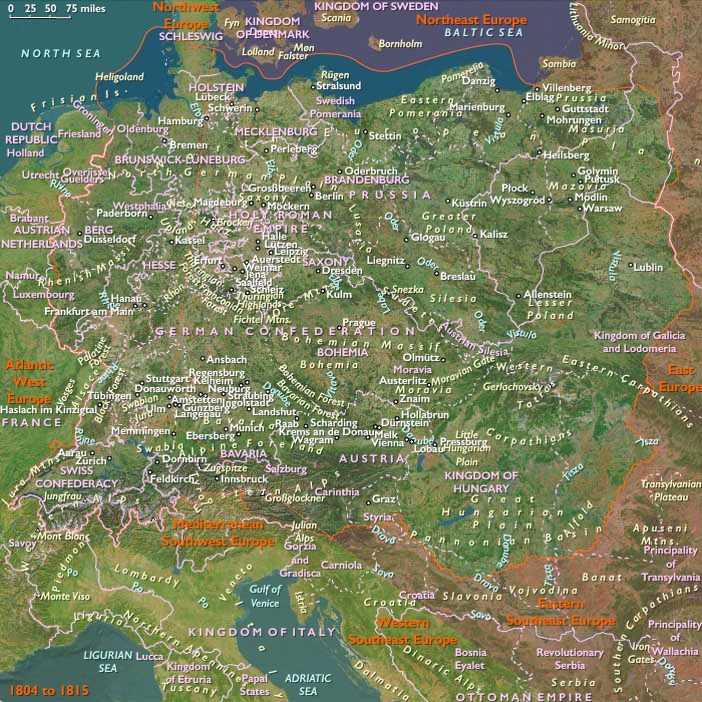
Subregions
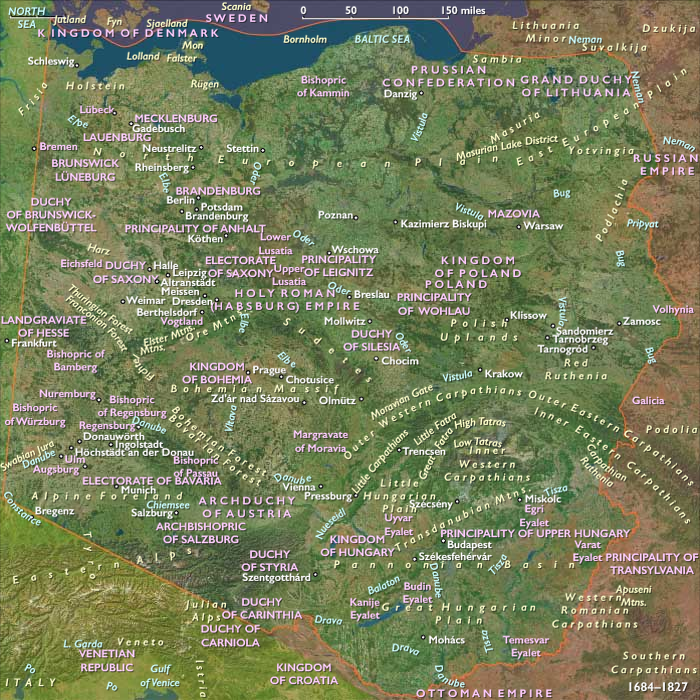
Related Events
Showing 2 events out of 2 total
Years: 1805 - 1805
November
Locations
People
- Archduke Charles of Austria, Duke of Teschen
- Auguste Marmont
- Ferdinand I of Austria
- Francis II, Holy Roman Emperor
- Joachim Murat
- Karl Mack von Leiberich
- Michel Ney
- Mikhail Kutuzov
- Napoleon
- Nicolas Jean-de-Dieu Soult
Groups
- Austria, Archduchy of
- Bavaria, Wittelsbach Duchy of
- Portugal, Bragança Kingdom of
- Russian Empire
- Britain (United Kingdom of Great Britain and Ireland)
- Baden, Electorate and Margravate of
- Austrian Empire
- France, (first) Empire of
- Bavaria, Kingdom of
Topics
Subjects
Regions
Subregions