
Most of the Knights’ castles fall in …
Years: 1263 - 1263
Most of the Knights’ castles fall in 1262–1263.
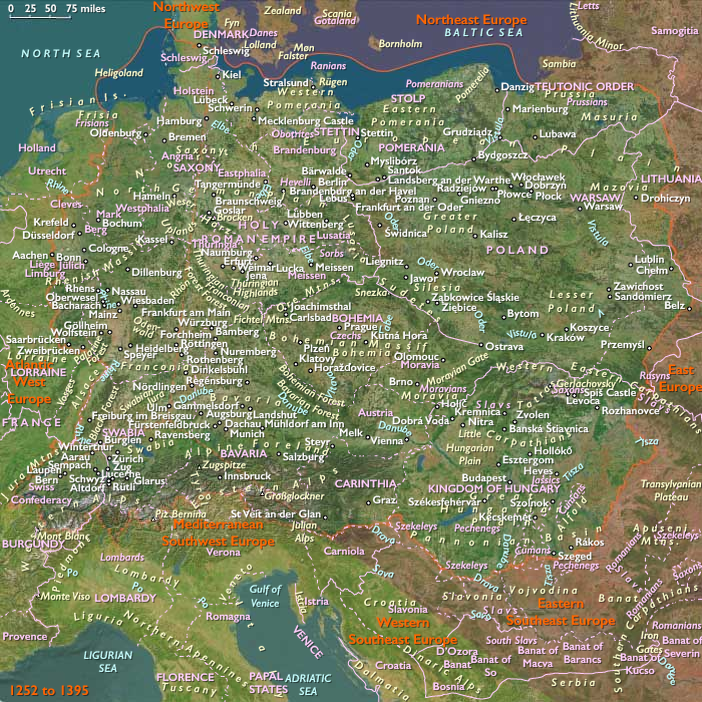
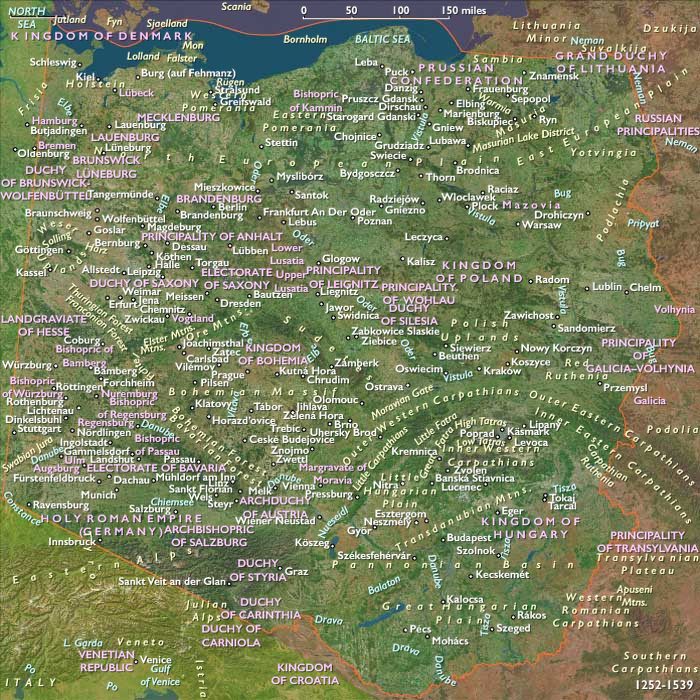
The Prussians destroy captured forts instead of using them for their own defense, so the end of successful sieges means that large Prussian forces do not have to stay near their home and are then free to operate in other parts of Prussia, raiding Kuyavia and the Chelmno Land, where the Knights had first established themselves in late 1220's.
Herkus Monte, recovered from his wound, raids Chelmno Land with a large force and takes many prisoners in 1263.
On his way back to Natangia, Herkus and his men are confronted by a contingent of their enemies.
In the Battle of Löbau that ensues, Prussians kill forty knights, including the Master and the Marshal of the order.
After the battle, it appears as though the Prussians might win the uprising, but because of infighting between numerous clans they do not seize the opportunity to strike the final devastating blow.
Instead, individual clans continue to act on their own.
Locations
People
Groups
- Polytheism (“paganism”)
- Prussians, Old, or Baltic (Western Balts)
- Germans
- Christians, Roman Catholic
- Natangians (Prussian clan)
- Pomerania, Polish Duchy of
- Teutonic Knights of Acre (House of the Hospitalers of Saint Mary of the Teutons in Jerusalem)
- Livonian Order
- Holy Roman Empire
Topics
- Crusades, The
- Ostsiedlung (German: Settlement in the East), a.k.a. German eastward expansion
- Poland, Fragmentation of
- Northern Crusades, or Baltic Crusades
- Teutonic Knights' Conquest of Prussia
- Prussian Uprising, Great
Commodoties
Subjects
Regions
Subregions
Related Events
Showing 10 events out of 45936 total
Years: 1263 - 1263
Locations
People
Groups
- Polytheism (“paganism”)
- Prussians, Old, or Baltic (Western Balts)
- Germans
- Christians, Roman Catholic
- Natangians (Prussian clan)
- Pomerania, Polish Duchy of
- Teutonic Knights of Acre (House of the Hospitalers of Saint Mary of the Teutons in Jerusalem)
- Livonian Order
- Holy Roman Empire
Topics
- Crusades, The
- Ostsiedlung (German: Settlement in the East), a.k.a. German eastward expansion
- Poland, Fragmentation of
- Northern Crusades, or Baltic Crusades
- Teutonic Knights' Conquest of Prussia
- Prussian Uprising, Great
Commodoties
Subjects
Regions
Subregions