Mozart's Così fan tutte, ossia La scuola…
January 1790 CE
An Italian-language opera buffa in two acts, the libretto is written by Lorenzo Da Ponte, who also wrote Le nozze di Figaro and Don Giovanni.
Although it is commonly held that Così fan tutte was written and composed at the suggestion of the Emperor Joseph II, recent research does not support this idea.
There is evidence that Mozart's contemporary Antonio Salieri tried to set the libretto but left it unfinished.
In 1994, John Rice will uncover two terzetti by Salieri in the Austrian National Library.
The title, Così fan tutte, literally means "Thus do all [women]" but is usually translated into English as "Women are like that".
The words are sung by the three men in act 2, scene 13, just before the finale; this melodic phrase is also quoted in the overture to the opera.
Da Ponte had used the line "Così fan tutte le belle" earlier in Le nozze di Figaro (in act 1, scene 7).
The opera will be given only five times before the run is stopped by the death of the Emperor and the resulting period of court mourning.
It will be performed twice in June 1790 with the composer conducting the second performance, and again in July (twice) and August (once).
After that it will not be played in Vienna during Mozart's lifetime.
The subject-matter does not offend Viennese sensibilities of the time, but throughout the nineteenth and early twentieth centuries, it will be considered risqué, vulgar, and even immoral.
The opera will be rarely performed, and when it does appear it will be presented in one of several bowdlerized forms.
After the Second World War it will regain its place in the standard operatic repertoire.
It is frequently performed today and appears fourteenth on the Operabase list of the most-performed operas worldwide.
Locations
People
Groups
Topics
Subjects
Regions
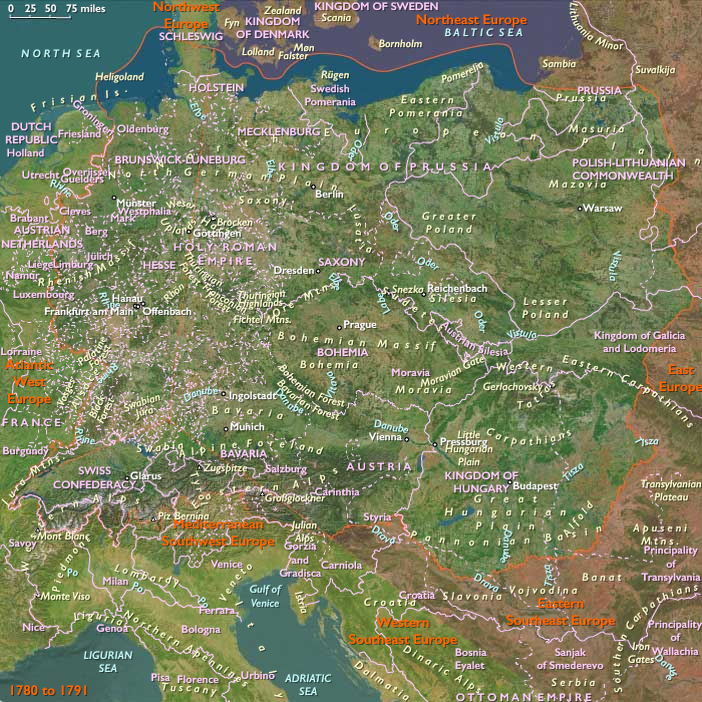
Central Europe
View →Subregions