The Rise of Namur: From Celtic Settlement…
992 CE
The Rise of Namur: From Celtic Settlement to Medieval County (992)
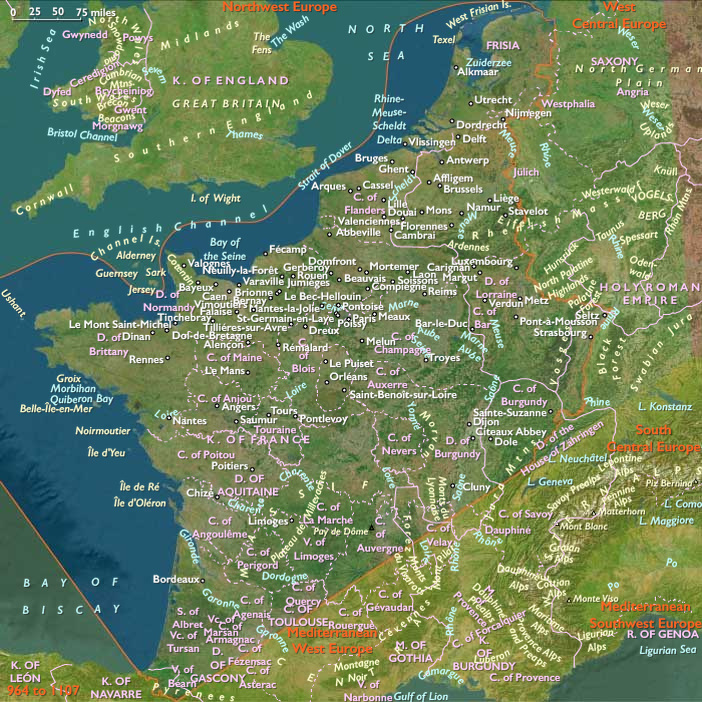
The city of Namur, located at the confluence of the Sambre and Meuse rivers, has long been a strategic and commercial hub. Its origins trace back to Celtic times, when it served as a key trading settlement, controlling east-west and north-south trade routes through the Ardennes. Over the centuries, Namur evolved under Roman, Merovingian, and later Ottonian rule, eventually emerging as an independent county in 992.
Early History and Roman Influence
- The Aduatuci, a local Celtic tribe, originally controlled the region before their defeat by Julius Caesar during his Gallic campaigns.
- The Romans established a presence in Namur, recognizing its strategic location for both military and trade purposes.
- Roman rule reinforced Namur’s importance along key continental trade routes, linking the Rhine, the Low Countries, and Gaul.
The Merovingian and Carolingian Periods
- During the early Middle Ages, the Merovingians built a fortress or citadel on the rocky promontoryoverlooking the Meuse and Sambre confluence, securing the town as a defensive stronghold.
- The Carolingians further integrated Namur into their realm, utilizing it as a regional power center within Lotharingia.
The County of Namur (992)
- In 992, Emperor Otto III formally elevated Namur to comital status, naming Albert I as Count of Namur, marking the city's political emergence as a feudal entity.
- This recognition granted Albert I increased autonomy and control over the surrounding lands, securing Namur’s status as a key principality within the Holy Roman Empire.
- The newly established County of Namur would grow in power over the 11th and 12th centuries, playing a crucial role in the medieval politics of the Low Countries.
Legacy
The elevation of Namur to a county in 992 solidified its role as a strategic, economic, and military center. With its citadel dominating the rivers and its trade connections expanding, Namur would continue to be an important player in the evolving feudal landscape of the Holy Roman Empire and the Low Countries.
Locations
People
Subjects
Regions
West Europe
View →Subregions