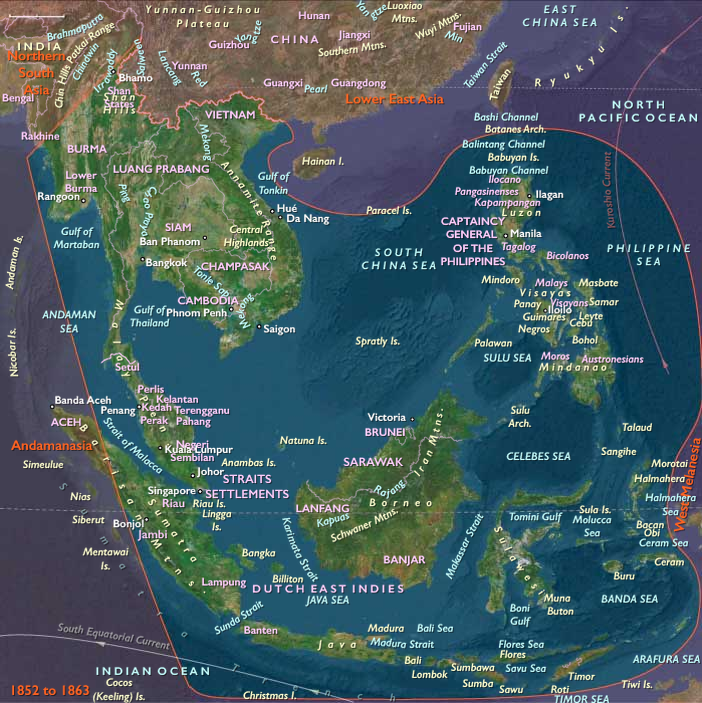
Mongkut is convinced that his realm must…
1852 CE to 1863 CE
Mongkut is convinced that his realm must have full relations with the Western countries in order to survive as an independent nation and avoid the humiliations China and Burma had suffered in wars with Britain.
Against the advice of his court, he abolishes the old royal trade monopoly in commodities and in 1855 signs the Treaty of Friendship and Commerce with Britain. (This treaty, commonly known as the Bo wring Treaty, is signed on Britain's behalf by Sir John Bowring, governor of Hong Kong.)
Under the terms of the treaty, British merchants are permitted to buy and sell in Siam without intermediaries, a consulate is established, and British subjects are granted extraterritorial rights.
Similar treaties are negotiated the next year with the United States and France, and over the next fifteen years with a number of other European countries.
These agreements not only provide for free trade but also limit the Siamese government's authority to tax foreign enterprises.
The elimination of these barriers leads to an enormous increase in commerce with the West.
This expansion of trade in turn revolutionizes the Thai economy and connects it to the world monetary system.
People
Groups
Regions
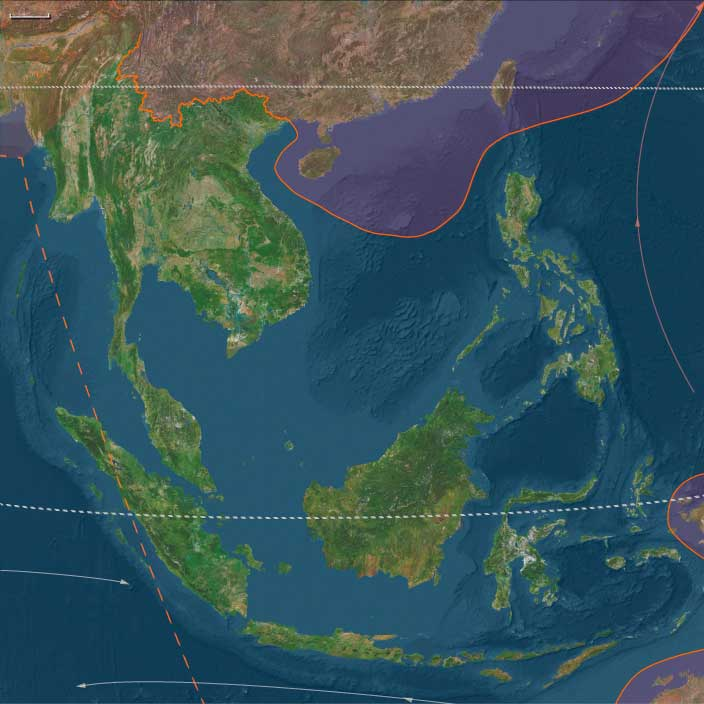
Southeast Asia
View →Subregions